
Vigna golden mosaic virus
Begomovirus vignae
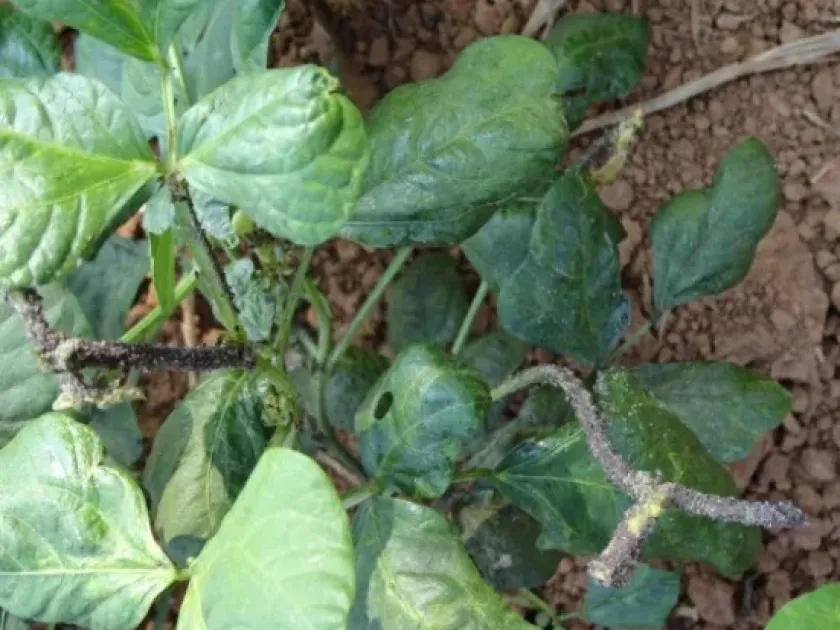
Description
Symptoms
The primary symptom is the development of bright yellow spots on the leaves, which eventually coalesce into a distinct mosaic pattern. The characteristic golden discoloration is a result of chlorophyll degradation and inhibited photosynthesis.
Severe deformation of the leaf tissue is common, including crinkling, curling, and overall reduction in leaf size. The leaves become thickened and leathery, leading to significant structural changes.
Infected plants exhibit stunted growth, with shortened internodes and a bushy appearance caused by the proliferation of side shoots. This morphological distortion is a classic response to systemic viral infection.
Flowering is frequently suppressed, and if pods develop, they are typically undersized, twisted, and contain shriveled, non-viable seeds. In severe cases, the plant may fail to produce any commercial harvest.
Symptoms usually appear in localized clusters within the field, reflecting the flight patterns and distribution of the whitefly population. This patchy distribution is a hallmark of vector-borne viral diseases.
Pathogen
The causal agent of the disease is the Vigna golden mosaic virus, belonging to the Begomovirus genus within the Geminiviridae family. This DNA virus is highly specialized and primarily affects species within the legume family.
The viral particles exhibit a characteristic twinned (geminate) structure consisting of two incomplete icosahedral capsids. The virus relies entirely on the host plant's molecular machinery to replicate, causing severe physiological disruptions.
Transmission is facilitated by the whitefly (Bemisia tabaci). The insect acquires the virus while feeding on infected phloem and retains the ability to transmit it for the remainder of its lifespan, making it a highly efficient vector.
The virus follows a persistent, circulative transmission mechanism. Once the insect feeds on an infected plant, the virus moves through the insect's digestive tract into the salivary glands before it can be transmitted to healthy crops.
Although mechanical transmission through sap is theoretically possible, it is not considered a primary pathway in agricultural settings. The rapid spread is almost exclusively driven by the population dynamics of the whitefly vector.
Conditions for development
The disease incidence is strongly correlated with warm, dry climatic conditions that favor whitefly proliferation. Temperatures between 25°C and 32°C optimize the insect's life cycle and increase the rate of virus transmission.
Plants subjected to environmental stress, particularly drought, show increased susceptibility to the virus. The reduced physiological resilience of the plant allows the virus to replicate and spread more rapidly within the host tissues.
Weed hosts in the surrounding areas serve as critical reservoirs for the virus during the off-season. The whitefly population survives on these weeds and moves to Vigna crops as soon as they emerge.
Delayed planting dates often correlate with higher infection rates because the whitefly population has more time to build up to peak numbers before the crop reaches its most susceptible growth stages.
Intensive farming practices that involve overlapping cropping seasons create a continuous food source for the whitefly, facilitating the year-round circulation of the virus in a given geographic area.
Why it matters
The economic impact is primarily due to drastic yield reductions, which can reach 40% to 90% depending on the timing of infection. Early-season infections often result in a total loss of commercial viability.
In addition to yield loss, the quality of the harvested pods is significantly downgraded, making them unsuitable for market. The lack of proper nutrient accumulation renders the seeds nutritionally inferior.
The virus weakens the plant's natural defense mechanisms, making it increasingly prone to secondary infections by various fungal and bacterial pathogens, which further diminishes the overall health of the field.
The cost of cultivation increases significantly due to the necessity of heavy insecticide usage to suppress the vector, adding financial pressure on producers while also risking the development of pesticide resistance.
Seed production fields are particularly threatened by this virus, as infected plants produce seeds with low germination rates and impaired vigor, leading to long-term issues for subsequent planting seasons.
Protection
The cornerstone of control is the effective management of the whitefly vector. The use of systemic insecticides during the early growth stages is critical to preventing the initial viral inoculation of the crop.
Spatial isolation of Vigna fields from known sources of infection is a key preventive measure. Eliminating weed hosts in adjacent areas significantly reduces the primary inoculum pressure on the crop.
Using high-quality, certified, and virus-free seed is essential to ensure that the crop starts without an internal source of infection. This is a fundamental step in integrated pest management.
Implementing crop rotation schemes that exclude preferred hosts of the whitefly helps break the viral disease cycle. Careful timing of planting can also help avoid peak periods of whitefly activity.
- Utilizing resistant or tolerant cultivars when available.
- Covering young crops with floating row covers (agrofiber) to block vectors.
- Regular monitoring of whitefly populations using yellow sticky traps.
- Strict field sanitation and destruction of crop residues post-harvest.
Discussion
No discussions yet — be the first.