
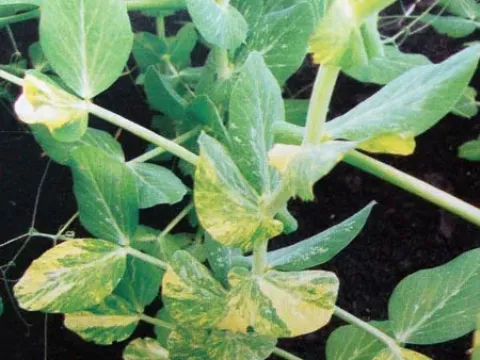
Pea mosaic
Comovirus pisi
Pea mosaic is caused by the Pea mosaic virus (PMV), a member of the Potyvirus group. It is a systemic infection that impacts the physiological processes of host plants by interfering with cellular replication.
What the section contains
Pea mosaic
The virus particles are filamentous, typically measuring about 750 nm in length. These particles invade the plant's vascular system, ensuring rapid distribution throughout the tissues.
Transmission occurs through two primary routes: seed-borne infection, which serves as the primary inoculum, and mechanical transmission, primarily facilitated by aphid vectors.
The host range is broad, encompassing various cultivated and wild legume species. This persistence in the ecosystem makes it difficult to eradicate the virus from agricultural landscapes.
Once inside the plant, the virus remains present throughout the life cycle, leading to chronic symptoms that affect the overall vigor and yield of the pea crop.
The classic manifestation of pea mosaic is a distinct mottling or mosaic pattern on the leaves. This is characterized by the irregular intermingling of light green and dark green patches.
As the disease progresses, leaves may become distorted, crinkled, or ruffled. The foliage often appears stunted, and in severe cases, the margins of the leaves may roll inward.
Growth reduction is a hallmark of the infection. Infected pea plants typically exhibit significant shortening of internodes, resulting in a bushy, dwarfed plant structure.
Reproductive development is also severely hampered. Plants may display reduced flower formation, increased flower abortion, and the development of malformed or sterile pods.
- Mottling and mosaic leaf patterns
- Leaf distortion and crinkling
- Stunted plant growth (dwarfism)
- Reduced flower count
- Malformation of seed-bearing pods
The development and spread of pea mosaic are highly dependent on the population dynamics of aphids, which act as non-persistent vectors of the virus.
Aphids acquire the virus during short feeding probes on infected plants and can transmit it almost immediately to healthy plants, making outbreaks very rapid.
Climatic conditions that favor aphid migration, such as mild winters and warm springs, significantly increase the risk of field-wide infection during the early growth stages.
The density of the crop canopy influences the spread; high plant populations can create favorable conditions for aphid movement and colonization within the field.
Seed quality is a decisive factor in disease epidemiology. Using untreated or infected seeds in areas with high aphid activity often triggers early-season infection cycles.
The primary economic impact of pea mosaic is a substantial loss in yield, often manifesting as fewer seeds per pod and reduced seed weight, directly impacting profitability.
Seed quality is severely downgraded due to the infection, leading to shriveled or discolored seeds that are often unsuitable for marketing or subsequent sowing.
Plants affected by the virus are significantly weakened and become more susceptible to environmental stressors, such as moisture deficits or heat stress, compared to healthy plants.
Increased susceptibility to secondary pathogens, including root rot and fungal blights, is a common consequence of the compromised immune system of infected pea plants.
Costs associated with management—including chemical control of insect vectors and the need for sourcing premium, virus-free seeds—represent a major financial burden for growers.
The most effective strategy for managing pea mosaic is the strict use of virus-free, certified seeds, which prevents the introduction of the primary inoculum into the field.
Integrated Pest Management (IPM) targeting aphid vectors is essential. Timely applications of insecticides can reduce the number of insects, thereby slowing the transmission rate.
Maintaining spatial isolation between current pea fields and perennial legume sources, like alfalfa or clover, helps in reducing the migration of aphids into the crop.
Weed management both within and around the field is crucial, as many weeds act as asymptomatic reservoirs for the virus and support aphid populations throughout the year.
Genetic resistance is the most sustainable approach. Selecting and planting resistant cultivars is recommended whenever available to minimize the dependence on chemical interventions.