
Pea spotted mosaic
Gammacarmovirus pisi
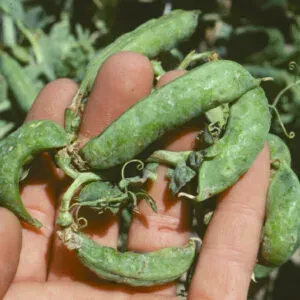
Description
Symptoms
The primary symptom of pea spotted mosaic is the development of characteristic spotting and mosaic patterns on the foliage. These chlorotic spots, often appearing along the veins, create a distinctive mottled effect on the leaves.
Plants affected by the virus often exhibit significant deformation of the leaves. The leaf blades can become wrinkled, curled at the edges, and overall stunted, which severely impacts the plant's photosynthetic efficiency.
Growth suppression is a hallmark of the infection. The internodes become shortened, leading to a compact, bushy appearance of the plant, often referred to as stunting, which hampers normal vertical development.
Pod development is also affected, with the appearance of necrotic or chlorotic spots on the surface. The pods themselves often remain underdeveloped, containing smaller, shriveled seeds that significantly reduce harvest quality.
The disease is systemic, meaning the virus spreads throughout the entire plant. Symptoms progressively move toward the terminal buds, eventually compromising the production of flowers and subsequent fruit set.
Pathogen
The disease is caused by the pea spotted mosaic virus, which belongs to the Gammacarmovirus genus. This plant pathogen specifically targets members of the Fabaceae family, causing systemic infection.
The virus particles are spherical and contain a single-stranded RNA genome. This structural simplicity allows the virus to rapidly replicate within the host plant's cells once it has been introduced.
The primary transmission mechanism in the field involves insect vectors, most notably aphids. These insects acquire the virus by feeding on infected plants and transmit it to healthy ones during subsequent feeding sessions.
Mechanical transmission is another pathway, occurring when sap from an infected plant comes into contact with wounded healthy tissue. This often happens during field operations like cultivation or manual inspection.
Seed-borne transmission is a critical aspect of the virus's survival strategy. It can remain in the seed embryo, ensuring that the pathogen survives during storage and spreads to new fields during the planting season.
Conditions for development
Environmental conditions that favor high aphid populations significantly increase the risk of disease outbreaks. Warm and dry weather is particularly conducive to the rapid spread of the vector.
The most vulnerable stage for pea plants is the early vegetative growth phase. Infection during the period from germination to flowering leads to the most severe yield losses.
The presence of wild legume hosts and weeds serves as a reservoir for the virus. These plants sustain the pathogen population in the absence of the main crop, acting as a bridge for infection.
Dense planting configurations create favorable microclimates that protect aphids and facilitate their movement between plants, thereby accelerating the spread of the virus within the field.
Poor agricultural practices, such as minimal spatial separation between new crops and old, infested fields, create a direct pathway for the virus to move from established reservoirs to susceptible young crops.
Why it matters
The economic impact of pea spotted mosaic is significant due to the drastic reduction in biomass and seed yield. Infected plants struggle to perform basic physiological functions required for optimal growth.
A reduction in the number of pods and the size of seeds per pod is the most direct financial loss for producers. The resulting seeds often fail to meet commercial quality standards for size and uniformity.
Seed quality is severely compromised, not only in terms of yield but also in terms of viability. Seeds from infected plants often exhibit poor germination rates, leading to uneven stands and potentially failed crops.
The viral infection weakens the plant, making it more susceptible to opportunistic secondary infections, such as root rots or powdery mildew, which can further aggravate the decline of the crop.
In cases of severe infection, yield losses can reach 30% to 50%. This high impact necessitates proactive management to protect the long-term profitability of legume cultivation.
Protection
The most effective strategy is the use of high-quality, virus-tested seed lots. Ensuring the planting material is free from the pathogen is the first line of defense against the disease.
Rigorous monitoring and management of aphid populations are essential. Using systemic insecticides early in the season can significantly reduce the viral load by curbing the insect vector population.
Weed control is crucial for managing viral outbreaks. Eliminating weeds that act as alternate hosts reduces the local reservoir of the virus and disrupts the disease cycle.
Implementing strategic crop rotation, where legumes are not grown in the same field for at least three to four years, helps in reducing the infectious pressure in the soil and surrounding environment.
Whenever possible, producers should select and plant cultivars known for their resistance or tolerance to local virus strains, as this reduces the reliance on heavy pesticide applications.
Discussion
No discussions yet — be the first.