
Pea enation mosaic virus
Enamovirus aev
Description
Symptoms
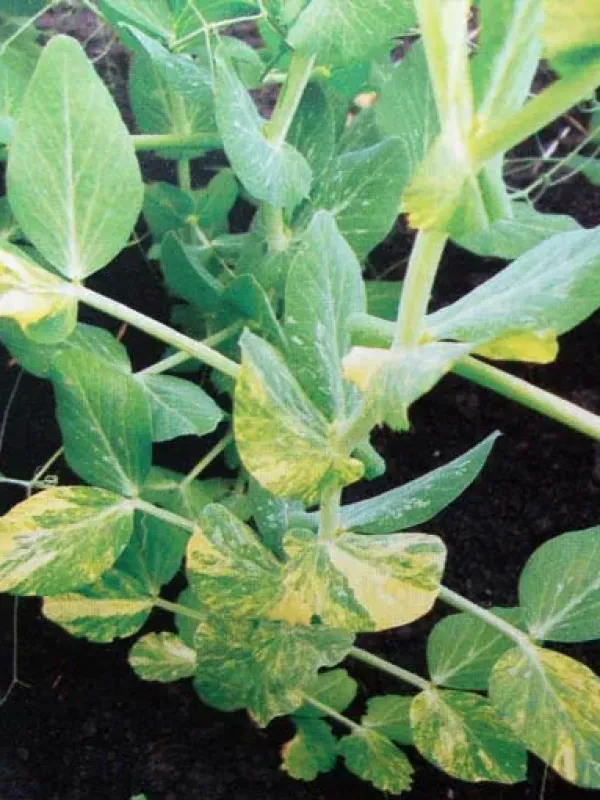
The first signs of the disease include chlorotic spotting or mosaic patterns on young leaves. As the infection progresses, leaves may become deformed and display asymmetrical growth.
A hallmark symptom, which gives the virus its name, is the development of enations (tissue outgrowths) on the undersides of leaves and stipules, often forming a net-like structure.
Severe infections lead to significant stunting of the plant. Internodes become shortened, resulting in a bushy, dwarf growth habit that stands out in a field of healthy crops.
Pods on infected plants are typically small, malformed, and may exhibit mosaic-like chlorosis. The pod surface can appear bumpy due to internal tissue disruption.
- Mosaic leaf patterns
- Formation of enations (outgrowths)
- Stunted plant growth
- Deformed pods
- Severe chlorosis
Pathogen
The causative agent of the disease is Enamovirus aev, commonly known as Pea enation mosaic virus (PEMV). It belongs to the Enamovirus genus and features a bipartite genome consisting of two positive-sense single-stranded RNA molecules.
This virus has a sophisticated transmission mechanism requiring specific helper proteins for successful movement and infection of host cells. It maintains high biological stability within its insect vectors.
The primary vectors for the virus are various aphid species, most notably the pea aphid (Acyrthosiphon pisum). The transmission is persistent, meaning the virus circulates within the insect's hemolymph but does not replicate inside it.
The host range includes a wide variety of legumes, such as garden peas, vetch, lentils, and certain clover species. Wild legumes often act as overwintering reservoirs for the virus.
Primary infections occur in early spring when winged aphids migrate from perennial weeds or overwintering sites to young pea seedlings.
Conditions for development
Epidemics are favored by warm, dry weather conditions, which promote the rapid multiplication and migratory behavior of aphids. High humidity and rainfall tend to reduce insect activity and slow the spread of the virus.
The presence of perennial legumes and uncultivated grassy areas near fields provides a green bridge, allowing the virus to persist through the winter and infect new crops in the spring.
Early planting dates often allow pea crops to establish robust growth before the peak migration period of aphids, thereby reducing the impact of primary infections.
Crop density also influences transmission rates; sparsely planted fields are often more attractive to aphids than dense stands due to increased background contrast.
Optimal temperatures for viral replication within host tissues are between 18°C and 25°C, which usually aligns with the peak vegetative growth phase of the pea crop.
Why it matters
The economic impact of Pea enation mosaic virus is substantial, as it can cause yield losses ranging from 50% to 70% in sensitive pea varieties due to reduced pod set and smaller seed size.
Beyond yield reduction, the virus negatively affects crop quality. Infected seeds are often shriveled, have lower viability, and exhibit poor germination characteristics.
Viral infections drain the plant's physiological energy, making the crop more susceptible to secondary stressors such as drought, nutrient deficiencies, and heat stress.
Seed production fields affected by the virus are often subject to rejection for certification, as the virus can significantly reduce the vigor of the following year's planting stock.
Economic losses are compounded by the high costs of frequent insecticide applications required to keep aphid populations below the economic threshold during the growing season.
Protection
Management focuses primarily on controlling the aphid vectors. Systemic insecticides applied early in the growth stage are effective in preventing initial colonization and secondary spread.
Sanitation practices, such as the removal of host weeds from field margins and nearby areas, are essential to eliminate reservoirs of both the virus and the insect vectors.
The use of resistant or tolerant cultivars is the most sustainable long-term strategy for managing the disease. Breeding programs prioritize resistance to PEMV to ensure stable yields.
Spatial isolation of seed production fields from commercial pea crops and perennial legume pastures can help prevent the arrival of viruliferous aphids.
Good agronomic management, including optimal fertilization and irrigation, helps maintain crop vigor, enabling plants to better withstand the negative impacts of viral infection.
Discussion
No discussions yet — be the first.