
Pea umbravirus
Umbravirus pisi
The causal agent of this disease is a virus from the Umbravirus genus, which possesses a unique biological trait. Umbraviruses lack their own genes to encode coat proteins, meaning they depend on "helper" viruses, usually from the luteovirus group, for capsid formation and systemic movement within the plant.
What the section contains
Pea umbravirus
The disease is classified as a systemic viral infection that primarily targets the plant's vascular system. The virus concentrates in the phloem tissues, which disrupts the transport of nutrients to all parts of the plant, leading to stunted growth.
In nature, the virus is transmitted by various species of aphids. The vector acquires the virus while feeding on an infected plant and transmits it to healthy plants during subsequent feeding sessions, maintaining the virus within its system for an extended period.
The genome of the pathogen consists of a single-stranded positive-sense RNA. Its lack of its own coat protein makes it highly dependent on the specific proteins produced by its co-infecting partner, which dictates its host range and transmission efficiency.
The biology of this pathogen necessitates a complex diagnostic approach, as symptoms often mimic those of other common viral infections. Without the helper virus, the umbravirus cannot form a fully infectious agent capable of vector transmission.
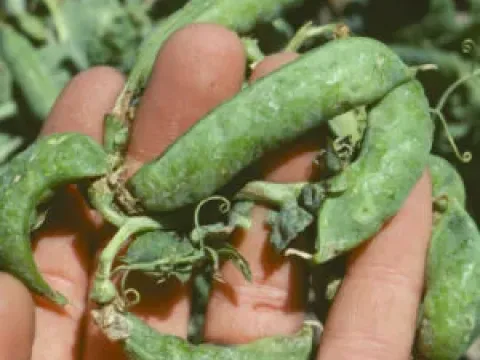
Symptoms of Pea Umbravirus infection manifest primarily as severe stunting of the entire plant. Internodes are significantly shortened, giving the plant a compact and underdeveloped appearance throughout the growing season.
A characteristic sign is chlorosis, which often progresses to yellowing of the tissues, starting from the upper leaves. Leaves may become deformed, curled, and exhibit mosaic patterns, which drastically reduces the total photosynthetic area.
Infection of reproductive organs leads to flower abortion and delayed development of pods. The seeds that do form are often smaller, deformed, and of poor quality, which significantly reduces the overall commercial yield.
The root system of infected plants is poorly developed, making them highly susceptible to drought and nutrient deficiencies. The overall vigor of the crop drops sharply, leading to premature wilting and reduced survival rates.
- Severe shortening of internodes
- Yellowing (chlorosis) and curling of leaves
- Delayed flowering and reduction in pod formation
- Deformed seeds within the pods
- General stunted growth and early senescence
The development of the disease is directly linked to the dynamics of aphid populations in the field. Warm and dry weather conditions favor the rapid reproduction of these vectors, creating optimal conditions for widespread crop infection.
Outbreaks of the virus often correlate with the presence of overwintering infection sources nearby. Perennial legumes or specific weed species can act as reservoirs, from which aphids transfer the virus to young pea seedlings.
Poor agricultural practices, such as late sowing, can result in the most vulnerable stages of pea development coinciding with the peak activity of insect vectors, significantly increasing the risk of widespread infection.
Temperature regimes influence the rate of viral replication within host tissues. Temperatures optimal for plant metabolism are often equally favorable for the rapid accumulation of viral particles, accelerating the appearance of visible symptoms.
High planting density also plays a role in disease spread. In dense stands, a favorable microclimate is created for aphid movement between plants, facilitating the rapid growth of infection pockets throughout the field.
The economic damage caused by Pea Umbravirus is due to a substantial reduction in yield. Because the virus suppresses plant physiology, seed weight and quality are significantly compromised, affecting overall production efficiency.
The virus degrades the seed quality, making the harvest unsuitable for use as future planting stock. Reduced germination energy and laboratory viability make the seeds economically non-viable for farmers.
Infection leads to metabolic disruptions, rendering the plants more vulnerable to environmental stresses such as drought, frost, or secondary attacks by fungal and bacterial pathogens that further weaken the crop.
Early-season infection can result in total crop failure or a complete lack of marketable yield, forcing producers to re-sow fields or accept significant financial losses during the harvest season.
The negative impact of the virus extends to the biochemical composition of the seeds, including reduced protein and carbohydrate content, which diminishes the nutritional and fodder value of the pea crop.
The primary control method involves managing aphid vector populations using insecticides during the early growth stages of the peas. Timely intervention helps lower insect numbers and limit the initial spread of the virus.
Spatial isolation of pea fields from perennial legume crops and weed-infested areas is crucial. Removing these infection reservoirs along field borders effectively lowers the local infection pressure.
The use of resistant or tolerant cultivars is the most sustainable and economically viable control strategy. Breeding for non-susceptibility allows farmers to minimize losses even in years with high vector activity.
Adhering to optimal planting dates helps avoid peak migration periods of aphids. Early sowing allows the crop to establish and gain vigor before the insects begin massive colonization of the fields.
Integrated agronomic practices, including crop rotation, the use of certified healthy seed material, and proactive weed control, create unfavorable conditions for the survival and spread of the umbravirus in agroecosystems.