
Citrus seed-borne viral infections
Citrus seed-borne
Citrus seed-borne viral infections refer to a subset of pathogens capable of being transmitted via seeds from infected parent trees. While many citrus viruses are transmitted by grafting or insect vectors, certain viruses have demonstrated the potential for vertical transmission through the seed embryo.
What the section contains
Citrus seed-borne viral infections
The transmission process occurs during the fertilization of the ovule or early seed development. This allows the virus to reside within the seed, meaning that a seemingly healthy fruit can harbor infected seeds, making it a dangerous pathway for international disease spread.
These viruses are often characterized by high stability within the seed coat, which allows them to remain viable for long periods during storage and transportation. This survival mechanism complicates efforts to eradicate such pathogens once they have entered a regional nursery system.
Unlike vegetative propagation, where symptoms might appear faster, seed-borne infections often result in a latent period. This means young seedlings may look perfectly normal for weeks or months before the first viral symptoms emerge.
Genetic research indicates that the viral load in seeds can vary depending on the host species and the specific strain of the virus. Consequently, monitoring programs must be adapted to identify various strains that pose the highest threat to nursery production.
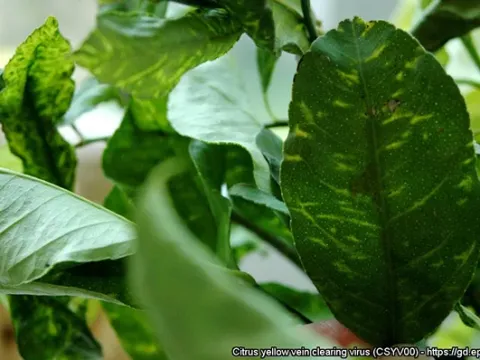
The most common symptoms appear during the early growth stages of seedlings. Look for chlorotic spots, mosaic patterns, or pale yellowish markings on the cotyledons and the first true leaves.
Deformation is a key diagnostic indicator. Leaves may appear crinkled, stunted, or exhibit irregular margins. This deformity is often accompanied by a significant reduction in leaf size, which is a sign of overall systemic disruption in the plant's growth.
Vein clearing, where the area around the leaf veins becomes translucent, is another classic sign of viral infection in citrus seedlings. This symptom is most visible when the leaf is held up against a bright light source.
Stunted growth is the most reliable observation for nurseries. Infected seedlings often show poor vigor and fail to reach the height and stem diameter of healthy plants grown from the same batch, creating uneven nursery stocks.
In advanced cases, the roots of infected seedlings show signs of poor development, with fewer fine root hairs. This deficiency limits the plant's nutrient uptake and makes it susceptible to further environmental stress and secondary soil-borne pathogens.
The primary economic harm is the loss of entire batches of seedlings, which must be destroyed to prevent the virus from spreading. This is a total loss for nursery operators and affects the supply chain of healthy rootstocks.
Infected trees often remain stunted and unproductive throughout their life cycle. Even if they survive, their yield potential is significantly lower, and the fruit quality is often compromised, making the trees unsuitable for commercial fruit production.
Seed-borne infections turn young plants into permanent reservoirs of the virus. Through insect vectors like aphids or mechanical tools used for pruning, the virus can spread to healthy neighboring trees, potentially causing an epidemic in a new orchard.
The cumulative impact of these viruses can lead to premature tree decline or sudden death. The metabolic cost for the plant to fight the virus leaves it vulnerable to secondary infections, increasing management costs for the grower.
International trade restrictions are a severe consequence of citrus viral infections. The presence of seed-borne pathogens can lead to the quarantine of whole production areas and the loss of export markets for local growers.
The most effective strategy is the use of certified virus-free seed sources. Establishing a strict nursery certification program ensures that all seeds are sourced from trees tested negative for known viruses through molecular diagnostic methods.
PCR (Polymerase Chain Reaction) testing is the standard for detecting viral presence in seed lots. Implementing mandatory testing before planting can prevent the introduction of pathogens into the nursery environment.
Quarantine and strict isolation are essential. Any seedlings showing symptoms must be culled immediately, and the area where they were grown should be sanitized to avoid any potential soil contamination.
Managing insect vectors is critical. In a greenhouse setting, controlling populations of aphids, whiteflies, and other potential vectors prevents the secondary spread of viruses from infected seedlings to healthy ones.
- Sourcing seeds exclusively from tested and certified parent trees.
- Utilizing molecular testing (PCR) for initial batch validation.
- Implementing rigorous nursery hygiene and equipment sterilization.
- Constant monitoring for early viral symptoms in seedlings.
- Integrating pest control programs to reduce vector populations.