
Citrus yellow-vein
Citrus yellow-vein associated virus
Description
Symptoms
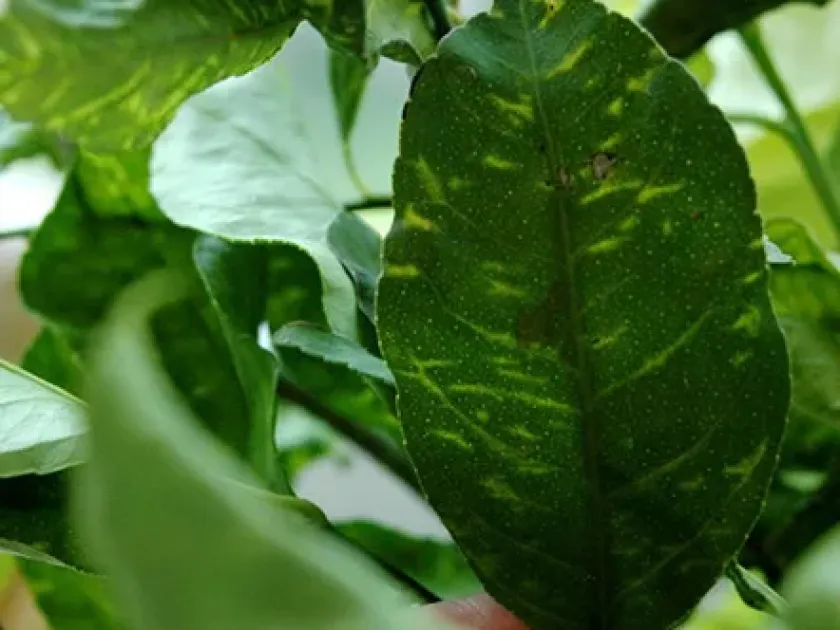
The most diagnostic symptom of the disease is the yellowing of the tissue immediately adjacent to the leaf veins, resulting in a characteristic vein-clearing or netting pattern.
This yellowing is typically distinct and contrasts sharply with the green areas of the leaf, often appearing across the entire foliage of an infected branch.
In addition to leaf symptoms, affected trees may exhibit reduced vigor and stunted development of young shoots during the growing season.
Leaf deformation may occur, where the leaves become distorted or smaller than those on healthy branches, significantly reducing the tree's photosynthetic capacity.
- Bright yellow vein-clearing on leaves.
- Distinctive netted appearance of the foliage.
- Stunting of new shoot growth.
- Reduced foliage density in severe cases.
Pathogen
Citrus yellow-vein is a viral disease that specifically affects the vascular tissue of citrus trees, primarily disrupting the phloem functions.
The disease is caused by a virus which is mainly transmitted through grafting and the use of infected budwood during the propagation process.
Once introduced into a host plant, the virus becomes systemic, spreading throughout the internal transport system and affecting all parts of the tree.
Scientific evidence indicates that there are no known insect vectors that effectively transmit this virus in natural field conditions, making human intervention the primary method of spread.
The virus persists in the tree for its entire life cycle, meaning that a once-infected plant will serve as a permanent source of inoculum.
Conditions for development
The primary factor for the development and dissemination of Citrus yellow-vein is the use of infected nursery stock for new plantings.
Environmental conditions such as temperature and humidity do not trigger the disease directly, but they can influence the speed at which visual symptoms appear.
Management practices, especially those involving tools used for pruning or grafting, are critical; contamination via unsterilized tools is a major risk factor.
Planting density and general orchard management also play a role, as stressed trees may exhibit more pronounced symptoms compared to healthy, well-nourished ones.
Spread across geographic regions is almost exclusively linked to the trade of nursery plants and propagation material without strict diagnostic testing.
Why it matters
The economic impact of the disease is significant, as it leads to a reduction in the overall yield and physiological decline of the trees.
Fruit quality is negatively impacted, often resulting in smaller fruit sizes and lower market value due to poor appearance and altered chemical composition.
The systemic nature of the virus leads to long-term weakening of the host, making the trees more susceptible to secondary pests and environmental stressors.
In mature orchards, widespread infection necessitates the removal of entire trees, leading to major financial losses for growers and reduced orchard productivity.
Because there is no cure, the cumulative loss of orchard lifespan and the constant risk to nearby healthy trees represent a persistent threat to profitability.
Protection
The most effective strategy for managing Citrus yellow-vein is the absolute use of virus-free, certified nursery stock obtained from reliable, tested sources.
Orchard managers should prioritize regular diagnostic monitoring and index testing to ensure that mother trees remain free of viral pathogens.
Once a tree is confirmed to be infected, it must be promptly eradicated to prevent the virus from spreading further within the orchard environment.
Rigorous sanitation protocols must be implemented, ensuring that all tools are thoroughly disinfected after each individual tree is pruned or grafted.
International and local quarantine regulations should be strictly followed to prevent the movement of infected plant material into non-infested citrus production areas.
Discussion
No discussions yet — be the first.