
Citrus leprosis virus
Citlodavirus citri
Description
Symptoms
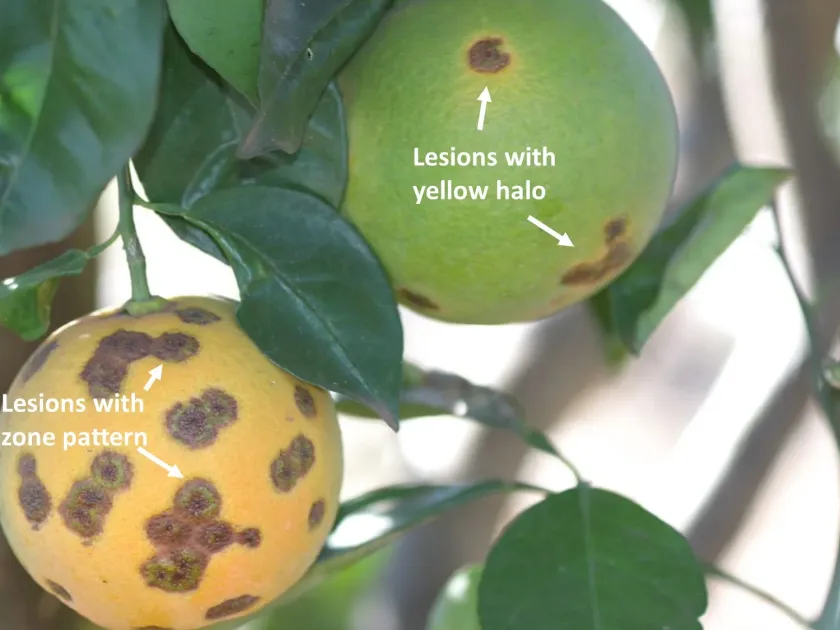
The most distinctive signs include the presence of necrotic spots or lesions on leaves. These lesions often have a dark center surrounded by a chlorotic halo.
Fruits infected by the virus show similar circular spots. These lesions impair the fruit's skin quality, making them commercially unacceptable for fresh markets.
On young twigs, the virus causes bark cracking and canker-like lesions. Over time, these structural damages weaken the tree's health and reduce its overall vigor.
Severe infestations often result in premature fruit drop and leaf abscission. The tree eventually shows a sparse canopy and stunted growth patterns.
- localized necrotic lesions;
- chlorotic halos on leaves;
- fruit deformation and discoloration;
- bark fissuring on branches;
- premature fruit and leaf drop.
Pathogen
The causative agent of the disease is the Citrus leprosis virus, which is the type species of the genus Citlodavirus. It is a serious viral disease that disrupts the normal metabolism of host plants.
The virus is transmitted by flat mites of the genus Brevipalpus, particularly Brevipalpus yothersi. The virus cannot be transmitted mechanically through pruning tools or contact between healthy and infected tissues.
Citrus species are the primary hosts for this virus, with sweet oranges being particularly susceptible to severe infection. Other citrus varieties also show varying degrees of vulnerability.
The virus biology is strictly linked to its mite vector. The mite acquires the virus after feeding on infected plant tissue and remains infectious throughout its lifespan.
Once inside the plant, the virus replicates within the cytoplasm, leading to localized cellular death and causing the typical symptoms observed on leaves, stems, and fruits.
Conditions for development
The spread of the disease is highly dependent on the population dynamics of Brevipalpus mites. Warm and humid climates provide the best conditions for their reproduction.
Orchards with high tree density and poor ventilation are more susceptible to rapid mite dispersal. Lack of proper pruning creates niches where mites can easily survive.
Wind dispersal is a major factor in the movement of mites between trees. Consequently, the infection can spread quickly throughout an entire orchard if not managed.
Seasonality influences the intensity of the disease. Periods of rapid plant growth often coincide with increased mite activity, leading to higher infection rates.
The introduction of infected nursery stock is the primary cause of long-distance spread, emphasizing the need for strict nursery certification programs.
Why it matters
The economic impact of Citrus leprosis is profound, causing significant losses in crop yield. In severe cases, the tree may become so weakened that it requires removal.
The damage to fruit quality renders them unmarketable. Growers face financial losses not only from reduced yield but also from the depreciation of their harvest.
Managing the disease necessitates constant investment in acaricide treatments. This increases production costs and places additional pressure on the orchard's profitability.
Long-term infections lead to the decline of the entire plantation. Many producers are forced to replant entire blocks, representing a massive loss of capital and time.
The persistence of the virus in a region can restrict the export of citrus products due to strict international phytosanitary regulations regarding this quarantine pest.
Protection
Strict quarantine measures are essential to prevent the introduction of the virus into disease-free areas. Monitoring imported plant materials is a top priority.
Regular chemical control of the mite vector is the most common management strategy. Acaricides must be applied rotationally to prevent the development of pesticide resistance.
Pruning and removal of heavily infected tree parts help reduce the inoculum reservoir. These sanitation practices are most effective when conducted during periods of low mite activity.
Early detection through systematic field scouting is crucial for rapid response. Utilizing magnifying tools for routine inspections helps identify mite populations before they become overwhelming.
The development of resistant rootstocks and scions is the long-term goal for the industry. Genetic resistance offers a sustainable way to manage the disease and reduce chemical reliance.
Discussion
No discussions yet — be the first.