
Citrus viroid
Citrus viroid
The causal agent of the disease is the Citrus viroid (CVd), which consists of a small, single-stranded circular RNA molecule lacking a protein coat. It is an infectious pathogen that replicates within plant cells by hijacking the host's enzymatic machinery.
What the section contains
Citrus viroid
Citrus viroids belong to the Pospiviroidae family. Depending on the specific strain and the host species, the infection may cause severe stunting or persist in a latent, asymptomatic form.
Transmission occurs primarily through infected budwood or rootstock material during budding and grafting. Additionally, the viroid can be spread by non-sterilized pruning tools used on multiple trees.
Once inside the plant vascular system, the viroid spreads systemically throughout all tissues, disrupting metabolic pathways and growth hormone synthesis. The incubation period can range from several months to years.
Currently, Citrus viroid is classified as a group of viroids, with CVd-III being recognized as one of the most aggressive strains causing significant physiological changes in plant architecture.
The primary symptom of infection is a significant reduction in tree growth, resulting in a distinct stunted appearance compared to healthy trees within the same orchard.
There is a noticeable decrease in leaf size, which may become chlorotic, leathery, or brittle. Branches often become thinner and more fragile as the infection progresses.
Affected citrus trees exhibit fruit deformation: the fruits are often smaller, show morphological changes, and have poor organoleptic quality, lacking both juice content and market appeal.
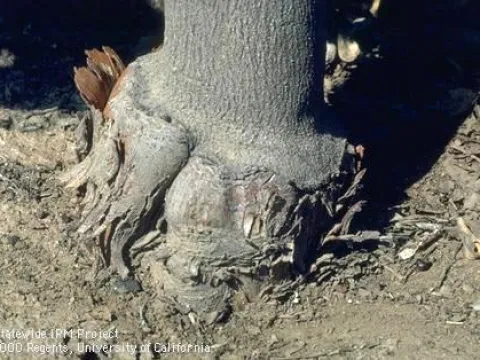
In cases of specific strain infections, trunk bark may show signs of cracking, scaling, or necrotic lesions, which impede sap flow and nutrient transport to the canopy.
- Delayed flowering and reduced fruit set.
- Gradual dieback of terminal shoots (tip dieback).
- General decline in tree vigor that does not respond to fertilization or irrigation improvements.
Favorable conditions for the development of the disease are linked to intensive citrus cultivation practices, where large-scale grafting facilitates the dissemination of the pathogen.
High temperatures during the growing season can stimulate the replication rate of the viroid within plant tissues, making visible symptoms more apparent in hot climates.
Infection spreads rapidly in nurseries, especially where maternal plant testing is insufficient and contaminated propagation material is utilized.
Agronomic factors, such as the failure to disinfect pruning shears and other tools, play a critical role in the horizontal transmission of the pathogen between neighboring trees.
Environmental stress, such as drought or improper water management, weakens the immune status of citrus trees, making them more susceptible to the severe manifestation of disease symptoms.
The economic impact of Citrus viroid lies in the significant reduction of crop yields, which, in advanced stages, can lead to losses of 50% or more of total production.
The decrease in fruit quality makes the produce unsuitable for the fresh fruit market, resulting in direct financial losses for citrus growers.
The disease causes premature aging and depletion of orchards, forcing producers to remove and replant trees much earlier than the expected commercial lifespan.
Infection of plantations complicates international trade, as many countries enforce strict phytosanitary protocols prohibiting the import of material from infected regions.
Because the infection is systemic and incurable, it threatens the long-term sustainability of the entire citrus operation, requiring costly orchard replacement strategies.
The cornerstone of management is the exclusive use of certified, virus-free planting material that has undergone rigorous laboratory testing via PCR (Polymerase Chain Reaction).
Strict adherence to tool disinfection protocols is mandatory: sanitizing shears and other equipment with sodium hypochlorite or alcohol-based solutions after working on each tree is essential.
Regular monitoring and surveillance of orchards enable early detection of initial infection signs, allowing for the isolation or removal of affected trees to prevent further spread.
The destruction of infected plants, including the root system, remains the only reliable method to eliminate an infection reservoir in commercial orchards or nurseries.
Establishing buffer zones and enforcing quarantine measures for imported plant material from endemic regions are vital to reducing the risk of introducing the pathogen into clean areas.