
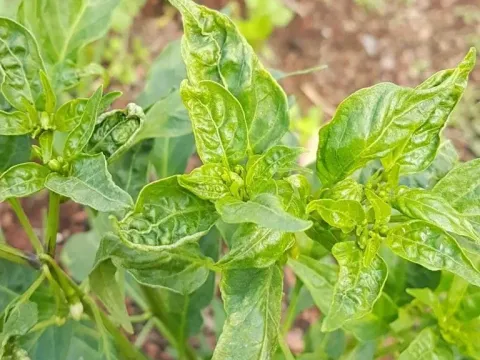
Pepper curly top virus
Begomovirus capsici
The causal agent of this disease is Begomovirus capsici, a virus within the Geminiviridae family. It is a persistent, circulative pathogen that relies entirely on the whitefly Bemisia tabaci for transmission.
What the section contains
Pepper curly top virus
The virus particles contain single-stranded DNA and invade the phloem tissues of the host plant. Once systemic infection occurs, the virus interferes with normal cellular replication and growth hormones.
Transmission happens when the whitefly feeds on the phloem sap of an infected plant, acquiring the virus, and then transferring it to a healthy pepper plant during its next feeding session.
Because the virus is not seed-borne and does not persist in the soil, the disease cycle is strictly linked to the presence and movement of the insect vector in the field or greenhouse.
Environmental stability of the virus is high within the plant host, but outside of living tissue, it degrades quickly, making vector management the cornerstone of disease epidemiology.
The primary symptom is the severe curling of the apical leaves. The leaves become stunted, distorted, and often exhibit a yellowish mosaic or chlorotic pattern between the veins.
Stunting is a hallmark of the disease; internodes are significantly shortened, giving the plant a shrubby or "rosette" appearance. The main stem may stop elongating entirely.
Floral development is usually severely affected, leading to bud drop or the formation of malformed flowers that fail to produce viable fruit.
If fruits do manage to develop, they are typically small, misshapen, and discolored, rendering them unsuitable for market standards. The texture of the leaves often becomes brittle.
- Downward or upward curling of apical leaves.
- Severe stunting and reduced internode length.
- Chlorotic or mosaic leaf discoloration.
- Floral abortion and reduced fruit set.
- Brittle leaf texture and abnormal plant structure.
The disease thrives in warm, dry weather conditions, which are optimal for the rapid population growth and flight activity of the whitefly vector.
Greenhouses create a high-risk environment as the protected conditions often lack natural predators, allowing whitefly populations to explode and spread the virus rapidly.
Weed management is critical, as many common weeds serve as symptomless reservoirs for both the Begomovirus and the whitefly population during the off-season.
Poorly managed nurseries are a common source of infection. Introducing virus-carrying seedlings into a clean field is the most common way for the disease to spread over large areas.
High-intensity light and heat can exacerbate the symptoms of curly top, as these conditions increase the plant's metabolic stress while accelerating the virus replication cycle.
The virus causes devastating economic losses by reducing fruit yield by up to 100% in heavily infested fields, as infected plants become unproductive.
The systemic nature of the virus means that once a plant is infected, it remains a permanent source of inoculum for other plants, necessitating the removal of the entire plant.
Reduced photosynthetic efficiency leads to overall plant decline, leaving it susceptible to secondary infections and reducing the plant's ability to withstand other abiotic stressors.
Marketability is effectively eliminated for infected crops, as the fruit quality is consistently poor, showing signs of severe malformation and lack of pulp development.
Large-scale outbreaks can lead to significant financial distress for agricultural operations, as there are no curative measures available once the symptoms appear.
The most effective strategy is the rigorous management of whitefly populations using integrated pest management (IPM) techniques, including systematic insecticide rotations.
The use of physical barriers, such as fine-mesh insect-proof netting in greenhouses, is highly recommended to prevent the introduction of vectors from the surrounding environment.
Strict sanitation practices, including the prompt removal and destruction of infected symptomatic plants, help to lower the viral load within the crop environment.
Selecting resistant or tolerant varieties of pepper is a key preventive measure, as it limits the impact of the virus even if minor vector pressure is present.
Strategic monitoring of whitefly populations using yellow sticky traps allows growers to apply chemical controls precisely when vector numbers reach a critical threshold.