
Pepper leaf curl virus
Begomovirus capsigondaense
The causative agent of the disease is a virus from the Begomovirus genus (family Geminiviridae). These viruses possess a single-stranded circular DNA genome and primarily affect Solanaceous crops in tropical and subtropical regions.
What the section contains
Pepper leaf curl virus
The virus is transmitted exclusively in a semi-persistent manner by its specific vector, the silverleaf whitefly Bemisia tabaci. The virus is not mechanically transmitted through sap or seeds, making the management of insect populations the only way to prevent infection.
Inside the plant, the virus moves through the phloem, systemically infecting all organs, which leads to the disruption of physiological processes such as photosynthesis and metabolism.
The genetic variability of begomoviruses allows them to adapt to new pepper cultivars, overcoming the resistance bred by plant breeders.
Identification of the pathogen is possible only under laboratory conditions using molecular genetic analysis methods, such as PCR, as symptoms can often mimic nutrient deficiencies.
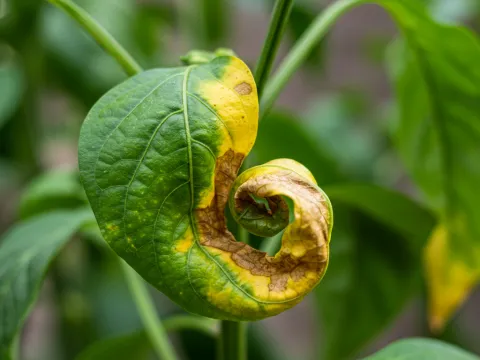
The first sign of infection is characteristic yellowing and chlorosis along the leaf veins, which eventually progresses to severe upward curling of the leaf lamina.
Plants infected at an early age show severe stunting, with shortened internodes forming a rosette shape at the top of the stem.
Leaves become brittle, thick, and often develop a leathery texture, which hinders the normal development of the canopy and reduces the total photosynthetic area.
Flowering is significantly reduced or ceases entirely upon viral infection, and flower buds often drop before reaching the fruit-set stage.
- Deformation of leaf blades
- Vein yellowing
- Plant stunting
- Flower and fruit drop
- Altered leaf texture
The key factor in virus spread is the high population density of the whitefly, which actively migrates during periods of drought and high temperatures.
The development of the disease is closely correlated with climatic conditions: dry and hot weather stimulates the reproduction of the vector, facilitating rapid spread of the infection across the field.
The presence of weeds around greenhouses or fields creates reservoirs for the vector to survive during the off-season, from where insects re-colonize pepper crops.
Poor crop rotation and the lack of physical isolation between new plantings and old infection sources significantly increase the risk of epiphytotics.
Failure to follow chemical treatment regulations against whiteflies leads to a rapid accumulation of viruliferous individuals capable of infecting thousands of plants in a short period.
Pepper leaf curl virus poses a serious economic threat to vegetable growers, as infected plants yield little to no marketable produce.
A significant reduction in fruit quality makes them unsuitable for market, and in cases of severe plantation infestation, yields can drop to critical minimums.
Beyond the direct losses in production, the costs of managing virus vectors significantly increase the overall cost of crop cultivation.
Infected areas become sources of primary inoculum for adjacent fields, requiring strict quarantine measures within the farm.
The long-term persistence of the virus in wild reservoirs complicates the prediction of disease outbreaks in subsequent seasons, forcing farmers to change their cropping patterns.
The primary protection strategy is based on strict control of the Bemisia tabaci population from the seedling stage using systemic insecticides.
Implementing agro-technical measures, such as installing insect-proof nets on greenhouses with mesh sizes that prevent whitefly entry, serves as the most effective barrier.
Regular weeding around fields and the roguing of severely infected plants at the very beginning of the disease help to limit the spread of the virus.
The use of resistant or tolerant pepper hybrids is the only way to minimize risks when complete eradication of the vector is impossible.
It is important to maintain temporal breaks between crop cycles and perform thorough disinfection of greenhouses after the season ends to eliminate residual insect populations.