
Xanthomoniasis
Xanthomonas spp.
Xanthomoniasis is a collective term for a variety of bacterial plant diseases caused by various species of the Xanthomonas genus. These are gram-negative, rod-shaped bacteria with polar flagella.
What the section contains
Xanthomoniasis
The pathogen is highly host-specific, with different species or pathovars adapted to infect specific crops, ranging from vegetables and ornamentals to cereal grains.
These bacteria invade plant tissues primarily through natural openings such as stomata, hydathodes, or through wounds caused by insects, hail, or agricultural machinery.
They possess the ability to survive in infected seeds, crop debris, and the rhizosphere of alternative host weeds, making their eradication from an agricultural site quite difficult.
A key biological feature is the secretion of extracellular polysaccharides, which create a slime or biofilm that protects the bacteria from desiccation and environmental stressors.
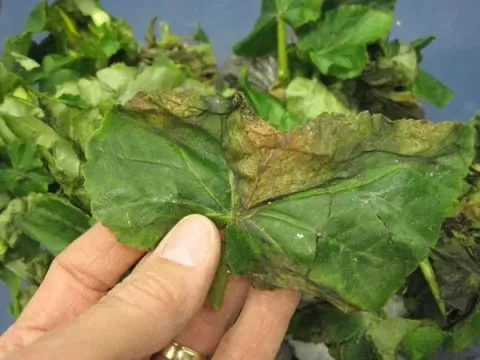
The primary symptom is the development of leaf spots that are often angular in shape, restricted by the leaf veins, giving them a distinctively geometric appearance.
Early stage lesions usually appear water-soaked or translucent, eventually turning brown, black, or necrotic as the tissue dies due to bacterial activity.
Yellow halos often form around these lesions, indicating the movement of bacterial toxins into surrounding healthy plant tissue.
Under humid conditions, bacterial ooze can be observed on the undersides of leaves, which appears as a sticky residue or a shiny film once it dries out.
In advanced cases, the infection can become systemic, leading to vascular wilting, stunted growth, and the development of cankers or lesions on stems and fruits.
Xanthomonas development is favored by high relative humidity (above 80%) and moderate to warm temperatures, typically between 25°C and 30°C.
Free moisture on leaf surfaces, caused by heavy rain, dew, or overhead irrigation, is critical for the bacteria to multiply and move across the plant canopy.
Physical injuries, even micro-abrasions caused by wind-blown sand or handling, significantly increase the risk of infection by providing easy access to the plant interior.
Seed-borne transmission is the most common way for the disease to spread over long distances and introduce the pathogen to new geographic areas.
Continuous cropping of susceptible varieties without adequate rotation allows the pathogen population to build up in the soil and crop debris over successive seasons.
The disease causes significant economic losses by reducing both yield quantity and the marketability of the harvested produce due to unattractive spotting.
Lesions on fruits and vegetables make them unmarketable, while systemic infections can lead to the total collapse and death of the plant during its productive phase.
Reduced photosynthetic capacity caused by extensive leaf necrosis leads to smaller, lower-quality fruits and a general decline in the plant's overall vigor.
In greenhouse environments, the rapid spread of Xanthomonas can lead to entire batches of seedlings being discarded, causing substantial financial losses.
Furthermore, produce infected with bacterial spots is prone to rapid secondary decay during storage and transit, drastically shortening shelf life.
The cornerstone of management is the use of high-quality, certified, and pathogen-free seeds, which effectively prevents the introduction of the disease.
Crop rotation remains a primary cultural control method, as it prevents the buildup of bacteria in the soil by alternating with non-host crops for 3 to 4 years.
Copper-based bactericides are commonly used in integrated pest management programs to provide a protective layer on the foliage and inhibit bacterial entry.
Strict sanitation practices, including the removal and destruction of crop residues, are essential to reduce the primary inoculum load for the next growing season.
Controlling insect vectors and managing irrigation methods, such as switching to drip irrigation to keep leaves dry, are effective strategies to minimize disease incidence.