
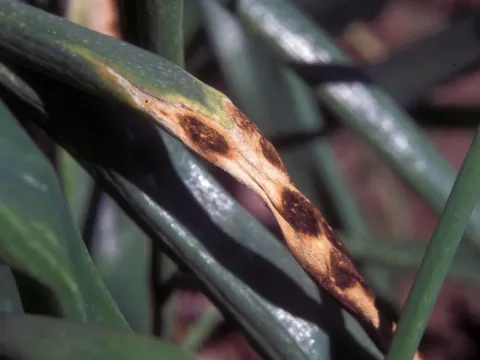
Stemphylium leaf spot
Stemphylium spp.
Stemphylium leaf spot is caused by various fungal species within the Stemphylium genus, most notably S. botryosum and S. vesicarium. These pathogens are classified as necrotrophic fungi that thrive by colonizing stressed or senescent plant tissues.
What the section contains
Stemphylium leaf spot
The fungus overwinters in infected crop debris, within the soil, and can also be seed-borne. It spreads primarily through airborne conidia, which are produced in large numbers and dispersed by wind, rain splashes, and agricultural machinery.
Infection begins when conidia germinate on the leaf surface under suitable moisture levels. The fungal germ tubes penetrate the epidermis directly or through natural openings like stomata, initiating the colonization process.
Once inside, the fungus secretes phytotoxins that induce tissue necrosis. These toxins are responsible for the localized cell death that characterizes the disease, facilitating the expansion of the fungal colony within the leaf lamina.
The life cycle is relatively short, allowing for multiple infection cycles within a single growing season. This rapid reproduction rate makes it a significant threat in high-humidity environments, potentially leading to widespread damage.
Initial symptoms of Stemphylium infection usually appear as small, dark brown, or black spots on the leaves. Unlike other foliar diseases, these spots are often surrounded by a distinct light-colored or yellow halo.
As the disease progresses, the lesions expand, becoming more irregular in shape. In many cases, the centers of the spots may turn lighter, but they typically lack the classic target-shaped concentric rings associated with Alternaria species.
Leaves with heavy infestation become chlorotic and eventually necrotic, leading to premature defoliation. In severe cases, the entire canopy of the plant can turn brown and dry out, significantly impairing its ability to perform photosynthesis.
Infection on stems appears as elongated necrotic lesions, which can weaken the structural integrity of the plant, potentially causing it to break or lodge. Fruit lesions, when present, are sunken and dark, often making the produce unmarketable.
The disease often spreads from the bottom of the plant upwards, as the lower canopy maintains higher humidity levels, creating an environment highly favorable for the fungal colonization of lower leaves.
The development of Stemphylium is heavily dependent on prolonged periods of leaf wetness. High relative humidity (typically above 80%) is required for the successful germination and infection processes of the fungal spores.
Temperatures ranging from 20°C to 28°C provide the optimum thermal environment for the growth of the pathogen. Within this range, the fungus can complete its infection cycle and produce new inoculum very quickly.
Poor ventilation and high plant density are major contributors to the spread of the disease. In greenhouse operations, condensation dripping onto leaves can exacerbate the severity of the infection.
Plants under physiological stress, particularly those suffering from nutritional deficiencies (such as low potassium) or water management issues, are much more susceptible to infection by Stemphylium spp.
Regular rainfall patterns, foggy mornings, and heavy dew contribute to the persistence of water on plant surfaces, which is the most critical driver for outbreaks of this fungal disease in agricultural fields.
The economic impact of Stemphylium leaf spot is primarily due to the loss of photosynthetic leaf area, which directly translates into reduced yields. Plants cannot accumulate the necessary energy to support fruit development.
Premature leaf drop exposes fruits to intense solar radiation, leading to sunscald. This significantly degrades the quality and shelf life of vegetables like tomatoes, peppers, and onions.
In cases of early-season infection, plant growth is severely stunted, which can lead to irregular stand establishment and reduced overall crop vigor, requiring replanting or intensive remedial care.
The presence of lesions provides entry points for secondary pathogens, such as soft rot bacteria, further increasing the risk of crop loss during storage and transportation.
Managing this disease entails significant additional costs, including frequent fungicide applications and extra labor for sanitation measures, which reduce the overall profitability of the farming operation.
Effective management begins with the use of certified, disease-free seed and the selection of resistant varieties whenever available. Proper crop rotation is essential to prevent the buildup of inoculum in the soil.
Sanitation practices, including the removal and deep burial or destruction of infected crop residues, are critical to reducing the primary inoculum source for the following growing season.
Managing the greenhouse environment by maintaining appropriate humidity levels and ensuring good air circulation is vital. Drip irrigation is preferred over overhead watering to keep foliage dry.
Integrated Pest Management (IPM) should be applied to keep plants healthy, as well-nourished crops show higher resistance to fungal colonization and damage from the disease.
- Application of protective and systemic fungicides (e.g., copper-based, strobilurins, or SDHIs).
- Scouting fields regularly to detect early symptoms for timely intervention.
- Balanced fertilization to optimize plant vigor and minimize tissue stress.
- Control of insect pests that damage leaf surfaces and facilitate fungal entry.