
Yucatan lethal yellowing
Yucatan lethal decline phytoplasma
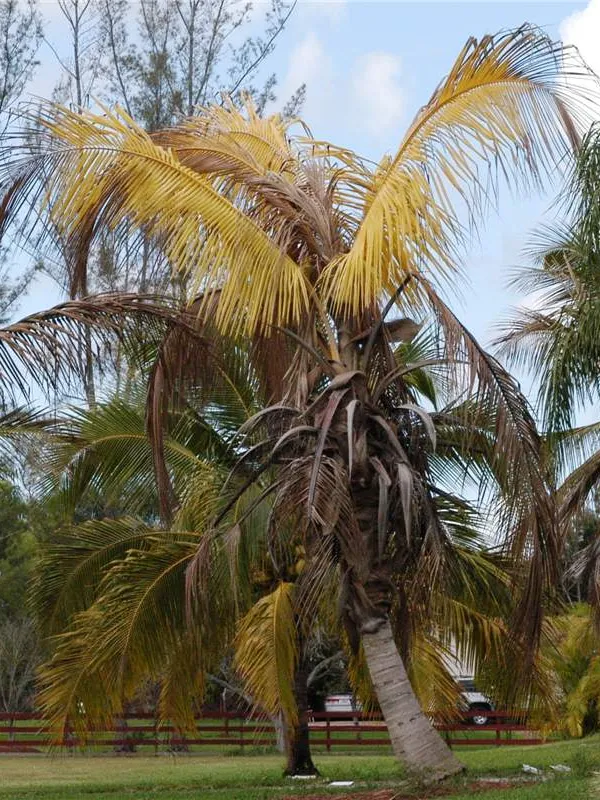
Description
Symptoms
The first symptom is the premature shedding of fruit, ranging from young buttons to fully mature coconuts or dates. This occurs long before the foliage shows any signs of distress.
Another early warning sign is the necrosis of new inflorescences. The flowers begin to turn black or dark brown starting from the tips, which is a clear indicator that the tree's internal circulation is failing.
Progressive yellowing of the fronds is the most visible stage. Older, lower leaves turn yellow, and this coloration gradually moves up the crown until the entire foliage is affected and eventually turns brown and brittle.
The collapse of the spear leaf (the newest, central growing tip) follows, signaling that the palm is in its final stages. Once the growing point dies, the crown collapses, leaving only the bare, dead trunk standing.
The overall speed of deterioration is alarming. Depending on the species, a palm can go from appearing healthy to being completely dead within three to six months once initial symptoms appear.
Pathogen
Yucatan lethal yellowing is a devastating plant disease caused by a phytoplasma, a type of specialized, wall-less bacterium that inhabits the phloem tissue of palm trees. By colonizing the vascular system, the pathogen disrupts the transport of essential nutrients.
The primary vector for this disease is the planthopper Myndus crudus. These insects acquire the phytoplasma while feeding on the sap of infected trees and transmit it to healthy palms as they move through the canopy.
Phytoplasmas are systemic pathogens, meaning they spread throughout the entire vascular network of the host plant. Once established, they cause irreversible damage to the phloem, eventually leading to the plant's death.
The disease is part of a complex group of lethal yellowing-type diseases affecting palms worldwide. Due to their nature, they cannot be eradicated using traditional fungicides, making them extremely difficult to manage in tropical environments.
Research confirms that the pathogen's ability to survive within the insect vector and the host palm simultaneously makes it one of the most challenging threats to palm diversity in the Yucatan region and beyond.
Conditions for development
The spread of the disease is highly dependent on the population density of the Myndus crudus planthopper. Humid, tropical climates provide the ideal conditions for these insects to thrive and reproduce.
Secondary vegetation plays a crucial role in the disease cycle. Grasses and various weeds surrounding palm plantings serve as reservoirs for the insect vectors, maintaining a constant presence of the disease in the area.
Monoculture plantings of susceptible palm species create a perfect corridor for the disease. In such areas, the lack of host diversity allows the vector to move easily from one tree to the next, causing rapid infection.
Human activity, specifically the transportation of infected but symptomless nursery stock, is the primary driver of geographic spread. Lax quarantine measures often allow the pathogen to enter previously disease-free regions.
Environmental stress, such as improper irrigation or soil nutrient imbalances, can further weaken the trees' natural defenses, making them more susceptible to infestation by the insect vector.
Why it matters
Yucatan lethal yellowing poses a severe economic threat to both the agricultural industry and the tourism sector. The total loss of mature palm trees requires significant investment in removal and replanting.
The disease can cause total loss of plantations in endemic regions, making it impossible to continue cultivation of susceptible species. The impact on biodiversity is also profound as native species are often affected.
The removal of dead trees is a major operational challenge. Infected debris must be managed carefully to ensure that it does not become a breeding ground or source of secondary transmission.
The loss of iconic palm landscapes significantly affects the aesthetic and recreational value of coastal areas, leading to long-term negative effects on local economies that rely on natural scenery.
Given its rapid spread, the disease leaves little room for hesitation. Failure to manage infected areas can lead to a domino effect, destroying palm populations across large geographic distances.
Protection
There is currently no cure for palms infected with the phytoplasma responsible for Yucatan lethal yellowing. Consequently, management strategies are strictly limited to prevention and containment.
Prompt removal of symptomatic trees is essential. Infected palms must be cut down and destroyed as soon as they are identified to reduce the pathogen load in the immediate environment and minimize the vector population.
The use of resistant or tolerant palm cultivars is the only sustainable long-term solution. Planting strategies that favor such varieties help ensure the survival of palm-based landscapes in affected areas.
Chemical control of the Myndus crudus planthopper is generally ineffective as a sole control measure. It is only useful in very specific, high-value settings and cannot prevent the spread on a landscape scale.
Stringent phytosanitary regulations and quarantine programs for plant movement are critical. By preventing the transport of infected materials, authorities can effectively slow the disease's movement into new territories.
Discussion
No discussions yet — be the first.