
Xylaria hypoxylon
Xylaria hypoxylon
Description
Symptoms
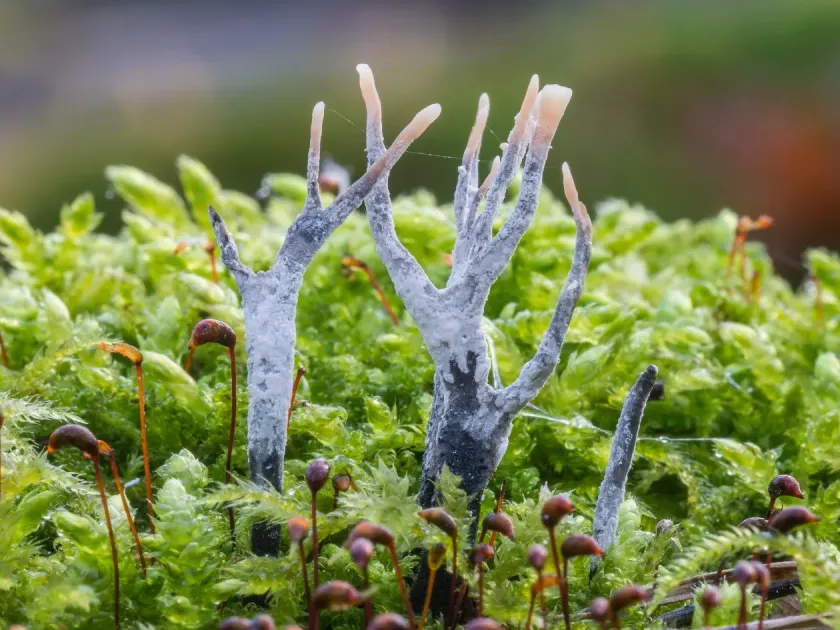
The most visible sign of infection is the presence of the fungus's fruiting bodies. These antler-shaped, black structures with white, powdery tips are typically found on the bark of infected trees or stumps during the autumn months.
Internally, infected wood shows classic symptoms of white rot. The wood loses its original strength and density, becoming brittle and turning a pale, bleached color as the fungus consumes the lignin.
Peeling away the bark of an affected tree often reveals white or yellowish mycelial cords known as rhizomorphs. These cords penetrate deeply into the cambium and xylem, facilitating the spread of the fungus throughout the trunk.
Visible decline in tree health, such as the dying back of individual branches or the entire crown, is a hallmark of the infection. This occurs as the fungal growth disrupts the tree's vascular system, hindering the transport of water and nutrients.
- Branching black-and-white fruiting bodies on the bark.
- Structural softening and brittleness of the wood.
- White mycelial mats or cords beneath the bark.
- Gradual crown dieback and branch failure.
- Premature yellowing and shedding of leaves.
Pathogen
Xylaria hypoxylon, commonly known as candle snuff fungus, is a member of the Xylariaceae family. It typically acts as a saprotroph, decomposing dead wood, though it can opportunistically invade weakened or damaged living trees, leading to white rot.
The fungus produces distinctive branching, antler-like stromata. During its early asexual stage, these structures are covered in a white, powdery layer consisting of conidia, which are released to propagate the fungus.
As the fungus matures, the stromata darken to a deep black color. Later, it develops perithecia—small, embedded structures that release ascospores, allowing the pathogen to spread via wind over significant distances.
Xylaria hypoxylon possesses powerful enzymes capable of breaking down lignin and cellulose. This enzymatic activity is what makes it a highly effective decomposer, gradually compromising the structural integrity of the wood it inhabits.
The biology of this fungus is intrinsically linked to dead organic matter. The presence of decaying stumps, fallen logs, and dead branches in an orchard or forest creates a reservoir for the pathogen to thrive and maintain its presence.
Conditions for development
The proliferation of Xylaria hypoxylon is highly dependent on humidity levels. It thrives in damp environments, particularly after prolonged periods of rainfall, which keep tree bark moist and receptive to spore germination.
Infection generally begins at points of injury. Damage caused by frost cracks, sunscald, pruning wounds, or wood-boring insects provides the necessary gateway for the fungal spores to colonize the tree.
High plant density and poor ventilation exacerbate the risk. When air circulation is restricted, moisture remains trapped within the tree canopy for longer periods, providing the perfect conditions for fungal spore development.
Dead wood left in the vicinity of healthy trees serves as a major source of inoculum. Without proper sanitation, these sources continuously release spores that can infect neighboring trees during periods of optimal weather.
The fungus is most active during the moderate temperatures of late summer and autumn. These conditions, combined with high atmospheric humidity, allow the fungus to rapidly produce spores and expand its mycelial network.
Why it matters
The primary hazard posed by Xylaria hypoxylon is the structural weakening of the host tree. As the fungus consumes the heartwood, the risk of branch breakage or total windthrow increases significantly, posing a danger to surrounding property.
In orchards, the presence of this fungus leads to reduced fruit production and overall vigor. The tree redirects energy away from reproduction to fight the infection, ultimately leading to a decline in orchard profitability.
Once a tree is deeply colonized, it becomes an irreversible drain on resources. The fungus essentially hollows out the tree, making recovery impossible and necessitating the removal of the tree to protect the rest of the orchard.
In nursery settings, the pathogen represents a severe risk to young stock. Improper sanitation can lead to rapid spread through the seedling beds, potentially causing significant financial losses before the symptoms are clearly recognized.
Infected trees become long-term sources of fungal spores. Because the fungus persists on dead wood, it can continue to threaten other trees in the area for several years if the initial infection is not addressed promptly.
Protection
Strict sanitation is the most effective control measure. All infected wood, including dead branches and old stumps, must be removed and destroyed to minimize the overall spore count in the environment.
Pruning should be done carefully to avoid unnecessary damage. All pruning cuts should be sealed with appropriate wound dressings, ideally those containing fungicides, to prevent opportunistic colonisation by fungal spores.
Maintaining tree health through proper fertilization and watering is vital. A vigorously growing tree has a better natural defense mechanism, allowing it to compartmentalize wounds and resist fungal invasion more effectively.
If the infection is caught at an early stage, surgically removing the affected tissue until clean, healthy wood is reached can sometimes save the tree, provided the wound is then treated with copper-based fungicides.
Preventative measures such as trunk whitewashing can protect bark from sun damage and cracking, effectively removing potential entry points for the fungus and promoting overall garden hygiene.
Discussion
No discussions yet — be the first.