
Zygophiala blotch
Zygophiala
Description
Symptoms
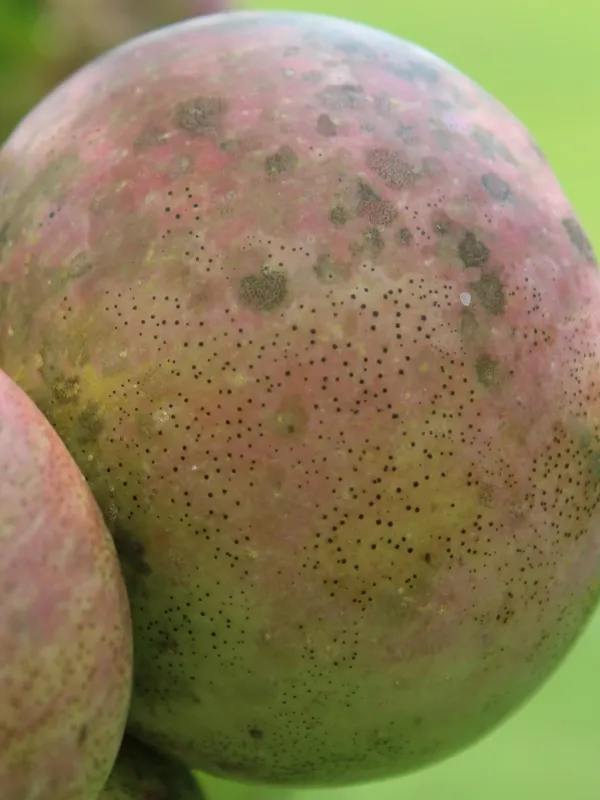
The hallmark of the infection is the development of distinct, often web-like or reticulate dark spots on the skin of apples, pears, and other fruits.
These spots frequently appear as dark, smudgy blemishes that can obscure the natural color and finish of the fruit skin, creating a dirty appearance.
While individual spots may start as tiny specks, they often coalesce into larger, irregular patches that cover significant portions of the fruit surface.
In humid conditions, the mycelial growth may become more prominent, creating a fine, lace-like pattern that is visible upon close inspection.
The blotches are non-necrotic, meaning they do not result in soft decay; however, their presence renders the fruit aesthetically unacceptable for high-end markets.
Pathogen
The causative agent of the disease is the fungus Zygophiala jamaicensis, which is widely recognized as a surface-dwelling pathogen of fruit trees.
This fungus typically survives the winter on plant debris, bark, or even on twigs, waiting for favorable conditions to produce conidia for dispersal.
It acts primarily as a superficial colonizer, meaning it does not invade the internal tissues of the fruit, but rather damages the aesthetic quality of the cuticle.
The fungus is highly resilient and thrives by utilizing the nutrients available in the waxy layer of the fruit, often appearing during the late maturation stage.
Often associated with complex fruit surface infections, Zygophiala spreads rapidly through water splashing and humid air currents during the summer season.
Conditions for development
Zygophiala blotch is heavily dependent on moisture; therefore, prolonged rain, high humidity, and frequent dew are the primary drivers of disease outbreaks.
Orchards with high density and poor canopy management are significantly more susceptible, as the lack of airflow keeps fruit surfaces wet for longer periods.
Low-lying areas of the orchard that experience heavy morning mists or foggy conditions provide an ideal microclimate for the fungus to establish infection.
The risk of infection increases as fruits approach maturity and their cuticle composition changes, making them more receptive to fungal colonization.
Uncontrolled weed growth and dense understory vegetation can further increase local humidity, contributing to the development and spread of the pathogen.
Why it matters
The primary damage is economic, as the fruit, while still edible, fails to meet quality standards for fresh market consumption and international export.
The aesthetic degradation leads to significant post-harvest losses and increased costs associated with sorting and grading the affected produce.
A compromised cuticle can lead to increased transpiration rates, causing the fruit to lose firmness and weight during prolonged storage periods.
The surface damage may also facilitate the secondary infection of opportunistic decay organisms, resulting in storage rot during cold-chain logistics.
Additional costs incurred for extra fungicide applications and specialized washing procedures reduce the overall profitability of the fruit-growing operation.
Protection
Effective management begins with vigorous canopy management, including pruning to improve air circulation and sunlight penetration throughout the tree.
Sanitation practices are vital, such as the removal of overwintering plant debris and maintaining a clean orchard floor to reduce the initial spore count.
Scheduled fungicide treatments, applied strategically during high-risk moisture events, remain the most reliable method for controlling the spread of the disease.
Integrated Pest Management (IPM) programs should focus on monitoring environmental factors and timing interventions before the fungus becomes well-established.
- Canopy thinning to promote rapid drying of fruit surfaces.
- Removal of infected debris and regular orchard sanitation.
- Strategic timing of fungicide applications.
- Monitoring humidity levels to predict infection risk.
Discussion
No discussions yet — be the first.