
Xerocomus hortonii
Xerocomus hortonii
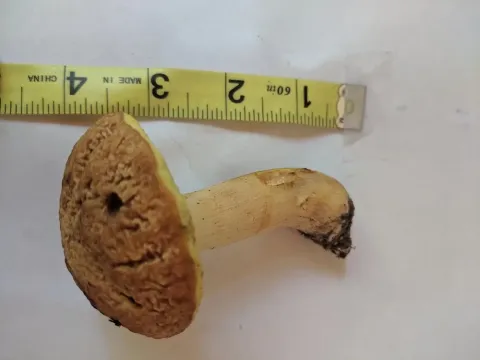
Xerocomus hortonii is a distinct member of the Boletaceae family, often recognized by its tubular hymenophore and specific morphological features. The cap usually measures between 3 and 8 centimeters in diameter, displaying shades ranging from yellow-brown to dark brown.
What the section contains
Xerocomus hortonii
The texture of the cap is typically dry and matte, often showing small fissures that expose the lighter flesh underneath as the mushroom matures. This dry surface distinguishes it from some of its slimier relatives in the bolete group.
The pore surface is yellow, often bruising blue or green when touched or damaged. This characteristic staining is a primary field mark used by mycologists and enthusiasts to identify the species in the field.
The stipe is cylindrical and solid, often colored in yellowish hues with a slight brownish tint. It lacks the complex reticulated pattern seen on many other boletes, providing a clearer look at its somewhat smooth or finely striated surface.
The internal flesh is usually pale and may show a faint discoloration when exposed to air. Its scent is mild and earthy, typical for edible-type boletes, making it a subject of interest for both scientific study and foraging enthusiasts.
It is important to clarify that Xerocomus hortonii is not a plant pathogen and does not cause diseases in crops or agricultural plants. It exists as a beneficial fungal organism within the forest ecosystem.
As a mycorrhizal fungus, it contributes to the nutrient exchange between soil and trees. It does not infect plants; rather, it creates symbiotic networks that support overall forest health and soil stability.
This fungus flourishes in temperate forest environments, particularly in areas with rich organic leaf litter and consistent humidity. It is frequently associated with coniferous and deciduous trees, establishing mycelial connections that facilitate growth.
Optimal fruiting occurs during periods of moderate temperatures and adequate rainfall, generally spanning from late summer to mid-autumn. Environmental stressors, such as prolonged drought, can limit the appearance of visible fruiting bodies.
Since Xerocomus hortonii is not a pathogen, it poses no harm to cultivated plants or forest health. In fact, it is considered a positive indicator of soil health and biodiversity in woodland regions.
There are no recorded instances of this fungus causing agricultural damage. It is entirely safe for the surrounding vegetation and does not require any pest or disease control interventions.
No protection or control measures are necessary for Xerocomus hortonii. As it is a natural component of the woodland, it does not threaten agricultural practices or gardens.
Conservation of its natural habitat, including the maintenance of healthy forest soils and organic matter levels, is the only factor relevant to the presence of this mushroom in the environment.