
Xerocomus silwoodensis
Xerocomus silwoodensis
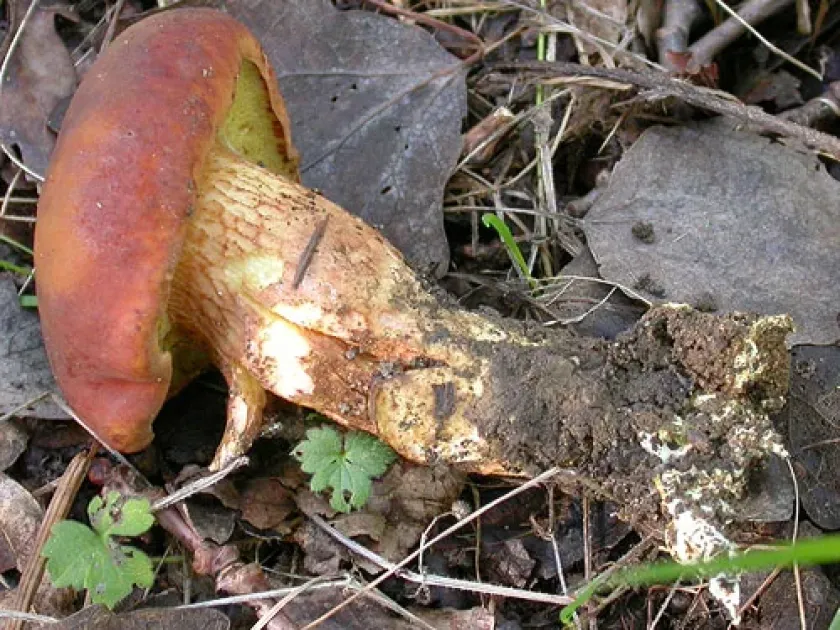
Description
Symptoms
Xerocomus silwoodensis is a member of the bolete family, characterized by a brownish, velvety cap that can occasionally develop small cracks as the fruit body matures and dries out.
The stem is generally robust, displaying yellowish to reddish hues, which serves as an important visual cue for identification. The texture of the stem is relatively firm, and it does not typically show signs of decay.
The pore surface is yellow when young, turning to a distinct olive-green shade as the spores develop. The pores are relatively large and angular, making them easy to spot upon close inspection.
When sliced, the flesh may show a mild blue staining reaction. This is a common chemical response in many Xerocomus species, involving the oxidation of compounds when exposed to the air.
Spore prints are olive-brown, reflecting the color of the mature tube layer. These microscopic details are essential for distinguishing this specific species from other lookalikes in the genus.
Pathogen
It is critical to clarify that Xerocomus silwoodensis is not a plant disease or a pathogen. It is a mycorrhizal fungus that forms beneficial symbiotic relationships with tree roots.
This fungus does not infect healthy plant tissues, nor does it cause rot or wilting in agricultural crops or forest trees. It functions as an essential partner in the soil ecosystem.
By extending the reach of root systems, the fungal mycelium helps trees absorb water and nutrients, proving to be an asset rather than a detriment to the host plant's health.
There is no evidence to suggest that this species causes economic damage. On the contrary, its presence is a sign of a well-functioning, healthy mycorrhizal network in the forest soil.
Misidentifying this species as a plant disease is a misconception that likely arises from the general confusion surrounding the role of fungi in forest health management.
Conditions for development
This species thrives in deciduous forest environments where it can form symbiotic associations with native tree species. It requires consistent moisture levels and a specific soil pH to develop.
The fungal mycelium prefers areas with rich organic leaf litter, which provides the necessary carbon sources for its initial growth phase before establishing the mycorrhizal link.
Optimal development usually occurs during temperate weather conditions with moderate rainfall. Extreme drought or soil compaction can significantly inhibit the appearance of fruiting bodies.
Dispersal is primarily achieved through airborne spores. These spores require specific environmental conditions to germinate and successfully colonize the roots of host trees in the vicinity.
As an indicator species, its presence suggests that the local ecosystem remains relatively undisturbed by harsh chemicals or significant industrial pollution that could harm soil fungi.
Discussion
No discussions yet — be the first.