
Xerocomus ripariellus
Xerocomus ripariellus
Description
Symptoms
Xerocomus ripariellus is a small to medium-sized mushroom species belonging to the Boletaceae family. It is distinct due to its physical appearance, which often attracts interest among mycologists and mushroom enthusiasts.
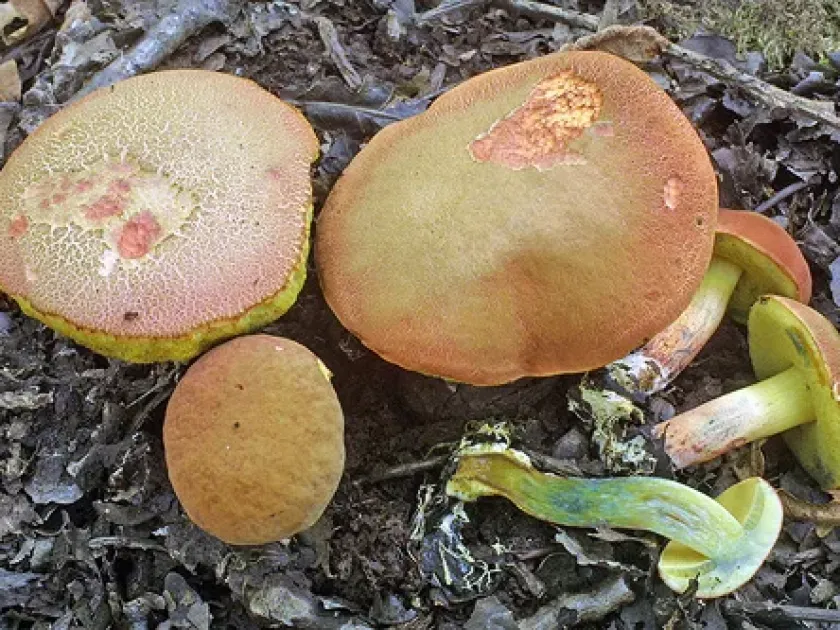
The cap typically ranges from 3 to 8 centimeters in diameter and often shows a characteristic cracking pattern on its surface. Under the cracks, the flesh reveals a subtle reddish or pinkish hue, which is a key diagnostic feature for the species.
The stipe is usually cylindrical, often yellowish with reddish punctation or streaks. This coloration pattern differentiates it from other common boletes found in similar environments.
The pore surface is initially yellow and transitions to an olive-greenish shade as the mushroom matures. When bruised or cut, both the flesh and the pores typically exhibit a slow blue staining reaction.
The overall fragrance is mild and pleasant, typical of forest boletes. Under microscopic analysis, the spores are olive-brown in color, which helps in confirming the species identity during professional surveys.
Pathogen
It is critical to note that Xerocomus ripariellus is not a plant pathogen or a disease. It is a mycorrhizal fungus that exists in a symbiotic relationship with trees and is not responsible for any agricultural damage.
The species does not attack living plant tissues and does not cause decay, rot, or wilting in trees or agricultural crops. It lacks the biological mechanisms to infect plant cells or cause systemic plant diseases.
In forest ecosystems, this fungus acts as a partner to trees, extending the reach of their root systems to gather water and minerals, which significantly boosts the health and development of the host trees.
There are no known agricultural reports of this species acting as a pest. Consequently, no plant protection measures, pesticides, or biological controls are required or recommended for this organism.
Classifying this fungus as a "plant disease" would be scientifically incorrect as it does not negatively impact the life cycle of its host vegetation. It remains a beneficial organism in natural forest habitats.
Conditions for development
The development of Xerocomus ripariellus fruit bodies is strictly dependent on specific forest conditions, particularly humidity and soil temperature. It thrives during the summer and autumn months.
The species is commonly found in riparian areas, hence its specific epithet 'ripariellus'. It favors environments near water bodies where moisture levels in the forest litter remain relatively stable.
This fungus predominantly forms mycorrhizal associations with broad-leaved trees like oaks and beeches. The presence of these host trees is essential for its survival and growth in the forest floor.
The preferred soil type consists of well-drained, nutrient-rich substrate. It does not colonize overly waterlogged or stagnant soils, preferring the edges of slopes or slightly elevated ground near water.
Temperature plays a crucial role, with warm weather following sufficient rain being the primary trigger for the rapid emergence of fruiting bodies. It requires a balanced ecosystem to maintain a healthy mycelial network.
Discussion
No discussions yet — be the first.