
Xerocomus truncatus
Xerocomus truncatus
Description
Symptoms
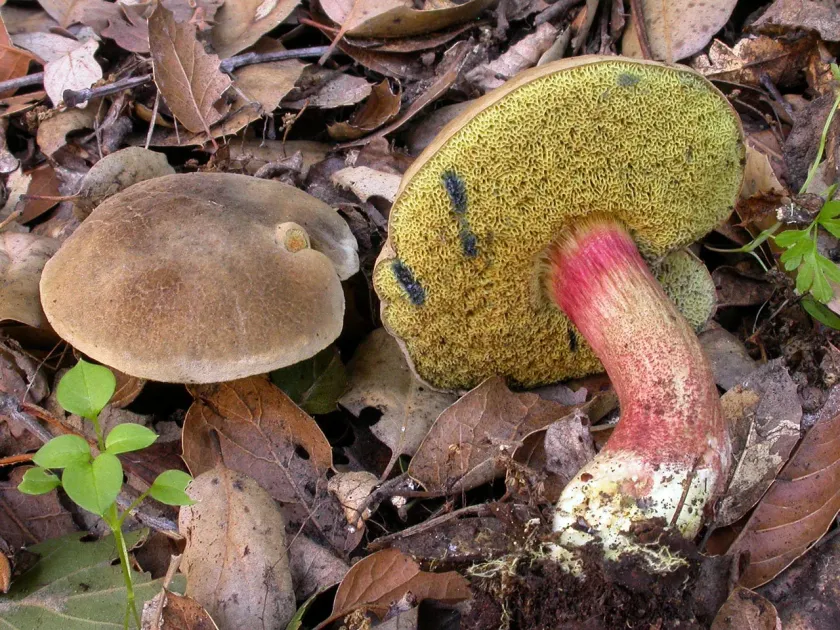
The fruit body of Xerocomus truncatus typically features a cap measuring between 3 to 8 centimeters in diameter, which starts convex and matures to a flatter shape.
The cap surface is notably velvety to the touch and tends to be dry, often developing characteristic cracks when humidity levels are low in the forest environment.
The coloration of the cap ranges from olive-brown to ochre or dark brownish tones, depending on the specific soil conditions and exposure to sunlight.
The pore surface is bright yellow and exhibits a distinctive blue or greenish-blue bruising reaction when pressed or subjected to mechanical damage.
The stipe is cylindrical or slightly tapered at the base, typically firm, colored in shades of yellow or red, and sometimes displays a fine surface reticulation.
Pathogen
It is crucial to clarify that Xerocomus truncatus is not a plant pathogen; it is a fungal species belonging to the Boletaceae family.
This species functions as a mycorrhizal fungus, establishing a mutually beneficial symbiotic relationship with the root systems of various forest trees.
The fungal mycelium integrates with the tree roots, assisting the plants in the uptake of water and essential mineral nutrients from the surrounding soil.
The reproductive strategy involves the production of spores within the tubular layer, which are dispersed by wind to colonize suitable substrates.
The scientific classification of Xerocomus truncatus is determined by microscopic analysis of spores and the unique morphological traits of the fruiting bodies.
Conditions for development
The species prefers moist forest environments, particularly those with a significant layer of leaf litter or pine needles providing consistent moisture.
Optimal fruiting typically occurs during seasons characterized by abundant rainfall and high humidity, which favor the development of the fungal network.
The fungus is commonly found in habitats with acidic soils, such as pine woods and mixed forest stands within temperate climatic zones.
The ideal temperature range for the development of fruit bodies is generally between +15 and +22 degrees Celsius, with growth slowing in cold weather.
It thrives in areas with adequate airflow, including forest edges, clearings, and along trails where the ground warmth promotes mycelial activity.
Why it matters
Xerocomus truncatus is not harmful to agricultural crops, forest plantations, or ornamental plants, as it lacks any pathogenic mechanism.
There are no documented cases of this species causing disease, rot, or decay in living plant tissues, making it harmless to economic flora.
Its ecological function is strictly beneficial, contributing to the health and vitality of the forest by strengthening tree root systems.
Consequently, it is not classified as a pest or a causative agent of plant disease, and it does not represent an economic threat to cultivation.
The presence of this fungus is considered a sign of a healthy, functioning forest ecosystem rather than a risk to be managed or eliminated.
Protection
There are no control measures or protection strategies required for this species, as it is neither a pest nor a threat to plant health.
In nursery management, the presence of mycorrhizal fungi is often encouraged to support the vigorous growth of tree seedlings.
If population density needs to be reduced for landscaping purposes, simple site management techniques like improving soil drainage are sufficient.
Prevention of overgrowth involves managing the accumulation of organic debris, but total eradication is generally neither necessary nor advisable.
Maintaining the natural balance of the soil microflora is essential, as the removal of such fungi can inadvertently hinder tree development.
Discussion
No discussions yet — be the first.