
Xeromphalina campanella
Xeromphalina campanella
Description
Symptoms
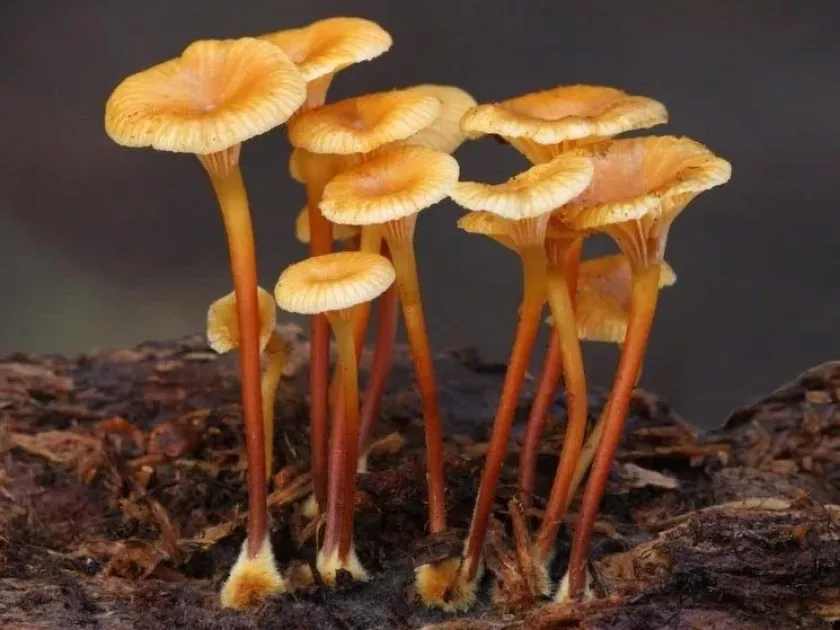
Xeromphalina campanella is easily identified by its dense clusters of small, bell-shaped fruit bodies growing on wood.
The caps typically exhibit a yellowish-brown or ochre coloration, often turning darker as the fruiting bodies mature.
Evidence of the fungus inside the wood is usually represented by a white to yellowish mycelial network spreading through the tissue.
The infected wood shows signs of advanced decay, becoming friable and showing a brownish discoloration typical of brown rot.
Fruiting bodies emerging from the wood surface serve as a visual indicator of deep internal colonization by the fungal pathogen.
Pathogen
The pathogen is Xeromphalina campanella, a basidiomycete fungus known for its role in wood degradation.
It functions as a saprotrophic organism, primarily targeting decaying conifer wood and stumps in temperate forests.
The disease mechanism involves the secretion of specialized enzymes that break down cellulose while leaving lignin largely intact.
Spore dispersal occurs through air currents, allowing the fungus to rapidly occupy new substrates across forested areas.
This fungus is highly adapted to acidic wood environments and can persist for many years within a log or stump.
Conditions for development
High moisture levels are the most critical requirement for the germination of spores and the development of fruit bodies.
Mild temperatures ranging between 15°C and 22°C significantly accelerate the metabolic activity of the fungus.
Shaded environments with minimal airflow provide a stable microclimate that prevents the drying out of the mycelium.
Dead wood, fallen branches, and stumps are the primary substrates that facilitate the spread of the fungal colony.
Injury to the living bark of trees provides easy access for the fungus to establish itself in the softer internal wood.
Why it matters
The main impact is the rapid structural degradation of wood, rendering timber useless for construction or industrial use.
The weakening of tree trunks and root systems makes the trees susceptible to windthrow and potential collapse.
The accumulation of decayed organic material contributes to increased forest fire risks during dry seasons.
If left unmanaged, the fungus can significantly reduce the overall quality and commercial value of standing timber in a forest.
Ecologically, while it helps recycle nutrients, it can be detrimental when it spreads to valuable, ornamental, or rare tree species.
Protection
Sanitation is the primary control method, involving the regular removal of deadwood, stumps, and fallen trees from the area.
Proper forest management, including thinning and clearing debris, reduces the available substrate for fungal colonization.
Timber should be stored in raised, well-ventilated stacks to ensure it remains dry and resistant to fungal invasion.
Protective wound dressings can be applied to trees that have suffered mechanical damage to prevent opportunistic infection.
- Monitor forest patches for early signs of fruit body growth
- Keep the forest floor clear of excess organic logging waste
- Use professional fungicides when protecting high-value woody plants
Discussion
No discussions yet — be the first.