
Xeromphalina cauticinalis
Xeromphalina cauticinalis
Description
Pathogen
Xeromphalina cauticinalis is a mushroom species belonging to the Mycenaceae family. From an agricultural standpoint, it is not a plant pathogen; it is classified as a saprotrophic fungus.
The organism specializes in the decomposition of dead organic matter, primarily focusing on coniferous needles and woody debris. It does not infect or cause diseases in healthy agricultural crops or fruit-bearing trees.
Labeling this species as a plant disease is a misconception, as its biological life cycle is strictly limited to mineralizing non-living biological remains, making it a vital decomposer rather than an aggressor.
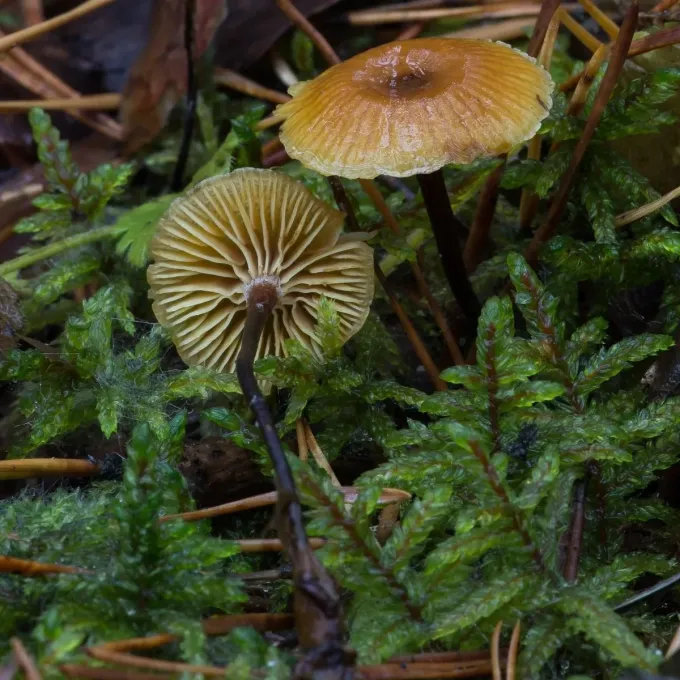
The fungus is morphologically distinct, featuring small fruiting bodies with a yellowish-brown cap and a stem known for its acrid taste. Its mycelium actively permeates dead substrate, breaking down polymers.
In professional agricultural and horticultural settings, this fungus is rarely observed, as standard soil management and vegetation control practices typically eliminate the dead organic debris that this species requires to survive.
Conditions for development
The development of Xeromphalina cauticinalis is intrinsically linked to moist forest environments, especially those dominated by coniferous tree species. High humidity levels are essential for the formation of its fruiting bodies.
Optimal conditions for growth include moderate temperatures ranging from +12 to +20 degrees Celsius. Mass emergence of fruiting bodies is most frequently observed in the autumn season following heavy rainfall.
The substrate required by this fungus consists of fallen conifer needles and decaying twigs. It lacks the enzymatic pathways necessary to attack the immune systems of healthy, living plants.
A soil environment with low acidity and a significant presence of forest litter provides the ideal ecological niche for the mycelium to proliferate, explaining its absence in highly managed or cultivated fields.
Spore dispersal occurs primarily through wind currents, which allows the fungus to efficiently colonize suitable patches of dead organic matter across forest ecosystems during favorable environmental conditions.
Why it matters
Xeromphalina cauticinalis poses no threat to agricultural productivity. Since it is not a pathogen, it does not induce symptoms such as wilting, chlorosis, or necrotic lesions in cultivated plant species.
The economic value of this fungus is strictly ecological. As a reducer, it contributes significantly to the soil's nutrient cycle by transforming complex organic matter into minerals that plants can absorb.
Any confusion regarding its status as a plant disease likely stems from its visual similarity to wood-rotting fungi, but it does not possess the capacity to invade or destroy living tissue in horticultural settings.
There are no recorded instances of this fungus causing losses in vegetable, grain, or orchard crops. It is widely considered harmless and even beneficial to the natural health of the soil in forest environments.
In summary, the species has no negative impact on agricultural operations and does not require management or suppression strategies within farm or garden ecosystems.
Protection
There is no need for control measures against Xeromphalina cauticinalis because it is not a pest or a disease agent. The application of fungicides against saprotrophs is scientifically unnecessary.
If management of the forest floor or ornamental garden debris is desired, standard sanitation practices—such as removing excess leaf litter or improving soil drainage—are sufficient to discourage fungal growth.
Maintaining proper plant nutrition and ensuring that crops are grown in environments with optimal soil aeration helps preserve the natural balance of microorganisms without requiring chemical interference.
Agronomic guidelines focus on supporting the health of the primary crop, and because this fungus does not compete with or damage crops, it is simply ignored in integrated pest management protocols.
Biological equilibrium in the soil is usually maintained by natural competition among various fungi and bacteria, which effectively regulates the population of saprotrophic species like X. cauticinalis.
Discussion
No discussions yet — be the first.