
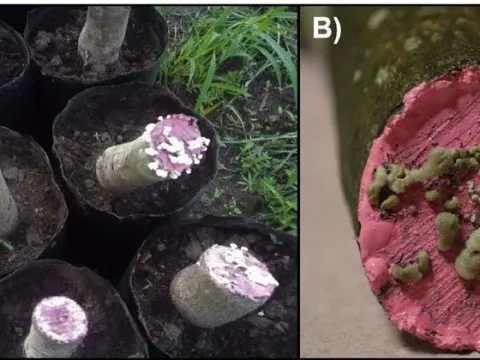
Trametes corrugata
Trametes corrugata
Trametes corrugata is a wood-rotting fungus belonging to the Basidiomycota division. It functions primarily as a saprotroph, but can act as a facultative parasite on stressed or weakened trees.
What the section contains
Trametes corrugata
The fungus invades the wood through wounds, bark crevices, or unhealed pruning cuts. It secretes enzymes that break down lignin and cellulose, fundamentally altering the structural integrity of the timber.
Fruiting bodies of this species are often leathery or corky, appearing as shelf-like brackets on trunks. The surface is distinctly wrinkled, providing a diagnostic feature for identification.
The fungus maintains its presence within the internal tissues of the tree, spreading its mycelium through the xylem and phloem, which progressively disrupts the tree's vascular transport system.
Like many white-rot fungi, it plays a complex role in nutrient cycling in forests, but in managed landscapes, it is considered a significant pathogen that threatens the longevity of individual trees.
The most prominent sign is the appearance of multi-layered, leathery fungal brackets on the tree bark. These are often found near old wounds or damaged sections of the trunk.
Internal wood decay manifests as white rot, where the timber loses its weight and structural strength, becoming soft, brittle, and pale in appearance due to lignin depletion.
Canopy thinning and premature leaf drop are common responses to the loss of conducting capacity. The tree may show signs of chronic distress, such as branch dieback and reduced annual growth.
Under the bark, one might observe thick, white mycelial mats that indicate extensive colonization of the cambium. This layer prevents nutrient flow and leads to the eventual death of the affected sector.
- Leathery, wrinkled brackets on the trunk.
- Bleached, brittle wood (white rot).
- Gradual canopy dieback and wilting.
- Structural failure and branch snapping.
Optimal conditions for Trametes corrugata include high humidity and temperatures between 18°C and 25°C. These conditions facilitate both the spread of spores and the growth of the mycelium.
Poor aeration in dense plantings creates microclimates with stagnant air and moisture, which are ideal for fungal development. Lack of direct sunlight also keeps the bark surface moist for longer.
Mechanical damage is the primary entry point. Any injury that exposes the sapwood provides a direct portal for wind-dispersed spores to germinate and infect the host.
Trees undergoing environmental stress, such as drought or flooding, are significantly more susceptible to infection. A compromised defense system fails to contain the fungal colonization.
Prolonged wet seasons trigger massive spore release, increasing the likelihood of neighboring trees becoming infected. Therefore, proximity to an existing infection source is a major risk factor.
The fungus causes severe structural degradation, leading to timber loss and high risk of tree failure. This is particularly dangerous if the infection is located near human infrastructure.
The disruption of water and nutrient transport significantly lowers tree vigor and yield. In orchards, this manifests as stunted fruit development and eventual cessation of production.
The economic impact involves the loss of valuable timber and the high costs associated with professional tree removal and site sanitation to prevent further spread.
Infected trees serve as reservoirs for future infections. If left untreated, the fungus can systematically destroy healthy trees in the vicinity through contact or spore dispersal.
The long-term consequence of infection is the decline of the specimen, necessitating premature removal, which impacts both aesthetic value and environmental benefits of the tree.
Good sanitation practices are the foundation of control. Regularly remove and destroy dead or damaged branches to reduce the availability of food sources for the fungus.
All pruning cuts should be made correctly and treated with protective sealants if necessary. Always sterilize pruning tools between trees to avoid accidental transmission of fungal spores.
Maintain tree health through proper fertilization and irrigation. A vigorous tree can compartmentalize wounds effectively, preventing the fungus from penetrating deep into the heartwood.
Physically remove and destroy any fruiting bodies found on the trunk. This prevents local spore production and limits the immediate spread of the disease to adjacent tissue.
In cases of severe structural damage, removal of the entire tree is the only safe option. Ensure the stump is properly treated or removed, as it can remain a source of infection for years.