
Trametes pubescens
Trametes pubescens
Description
Symptoms
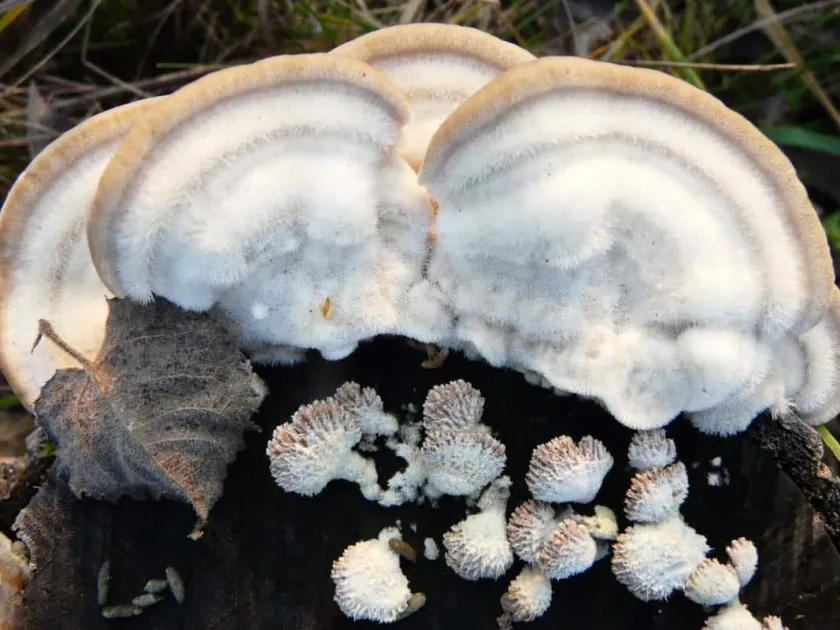
The main sign of infection is the appearance of characteristic fruiting bodies on trunks, stumps, or scaffold branches. They are visually identifiable as light-colored, fuzzy growths with a delicate texture.
In the early stages, the tree may show no visible signs of stress, even though internal wood decay is already progressing. Foliage on affected branches may become stunted and turn yellow prematurely.
When the bark is removed at the site of infection, one can observe significant structural changes in the wood. It becomes soft, spongy, and takes on a lighter shade, indicative of white rot development.
In advanced cases, the bark may crack, and entire segments of the crown may die back. The inner parts of the trunk lose mechanical strength, which can lead to branch failure or wind-snap.
Gradually, the fungal network covers large areas, leading to the overall decline of the tree. The infected plant loses its capacity for normal fruit production and overall growth.
Pathogen
The causative agent of the disease is the wood-destroying fungus Trametes pubescens, belonging to the Polyporaceae family. It is a basidiomycete fungus that primarily follows a saprotrophic lifestyle but can infect weakened living trees.
The fungal mycelium actively penetrates wood structures through mechanical damage to the bark, pruning cuts, or frost cracks. Once inside the tissues, it secretes specific enzymes that decompose lignin and cellulose.
The fruiting bodies of the fungus are annual, characterized by a resupinate-reflexed shape and a velvety surface. They are often found in clusters, forming overlapping, shelf-like structures on trunks and branches.
The color of the caps ranges from white to cream or ochre. The underside (hymenophore) is covered with tiny pores, which serve as sites for the active maturation and dispersal of basidiospores.
Dispersal primarily occurs through the air: spores are easily carried by wind and settle on exposed tree wounds, where they germinate rapidly if moisture levels are sufficient.
Conditions for development
Trametes pubescens thrives in humid conditions; therefore, its most active development is observed during prolonged rainy periods or in dense plantations with poor air circulation.
A key factor in the infection process is the presence of open wounds. Poor pruning practices and a lack of wound dressing on cuts create ideal entry points for the fungal pathogen.
The fungus actively colonizes weakened trees, such as those suffering from pest infestations or nutrient deficiencies. Stress factors compromise the bark's integrity, making it susceptible to hyphal penetration.
Optimal temperatures for fungal vegetative growth fall within the mild to warm ranges typical of spring and autumn. High atmospheric humidity is critical for the formation of fruiting bodies.
Infections often originate in old or neglected orchards where sanitary maintenance of dead wood is absent. Leftover stumps and fallen wood serve as natural reservoirs for fungal spores.
Why it matters
The primary danger lies in the development of white rot, which irreversibly destroys the internal structures of the tree. This leads to the loss of wood utility and the eventual death of the plant.
The infection significantly reduces the tree's cold hardiness. A tree weakened by fungus is much more likely to suffer from low-temperature damage and freeze during the winter months.
Beyond tissue destruction, the fungus competes with beneficial garden microflora. Its active proliferation displaces other beneficial organisms and disrupts the ecological balance of the site.
In stone and pome fruit crops, infections cause a sharp decline in yields. Fruits often fail to develop properly, and the tree may drop its fruit early due to disrupted nutrient transport.
Removing a deeply infected tree is labor-intensive and costly, as the mycelium can persist in the soil and remaining root system, creating recurring hotspots for re-infection.
Protection
The foundation of protection is timely sanitary pruning and the physical removal of all fungal fruiting bodies. Infected branches must be cut off and destroyed immediately, preferably by burning.
Any mechanical damage or pruning cuts must be disinfected and sealed. Garden wax, specialized healing pastes, or natural oil-based paints are recommended for this purpose.
Regular fertilization is essential to boost the tree's immune system. A healthy, vigorous tree is much more capable of resisting the penetration of fungal pathogens into the bark tissues.
- Performing annual autumn whitewashing of trunks using a lime solution with added fungicides.
- Monitoring crown health and ensuring proper air circulation through thinning.
- Clearing away stumps and plant debris that serve as substrates for spore production.
In commercial orchard management, preventive spraying with contact fungicides during periods of active spore release is recommended to prevent spores from settling on open wounds.
Discussion
No discussions yet — be the first.