
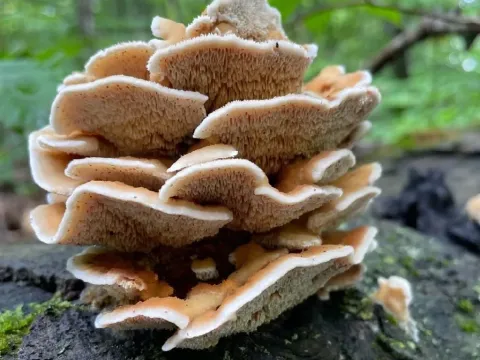
Trametes cervina
Trametes cervina
The causative agent of the disease is the wood-decay fungus Trametes cervina, which belongs to the Polyporaceae family. This microorganism acts as a facultative parasite and saprotroph, effectively breaking down lignin and cellulose within woody tissues.
What the section contains
Trametes cervina
In the fungus's life cycle, basidiocarps play a significant role. These fruiting bodies form on the surface of affected wood and appear as flat or overlapping structures with a characteristic ochre-brown color and a porous hymenophore.
Fungal spores are dispersed by air currents. Upon landing on damaged bark or exposed wood cuts, they germinate. The mycelium then penetrates deep into the trunk structure, consuming nutrients and causing structural degradation of the host plant.
The biology of this pathogen allows it to survive in harsh conditions, remaining viable inside the wood for many years. It can continue to feed on dead woody tissue long after the tree itself has perished.
Often found in forests and old gardens, this fungus demonstrates a preference for broad-leaved trees. Its activity leads to significant changes in the physical and chemical properties of the wood, rendering it fragile and mechanically weak.
The primary sign of infection is the appearance of leathery or cork-like fruiting bodies on trunks and branches. Initially appearing as small growths, they gradually expand over time to cover significant portions of the bark.
The internal structure of the wood undergoes a deep transformation, known as white rot. The wood becomes fibrous and soft, losing its mechanical strength and taking on a whitish hue due to the rapid decomposition of lignin.
The bark in the affected areas often cracks or peels off. Underneath, one may find white fungal mycelium penetrating the cambium and sapwood, gradually stripping the tree of its essential nutrient pathways.
Drying out of individual branches or the crown canopy is a secondary symptom of deep-seated internal damage. As the fungus disrupts the vascular system, the tree fails to transport water and minerals effectively, leading to gradual wilting.
- Presence of characteristic ochre-brown fruiting bodies on bark.
- Softening of wood structure and loss of mechanical integrity.
- White fungal cords visible beneath damaged or peeling bark.
- Premature leaf drop and generalized poor health of the tree canopy.
High humidity and moderate temperatures provide ideal conditions for the development of Trametes cervina. The fungus prefers shaded, damp areas where moisture remains on the bark surface for extended periods, facilitating spore germination.
Mechanical injuries, including frost cracks, sunburn, or improper pruning wounds, serve as gateways for the infection. Spores easily enter these exposed tissues, where they establish a foothold and begin colonizing the host.
Weakened trees with compromised immune systems are the most susceptible. Factors such as nutrient deficiency, drought stress, or poor maintenance make the plant significantly more vulnerable to pathogen invasion.
In dense, poorly ventilated planting sites, fungal spores spread much faster. Stagnant air allows moisture to accumulate, which is critical for the survival and growth of the basidiospores on the tree trunk.
Spring thaws and autumn rainfall represent the most active phases for the fungus. During these times, the fruiting bodies actively release new spores, significantly expanding the infection radius within an orchard or forest.
The primary damage lies in the rapid degradation of timber, which lowers the economic value of forests and orchards while increasing the risk of windthrow. Affected wood loses its load-bearing capacity and becomes brittle.
In horticulture, this fungus is dangerous because it can destroy a fruit tree within a few years. It impairs the movement of nutrients, leading to a sharp decline in yield and eventually causing the death of the host tree.
Damage to the structural integrity of the trunk makes the tree a safety hazard. Decayed wood can easily break during storms or strong winds, posing a direct threat to surrounding buildings and people.
The pathogen facilitates the entry of secondary pests, such as wood-boring beetles, which exploit the softened wood. This leads to a synergistic effect that accelerates the destruction of the tree beyond recovery.
Economic losses include costs associated with tree removal, crop failure, and orchard rehabilitation. Early diagnosis and proactive management are the most cost-effective ways to protect valuable tree assets.
The first step in management is sanitary pruning and the removal of all infected woody parts. All cuts must be treated with wound dressings or specialized fungicides to prevent reinfection and entry of new spores.
Maintaining high levels of horticultural practice is the best preventive measure. Proper fertilization and timely irrigation help trees maintain their natural defenses, preventing the mycelium from penetrating deep into the trunk.
Regular pruning of the canopy ensures good airflow, which reduces humidity and prevents spores from settling on the bark. This simple cultural practice is vital for maintaining a healthy growing environment.
Applying copper-based fungicides during early spring treatments can help eliminate fungal spores present on the bark. These applications should be performed before the onset of active sap flow and bud break.
All identified fruiting bodies must be removed from the tree and destroyed by burning. Leaving infected materials in the garden is strictly prohibited, as they act as a persistent source of spores for years to come.