
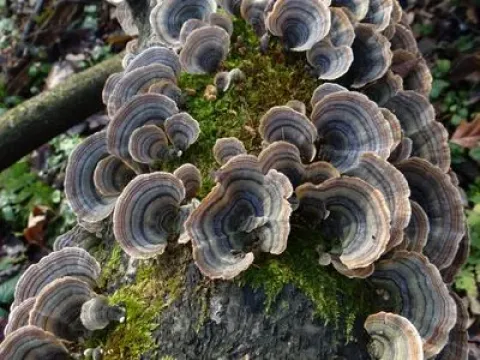
Trametes
Trametes
Trametes is a genus of wood-decay fungi belonging to the Polyporaceae family, well-known for causing white rot in woody plant species.
What the section contains
Trametes
The most recognized species, Trametes versicolor, functions as a saprotroph and sometimes a pathogen, colonizing the xylem of trees.
The fungus produces microscopic spores that travel through the air, looking for wounds or broken branches to settle and germinate.
Once inside the tree, the mycelium secretes enzymes like laccase, which decompose lignin, the material responsible for wood structural integrity.
This process transforms healthy wood into a soft, fibrous, or spongy mass, significantly impacting the tree's overall stability.
The most visible indicator of Trametes presence is the development of fruit bodies (sporocarps) appearing on the bark of infected branches or trunks.
These fruit bodies are often fan-shaped or shelf-like, featuring distinct, colorful concentric zones on their upper surface.
Inside the infected wood, the decay manifests as a white, bleached area, often marked by thin dark lines that delineate the spread of the mycelium.
As the rot progresses, the wood loses its density and structural weight, eventually becoming brittle and prone to crumbling.
External signs are often delayed, but if the bark looks sunken or feels hollow upon tapping, internal fungal infection is highly probable.
High humidity and consistent moisture levels are essential for the spores of Trametes to successfully infect and colonize host tissues.
Optimal temperatures for mycelial growth typically fall within the range of 15°C to 25°C, common during spring and autumn seasons.
Open wounds, such as pruning cuts, cracks caused by frost, or insect damage, act as primary entry points for the fungal spores.
Poor airflow within dense canopy structures or stagnant water accumulation increases the risk of successful infection and rapid development.
The presence of decomposing wood debris in the orchard or forest floor provides an ideal environment for the fungus to persist and spread.
Trametes poses a significant threat to orchards and forestry by compromising the hydraulic and structural health of trees.
As the fungus destroys the vascular system, the tree's ability to transport nutrients and water from the roots to the leaves is severely disrupted.
Structural weakening of the trunk or main branches makes trees hazardous, as they become prone to snapping under wind pressure or heavy snow.
Infected trees often experience a decline in vigor, reduced fruit production, and early mortality due to advanced internal wood decay.
If left unmanaged, a localized infection can quickly spread through the canopy or to neighboring trees, causing economic damage.
Proactive management involves regular sanitary pruning to remove dead or dying wood, which eliminates potential infection sites.
All large pruning wounds should be immediately protected with professional wound sealants or fungicidal treatments to block fungal entry.
Fruit bodies found on the tree must be physically removed and destroyed via burning to minimize the local spore load in the environment.
Maintaining tree vigor through proper fertilization and pest management helps the tree naturally resist colonizing fungal pathogens.
Orchard hygiene, including the removal of stumps and fallen logs, is essential to deprive the fungus of a survival substrate.