
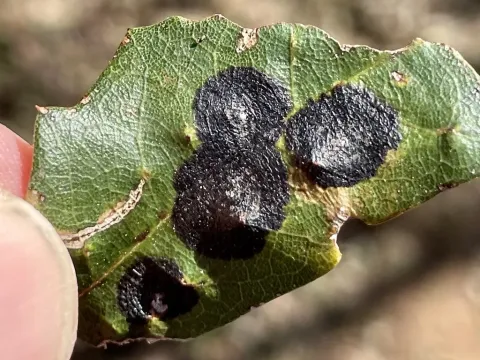
Trabutia quercina
Trabutia quercina
The disease manifests as distinct, small, often circular spots that appear on the surface of infected oak leaves.
What the section contains
Trabutia quercina
A diagnostic feature of this condition is the development of black, slightly raised stromata that represent the fruiting bodies of the fungus.
These black spots are typically visible on both sides of the leaf, though they are most prominent on the upper surface.
In severe cases, infected leaves may show chlorosis or premature browning before they eventually drop from the branches.
The presence of these black stromatic structures on fallen leaves allows the fungus to persist throughout the dormant winter season.
The causal agent of this disease is the ascomycete fungus Trabutia quercina, which belongs to the Phyllachorales order.
This pathogen is an obligate parasite that colonizes the leaf tissues of host oak trees during the active growing season.
The life cycle involves the formation of spores within the stromata, which are then dispersed by wind and splashing rainwater.
The fungus is well-adapted to surviving in the leaf litter, ensuring its survival and transmission to new foliage in the following spring.
Its biological cycle is strictly synchronized with the phenology of the host, allowing for rapid colonization during favorable weather.
High humidity and consistent rainfall during the spring and early summer are essential for the germination and spread of Trabutia quercina.
Dense canopies that restrict airflow create a humid microclimate that significantly increases the risk of fungal infection on the lower branches.
Moderate temperatures ranging from 18°C to 25°C provide the ideal environment for the mycelium to spread through the leaf tissues.
Trees located in valleys or low-lying areas with poor air drainage are often more susceptible to outbreaks of this disease.
Prolonged wet spells following the emergence of new leaves create the most critical window for primary infection events.
The primary impact of the disease is the reduction of the photosynthetic surface area, which weakens the tree's overall vigor.
Premature defoliation disrupts the tree's ability to store carbohydrates, potentially leading to increased stress and susceptibility to other pests.
In forest nurseries, high infection rates can result in stunted growth and the loss of young oak seedlings, causing economic setbacks.
While the disease is rarely lethal to mature trees, chronic annual infection can lead to reduced timber quality and canopy thinning.
The aesthetic value of trees in urban landscapes or parks can be significantly diminished by heavy leaf spotting and premature leaf drop.
Sanitation is the most effective management strategy; removing and destroying infected fallen leaves helps reduce the primary inoculum load.
Pruning lower branches can improve air circulation within the canopy, helping to keep leaves drier and less prone to infection.
Fungicide applications, when necessary in high-value plantings, should be timed to coincide with leaf bud break to protect the new foliage.
Maintaining tree health through proper fertilization and watering helps the host plant better resist and recover from fungal outbreaks.
When establishing new oak plantings, proper spacing is recommended to prevent the future formation of dense, stagnant canopy conditions.