
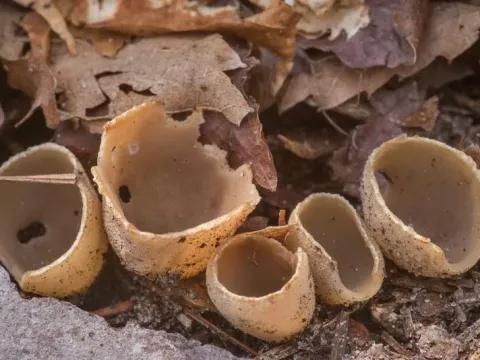
Tarzetta cupularis
Tarzetta cupularis
Tarzetta cupularis is a species of cup fungus belonging to the Pyronemataceae family. While it is primarily classified as a saprotroph that grows on soil, decaying plant matter, or wood debris, it can occasionally interact negatively with the rhizosphere of agricultural crops.
What the section contains
Tarzetta cupularis
The fungus is characterized by small, cup-shaped fruiting bodies that appear on the ground. These structures are the reproductive units that release spores into the environment, allowing the pathogen to persist in agricultural landscapes.
Biologically, the fungus thrives by breaking down organic carbon. In agroecosystems, the accumulation of crop residues provides an ideal substrate for its development, which can lead to localized population surges under favorable conditions.
While not a primary obligate parasite, Tarzetta cupularis can act as an opportunistic colonizer. Its presence is often a result of disturbed or poorly drained soil, which allows it to outcompete beneficial microorganisms.
The fungus survives the off-season as mycelium within the soil organic matter. This persistence makes it a recurring resident in fields where tillage practices are minimal and organic matter remains abundant on the surface.
The most visible symptom is the appearance of distinct, cup-shaped fruiting bodies on the soil surface. They are typically found in shaded or damp spots, particularly near the bases of plants.
Crops in infested areas may exhibit signs of general stress, such as leaf yellowing or stunted growth. This happens because the fungal mycelium can physically and biologically alter the root zone environment.
Root systems of affected plants may appear necrotic or discolored. When the mycelium creates a dense mat, it restricts the root's ability to absorb water and nutrients efficiently from the soil.
Under high humidity, a fine white mycelial mat may cover the soil surface around the base of the plant. As the environment dries, the mycelium recedes, leaving the plant roots exposed to stress.
In cases of heavy infestation, the lack of uniformity in plant height and vigor across the field is a diagnostic indicator that the soil biological balance has been disrupted by the fungus.
High soil moisture is the primary driver for the development of Tarzetta cupularis. Sustained rain or over-irrigation encourages the growth of both the mycelium and the cup-shaped fruiting bodies.
The presence of raw, undecomposed organic matter is essential for the rapid multiplication of the fungus. Fields with heavy stubble or mulch cover are more susceptible to colonization.
Moderate temperatures, ranging between 15°C and 22°C, provide the best growth conditions. Extreme heat or prolonged dry spells usually inhibit the fungus, forcing it into a dormant phase.
Soil compaction creates micro-environments with limited oxygen, which favors this fungus over aerobic beneficial microbes. Improving soil structure is crucial to limiting its expansion.
Acidic soil conditions are often associated with higher incidences of cup fungus growth. Adjusting the pH level can make the environment less favorable for the survival and spread of the pathogen.
The main harm caused by this fungus is the suppression of plant growth due to competition for nutrients. Crops grown in high-density areas of Tarzetta cupularis often fail to reach their full biomass potential.
By impeding root access to water and oxygen, the fungus increases the vulnerability of crops to environmental stress, including drought and sudden temperature fluctuations.
The presence of the fungus in the rhizosphere can facilitate the colonization of roots by more aggressive secondary pathogens. This synergy can lead to severe root rot symptoms that are difficult to mitigate.
In greenhouse settings, Tarzetta cupularis can rapidly occupy the substrate, negatively affecting seedling vigor and leading to uneven stands that require extensive re-planting or intervention.
Economic damage also arises from the need for corrective agronomic measures, such as intensive soil treatment or adjustments to cultivation techniques, to restore the field's health.
- Deep plowing to incorporate crop residues and promote rapid decomposition.
- Rotation with non-susceptible crops to disrupt the fungal life cycle.
- Liming the soil to maintain an optimal pH range for beneficial microbes.
- Ensuring proper drainage to prevent waterlogging, which triggers spore production.
- Applying preventive soil fungicides if historical data confirms a high risk of infestation.