
Tawny Grisette
Amanita fulva
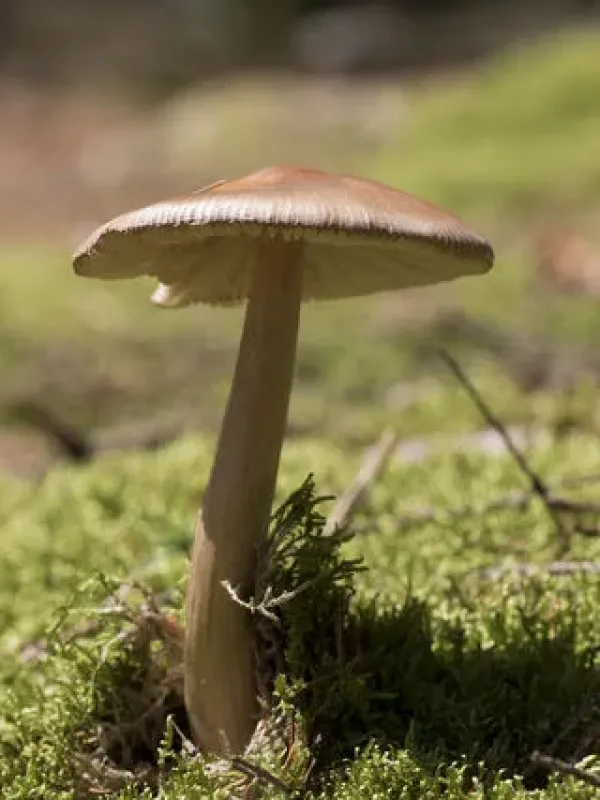
Description
Pathogen
The Tawny Grisette (Latin: Amanita fulva) is not a plant disease pathogen. It is a mycorrhizal fungus belonging to the Amanitaceae family.
This fungus forms symbiotic relationships with the roots of various trees, primarily in forest environments.
It does not attack or cause diseases in agricultural crops, as its biological niche is strictly tied to forest soils.
The mycelium of the fungus aids in nutrient cycling, which is beneficial for the forest ecosystem adjacent to farmlands.
In agronomy, it is classified as a neutral or beneficial organism rather than a pest or disease agent.
Conditions for development
The species prefers acidic, organic-rich soils typical of woodlands and forest margins.
It requires moisture and stable temperatures to produce fruit bodies, commonly appearing in late summer and autumn.
The presence of suitable host trees, such as birch or coniferous species, is essential for its development.
Spores are dispersed by wind, but they do not find the necessary conditions to germinate on agricultural crops.
Environmental fluctuations that affect forest health have a direct impact on the fruiting cycles of Amanita fulva.
Why it matters
The Tawny Grisette does not cause any economic damage to field or horticultural crops.
It does not produce toxins that affect plant metabolism or soil health in agricultural settings.
There is no evidence of the fungus being a vector for diseases or a competitor for crop resources.
Misidentifying this fungus as a plant pathogen could lead to unnecessary and harmful chemical applications.
The species is harmless and plays a positive role in decomposing organic matter in forest soils.
Protection
No control measures are necessary, as this organism does not pose a threat to agriculture.
Applying fungicides to control this species would be counterproductive and environmentally damaging.
Field management should focus on identifying actual threats rather than attempting to eradicate beneficial forest fungi.
If Amanita fulva is observed near farm borders, it indicates a healthy nearby ecosystem.
Regular agricultural monitoring should focus on crop-specific pathogens, ignoring neutral forest species.
Discussion
No discussions yet — be the first.