
Tea anthracnose
Elsinoë theae
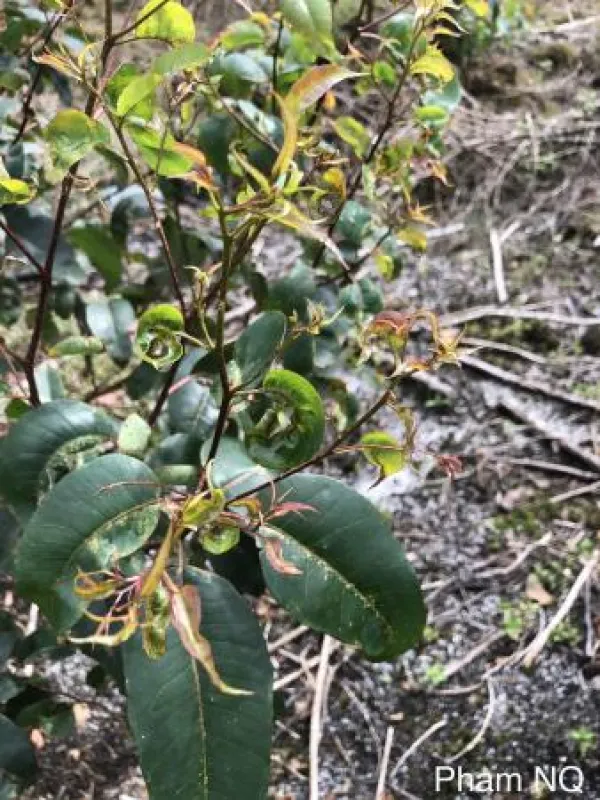
Description
Symptoms
The first visual signs of anthracnose appear on young, non-hardened tea leaves. Initially, small, round, pale green or yellowish spots emerge on the leaf blades, which darken over time.
The center of the spot often turns gray or brown, becoming dry and brittle. A dark brown or reddish margin typically forms around the edge of the affected area, limiting the spread of the mycelium.
In high humidity, small black dots can often be seen on the surface of the spots; these are the pathogen's sporodochia. In severe cases, the spots merge, covering a significant area of the leaf, which leads to deformation and premature leaf drop.
The disease affects not only the leaves but also young shoots. Elongated ulcers form on the stems, which impede normal sap flow, weakening the development of the entire branch and reducing the overall productivity of the tea bush.
A characteristic diagnostic sign is the uneven growth of the leaf blade, which becomes asymmetrical and stunted in case of heavy infection, noticeably reducing the commercial quality of the tea leaf.
Pathogen
The causal agent of tea anthracnose is the ascomycete fungus Elsinoë theae, which infects the aerial parts of the plant. This pathogen belongs to a group of parasitic microorganisms capable of surviving on plant debris and within the tissues of infected shoots for an extended period.
The fungus's life cycle is closely linked to environmental humidity and temperature. During the growing season, the infection spreads through conidia, which are dispersed by rain droplets or wind to neighboring healthy plants.
The fungal mycelium penetrates the leaf epidermis, destroying cells and disrupting photosynthesis. Gradually, the pathogen spreads across the leaf surface, forming characteristic sporodochia where new generations of spores are produced.
In addition to conidial sporulation, the fungus can form fruiting bodies (ascostromata), which ensure the pathogen's survival during unfavorable winter conditions. This makes disease management a systematic process requiring control throughout the entire year.
This fungus is a specialized pathogen affecting primarily the tea bush (Camellia sinensis), and its activity directly correlates with the intensity of agricultural practices and the overall health status of the plantation.
Conditions for development
The primary factor promoting the development of anthracnose is excessive atmospheric and soil moisture. Frequent fog and prolonged rainfall create ideal conditions for fungal spores to germinate on the surface of the tea leaf.
The temperature range from +20°C to +28°C is considered the most favorable for active infection spread. Under such conditions, the fungal incubation period is significantly shortened, and the disease can infest a plantation in a short time.
Poor aeration within the tea bushes due to a lack of proper pruning promotes moisture accumulation in the canopy. High planting density also hinders airflow, creating a microclimate with elevated humidity levels.
A lack of mineral nutrition, especially potassium and phosphorus deficiency, lowers the plant's immunity, making it more vulnerable to fungal pathogens. Weakened bushes become infected with anthracnose much faster than healthy specimens.
Contamination of the plantation with plant debris from the previous season serves as a powerful source of primary infection. If sanitary cleaning is not performed after harvest, the risk of a disease outbreak in the following season increases multiple times.
Why it matters
The main damage caused by anthracnose is a sharp decline in the commercial quality of tea raw materials. Affected leaves lose their qualitative characteristics, making them unsuitable for the production of high-grade teas.
The disease leads to a significant decrease in yield due to premature leaf drop and slowed shoot growth. Bushes suffering from the fungus lose vegetative mass and require a long recovery period.
Systematic infection leads to the exhaustion of tea bushes, reducing their productive longevity. Gradual dieback of individual branches occurs, which eventually can lead to the complete death of the plant in the field.
Economic losses consist not only of lost yield but also costs associated with protection measures, application of chemicals, and labor costs for manual pruning of infected plant parts.
Infected sections of the plantation become constant reservoirs of spores for the entire area, forcing farmers to limit harvesting and alter agricultural schedules to contain the spread of the disease.
Protection
The foundation of anthracnose protection is strict adherence to agricultural practices. It is crucial to perform timely and high-quality pruning of tea bushes to ensure necessary canopy ventilation and prevent the stagnation of moist air.
Regular cleanup and destruction of infected plant debris allow for a significant reduction in the initial infection load on the plantation. Fallen leaves and pruned branches should be removed from the field or composted at high temperatures.
The application of balanced mineral fertilizers, especially those with high phosphorus and potassium content, helps strengthen leaf tissues and increases the natural resistance of tea to fungal diseases.
During periods of mass infection, the use of contact and systemic fungicides is justified. It is important to rotate preparations to prevent the development of resistance in Elsinoë theae.
Preventive spraying with copper-based preparations at the beginning of the growing season helps create a protective barrier on the leaf surface, inhibiting conidial germination and limiting the primary focus of the disease.
Discussion
No discussions yet — be the first.