
Taphrina fungi
Taphrinomycetes
Taphrina fungi belong to the class Taphrinomycetes within the phylum Ascomycota. The most notorious species is Taphrina deformans, which causes peach leaf curl, a devastating disease affecting stone fruit trees worldwide.
What the section contains
Taphrina fungi
These organisms are obligate parasites that exhibit high host specificity. They survive the winter as spores or mycelium embedded in the bark crevices or under the protective scales of dormant buds.
When spring arrives, the pathogen activates and infects emerging tissues. The fungus grows intercellularly, secreting enzymes and growth-regulating substances that trigger an abnormal expansion and proliferation of host plant cells.
The fungus propagates by forming a dense layer of asci on the surface of affected plant organs. This layer often manifests as a powdery or velvety coating containing numerous ascospores ready to be dispersed by wind and rain.
The lifecycle of the fungus is strictly synchronized with the phenology of the host plant. The infection process is insidious, as the pathogen establishes itself within the host tissue long before the classic visible symptoms appear.
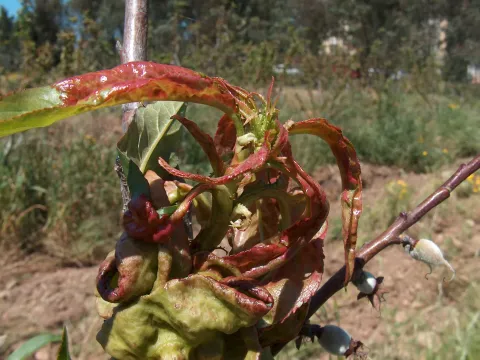
The most diagnostic symptom of a Taphrina infection is severe leaf deformation. Affected leaves become curled, twisted, and puckered, while their texture becomes thickened and noticeably more brittle than healthy leaves.
Discoloration is a hallmark of the disease. Initially, leaves turn pale green, eventually transitioning into vibrant shades of yellow, pink, or deep red as the physiological stress increases.
A whitish or greyish waxy bloom appears on the lower surface of the foliage. This layer represents the fungal sporulation stage; shortly after this, the leaves typically turn brown, wither, and drop prematurely.
Stems and young shoots are also impacted. They often exhibit swelling, distortion, and stunted growth. In severe cases, the formation of abnormal shoot structures, sometimes called witch's brooms, may occur.
Floral organs and fruit are highly susceptible. Buds may fail to develop properly and fall off, while fruits that do persist become malformed, cracked, and covered in disfiguring lesions, rendering them unmarketable.
Environmental factors are crucial for the development of Taphrina diseases. The fungus thrives in cool, wet weather conditions, particularly during the early spring period when host buds are beginning to open.
Optimal conditions for infection occur when temperatures range between +10°C and +15°C accompanied by high humidity, prolonged fog, or frequent rainfall. These conditions keep the plant surfaces moist for extended periods.
As temperatures rise above +20°C, the activity of the fungus significantly decreases. While warm, dry weather can halt the spread of the disease, it does not repair damage already done to the host tissues.
Orchard management plays a role in disease prevalence. Dense, unpruned tree canopies trap moisture and reduce air circulation, creating a favorable microclimate for the pathogen to thrive and spread.
The primary infection window is limited to the timeframe between bud swell and the full expansion of leaves. Once the leaves reach maturity and harden, they become naturally resistant to new infections.
The primary economic impact is the early defoliation of trees. This loss of foliage leads to a reduction in photosynthesis, severely limiting the tree's ability to store energy reserves for the following season.
Reduced vigor significantly lowers the tree's cold hardiness, making it more susceptible to frost damage and winter injury. Over time, recurring infections lead to the dieback of branches and tree decline.
Crop yields are devastated by both the loss of fruit and the poor quality of the remaining harvest. Marketable yield can be reduced to near zero in years with high disease pressure.
The disease weakens the host's overall immune system, increasing vulnerability to secondary pathogens and pests. This cumulative stress shortens the productive lifespan of the orchard.
For commercial growers, the cost of fungicides and the labor required for disease management represent a significant financial burden, often challenging the profitability of stone fruit production.
Preventative fungicide application is the cornerstone of effective management. The most critical treatment is performed in early spring, just before bud break, to eliminate overwintering spores.
Copper-based products and specific systemic fungicides are highly recommended. Thorough coverage is essential, ensuring that all parts of the tree, including the crotches and bark crevices, are adequately coated.
Sanitation practices are vital to reduce the inoculum pressure. Removing and destroying symptomatic shoots and disposing of fallen, infected leaves helps prevent the reinfection of the orchard in subsequent seasons.
- Proper canopy thinning to improve air movement and light penetration.
- Balanced nutrient management to support host health.
- Selecting cultivars with genetic resistance to leaf curl.
If environmental conditions favor disease after the initial treatment, follow-up applications may be necessary, provided that harvest intervals and safety regulations are strictly observed.