
Taphrina sadebeckii
Taphrina sadebeckii
Description
Symptoms
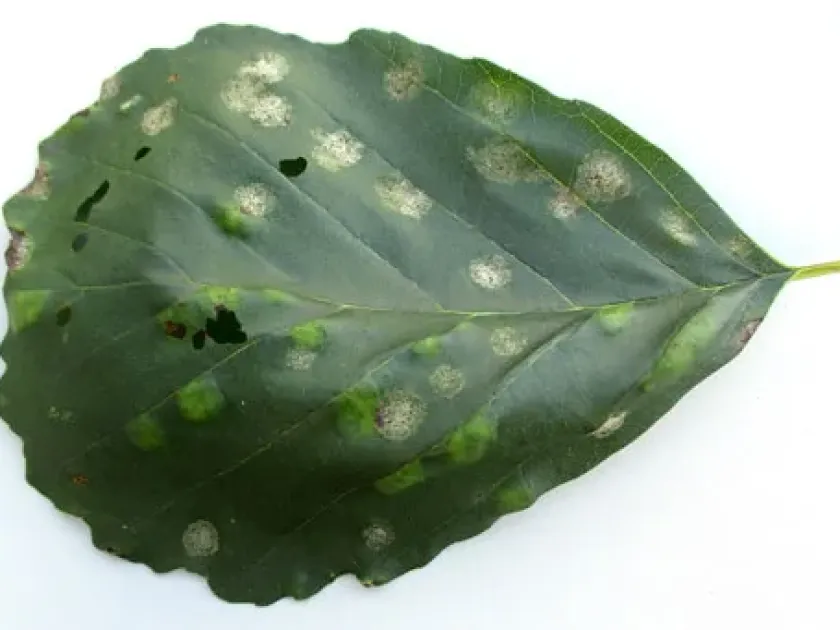
The most prominent symptom is the development of yellowish-green or brown spots on the alder leaf blades. These spots often expand over time, affecting large portions of the leaf surface.
On the underside of the infected leaves, a velvety or mealy-looking layer appears in the affected areas. This represents the fungal spore masses emerging through the leaf surface.
Infected leaves frequently exhibit curling, twisting, or wavy deformation. These structural changes are a direct result of the fungus inducing hypertrophy and hyperplasia in the leaf tissue.
Severe infections lead to premature leaf drop, which can leave branches bare mid-season. This abnormal foliage loss is a key indicator of heavy pathogen pressure.
Visual identification is facilitated by the specific appearance of the spots, which look like swollen tissue patches rather than traditional necrotic lesions common in other diseases.
Pathogen
The causative agent of this disease is the ascomycete fungus Taphrina sadebeckii. It is a highly specialized parasite that exclusively targets various species within the Alnus (alder) genus.
The fungal life cycle involves the development of mycelium between the cuticle and the epidermis of the host leaf. During the reproductive phase, the fungus produces an ascospore layer that ruptures the cuticle to release spores.
The fungus overwinters as spores or mycelium within bark crevices and on the scales of buds. In early spring, these spores are activated by moisture and initiate the infection of emerging young leaves.
As an obligate parasite, Taphrina sadebeckii is entirely dependent on living host tissues for survival. It cannot survive as a saprotroph in dead organic matter, making its life cycle tightly linked to the host's phenology.
Understanding the biology of this fungus is crucial for forest management, as the timing of spore release often coincides perfectly with the tree's bud-break stage.
Conditions for development
High humidity and cool spring temperatures are the primary drivers for disease development. Frequent rainfall during the bud-break period creates an ideal environment for spore germination.
The fungus thrives within a temperature range of +12°C to +18°C. Warmer summer temperatures generally inhibit the further development and spread of the fungus.
Dense, poorly ventilated stands of alder trees create stagnant microclimates that retain moisture, allowing the infection to spread rapidly through the canopy via wind and splashing rain.
Tree vigor is a significant factor in disease resistance. Trees already stressed by drought, nutrient deficiencies, or soil compaction are more susceptible to severe infection.
The presence of moisture on the leaf surface is the critical trigger for the spores to penetrate the leaf tissue, turning a mild infection into an outbreak.
Why it matters
The primary impact of Taphrina sadebeckii is the reduction of the photosynthetic surface area due to leaf deformation and premature shedding, which weakens the tree over time.
Consecutive years of severe infection can lead to chronic tree decline, making the alder vulnerable to secondary attacks by wood-boring insects and other opportunistic pathogens.
Reduced biomass production is a significant economic concern in forestry, as trees struggle to accumulate the necessary reserves for winter dormancy and spring growth.
The ornamental value of alder trees in landscape and park settings is severely compromised due to the unsightly curling and discoloration of the canopy.
In extreme cases, the stress caused by the fungus leads to dieback of small twigs and branches, resulting in the stunted growth of the entire plant.
Protection
Effective management begins with strict sanitation practices, such as the collection and disposal of fallen leaves, which serve as the primary reservoir for overwintering spores.
Thinning out dense tree stands improves air circulation and increases light penetration, effectively lowering the humidity levels required for the fungus to thrive.
Copper-based fungicidal sprays are the most common chemical control measure, applied early in the spring before bud break to target the fungus during its initial activation phase.
For high-value trees, systemic fungicides applied upon the appearance of the first symptoms can help manage the infection and preserve the health of the foliage.
Maintaining long-term tree health through proper fertilization and site selection remains the best preventive strategy against the recurrence of Taphrina-related diseases.
Discussion
No discussions yet — be the first.