
Taphrinaceae
Taphrinaceae
Description
Symptoms
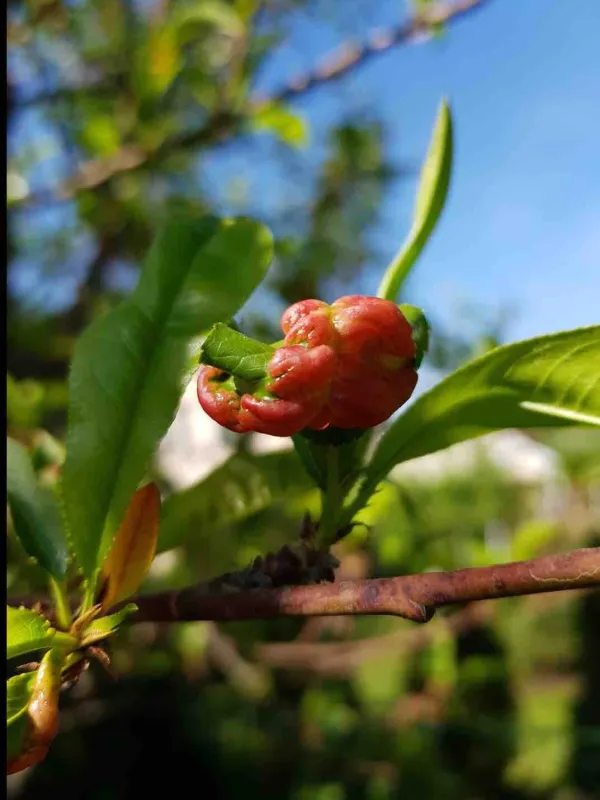
The primary symptom is the severe distortion of leaves. They become curled, thickened, and brittle, often displaying vibrant red, yellow, or pale green discoloration due to altered chlorophyll content.
In cases of Taphrina pruni infection, fruit development is severely impaired, resulting in so-called "plum pockets." These fruits are hollow, elongated, and lack a pit, making them entirely unmarketable.
Shoots affected by the pathogen become stunted, twisted, and succulent. Over time, the infected tissues die, resulting in localized necrotic patches and premature leaf drop.
A powdery, grayish-white bloom can often be observed on the underside of deformed leaves or on the surface of fruits, which represents the fungal spore-producing structures.
The cumulative effect of these symptoms is the deformation of the plant's canopy, which impairs the plant's ability to maintain healthy growth and store nutrients for the upcoming season.
Pathogen
Taphrinaceae is a family of ascomycetous fungi that act as obligate parasites on vascular plants. The most economically significant genus is Taphrina, responsible for various plant deformities such as leaf curl and fruit pockets.
These pathogens invade the host plant's tissues, stimulating cells to multiply and grow abnormally (hypertrophy). They form a layer of asci (spore sacs) on the surface of the infected tissue, which is often visible as a dusty coating.
The fungi survive the winter as dormant mycelium or spores lodged in the crevices of the bark or under the scales of dormant buds. As soon as the conditions become favorable in early spring, the spores disperse.
The life cycle is tightly synchronized with the development of the host plant. Infection usually occurs during the early stage of bud burst when the developing leaves are most vulnerable to fungal penetration.
Being obligate parasites, they require live host tissue to survive. They cannot obtain nutrients from dead or decaying plant matter, making them highly dependent on the host plant's seasonal rhythm.
Conditions for development
Taphrinaceae development is highly favored by cool, damp weather conditions during the early spring season. An optimal temperature range for infection typically falls between 10°C and 18°C.
Prolonged rainfall during the bud-break period facilitates the movement of spores from the bark surfaces onto the developing leaves, creating a high-risk environment for massive outbreaks.
Poor orchard sanitation and dense canopy foliage provide a microclimate that stays moist for longer periods, which is ideal for the germination and penetration of fungal spores.
Environmental stress, such as sudden cold snaps that delay the plant's cuticle development, can significantly increase the susceptibility of the tree to these pathogens.
Conversely, the onset of warm, dry, and sunny weather effectively halts the progression of the disease, as the fungi are highly sensitive to desiccation and heat.
Why it matters
The economic impact of Taphrinaceae is significant, primarily due to direct yield loss. Infected fruit is non-edible, and the heavy loss of leaves leads to poor fruit set and development.
Persistent infection severely weakens the plant's vigor. The loss of foliage reduces the photosynthetic capacity, which leads to lower energy reserves and poor health for the following year.
Reduced vigor makes the trees more susceptible to winter injury. Consequently, trees affected by heavy leaf curl often suffer from cold damage during harsh winter months.
Chronic cases lead to the dieback of branches and stunted growth, effectively reducing the productive lifespan of fruit-bearing trees in orchards.
Furthermore, the increased need for intensive chemical interventions to manage the disease leads to higher production costs and increased environmental pressure.
Protection
- Apply copper-based fungicides during the dormant season (late autumn or early spring) to kill overwintering spores.
- Systematically prune and destroy infected shoots and foliage to reduce the inoculum level for the following season.
- Select resistant cultivars when planning new orchard plantings to minimize the risk of recurring infection.
- Ensure proper canopy management through regular thinning to promote air circulation and faster leaf drying.
- Time the application of systemic fungicides to coincide with the bud-swelling stage, especially in years with a cold and rainy spring.
Discussion
No discussions yet — be the first.