
Tar spot
Rhytisma
The first signs of tar spot include small, yellowish-green spots appearing on the upper surface of the leaves during the early summer months.
What the section contains
Tar spot
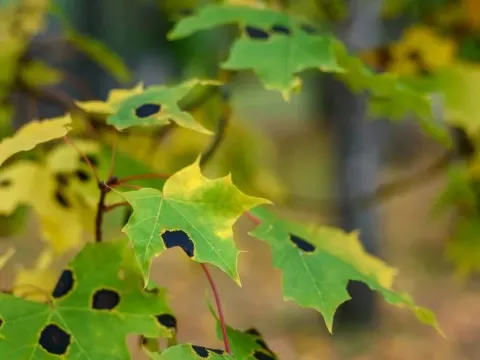
As the infection progresses, these spots enlarge and develop raised, shiny black structures that resemble drops of tar or asphalt.
A distinct yellow halo often remains visible around these black, stromatic fungal pads, creating a stark contrast on the maple leaf blade.
By late summer and early autumn, the leaf tissue within the affected areas may begin to die, leading to premature leaf browning and drying.
In cases of heavy infection, the affected leaves may curl, distort, and fall from the tree much earlier than normal during the autumn season.
The disease is caused by the ascomycete fungus Rhytisma acerinum, which belongs to the order Rhytismatales.
The fungus completes its life cycle primarily on fallen maple leaves, where it develops black structures that survive the winter.
In the following spring, these structures produce spores that are discharged into the air and carried by wind to newly emerging foliage.
The pathogen is highly host-specific, primarily affecting various species of the Acer genus, including Norway and sycamore maples.
The colonization process is slow, and the characteristic black symptoms do not become fully visible until well into the growing season.
Tar spot development is strongly dependent on high humidity and consistent moisture on the leaf surface during the spring spore release period.
Dense canopies and poor air circulation within the tree structure provide the perfect environment for spores to germinate and infect leaves.
Trees subjected to environmental stress, such as poor soil quality or pollution, often exhibit higher susceptibility to fungal colonization.
Prolonged, cool, and rainy spring weather creates an ideal window for successful infection of young maple leaves by airborne fungal spores.
The presence of overwintering leaf litter underneath the tree canopy serves as the primary inoculum source for the subsequent year's outbreak.
The primary impact of tar spot is the significant reduction in the ornamental and aesthetic value of maple trees in urban and landscape settings.
Premature leaf drop decreases the plant's photosynthetic capacity, which can reduce the tree's overall vigor over several years of infection.
While the disease is rarely lethal to mature trees, it can weaken them, making them more susceptible to winter injury and other secondary pathogens.
For young saplings and nursery stock, chronic infection can lead to stunted growth and reduced development of the tree structure.
Persistent outbreaks create an unsightly appearance in parks and gardens, often necessitating additional maintenance and cleanup efforts.
Sanitation is the most effective management strategy, requiring the thorough raking and disposal of fallen leaves to eliminate the fungus's wintering grounds.
Improving air circulation through careful pruning and thinning of the canopy helps keep foliage dry, reducing the conditions for spore germination.
Fungicide applications, such as copper-based sprays, can be used in high-value ornamental settings, though they must be timed correctly in early spring.
Promoting tree health through appropriate irrigation and nutrient management helps the plant develop natural resistance to fungal stress.
Selecting resistant maple cultivars or diversifying plant species in the landscape are long-term solutions to avoid tar spot issues entirely.