
Tapinella panuoides
Tapinella panuoides
Description
Symptoms
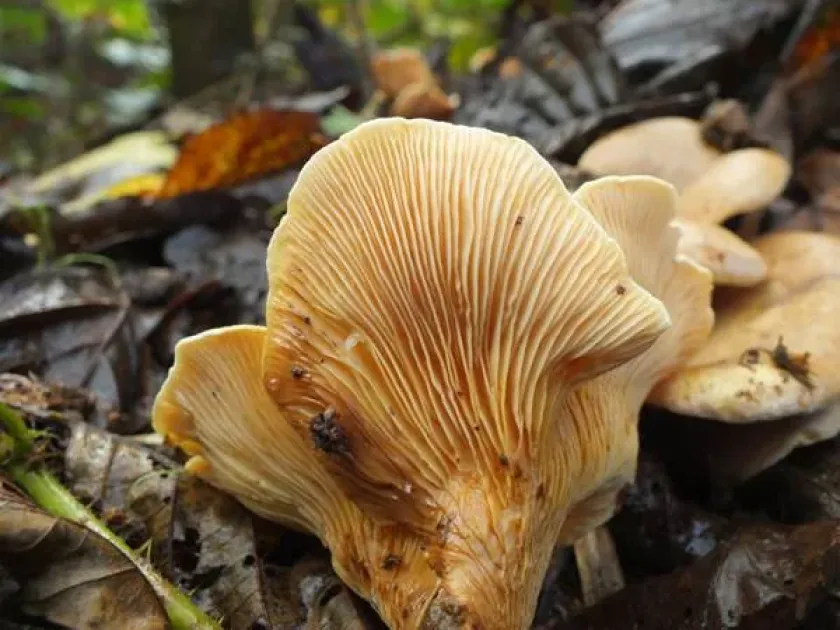
Tapinella panuoides is typically identified by its distinctive fan-shaped or ear-shaped fruiting bodies that emerge from decaying timber.
The caps usually appear velvety and vary in color from yellow-brown to a darker shade of brown, often lacking a formal stalk.
Underneath the cap, you can observe vibrant yellow to orange gills, which are often crowded and wavy, serving as a key diagnostic feature.
Advanced stages of infestation are characterized by the wood becoming brittle and breaking into small, cube-like pieces, indicating deep-seated brown rot.
Dense, thread-like mycelium often spreads across the wood surface or within cracks, signifying that the fungus is actively colonizing the material.
Pathogen
The pathogen is Tapinella panuoides, a basidiomycete fungus known as a significant wood-decaying organism affecting coniferous timber.
It operates by secreting enzymes that break down cellulose and hemicellulose, which are the primary structural components of the wood cell walls.
The mycelium grows rapidly through the wood fibers, effectively absorbing nutrients and leaving behind a structurally compromised, decayed matrix.
This fungus primarily spreads through airborne spores that land on suitable host materials and germinate when environmental conditions are favorable.
As a saprotrophic organism, it specializes in the decomposition of dead organic matter, specifically pine and spruce wood in humid environments.
Conditions for development
The development of this fungus is strictly dependent on high moisture levels in the wood, typically requiring a moisture content exceeding 20%.
It thrives in dark, poorly ventilated areas such as basements, crawl spaces, and attics where moisture cannot easily evaporate.
Optimal temperatures for the growth of Tapinella panuoides range from 20°C to 25°C, accelerating the destruction process during warmer periods.
Structural elements that remain in contact with soil or masonry without proper damp-proof courses are at a much higher risk of infection.
Inadequate maintenance, such as blocked vents or leaking pipes, creates the specific damp microclimate required for the fungus to establish itself.
Why it matters
The primary threat posed by Tapinella panuoides is the loss of structural integrity in wooden components like beams, joists, and rafters.
Because the fungus causes aggressive brown rot, the wood loses its load-bearing capacity, potentially leading to total structural failure.
The decay is often hidden within the wood or behind wall linings, making it difficult to detect before significant damage has occurred.
Once established, the fungal colony continues to grow and spread unless the source of moisture is eliminated and the infected wood is removed.
Beyond the structural risk, the presence of the fungus can lead to poor indoor air quality and unpleasant odors in affected buildings.
Protection
Effective control starts with controlling moisture levels; ensure proper ventilation and drainage around all timber structures to keep wood dry.
Treating susceptible timber with professional-grade wood preservatives is essential for preventing the initial germination of fungal spores.
Use physical barriers like damp-proof membranes between wood and brickwork or concrete to prevent moisture wicking from the ground.
If an infection is found, the affected wood must be surgically removed, ensuring a margin of at least 50 cm of healthy wood is also cut away.
Regular inspections and keeping the building environment dry are the most critical long-term strategies for preventing Tapinella panuoides growth.
Discussion
No discussions yet — be the first.