
Strigula macrocarpa
Strigula macrocarpa
Strigula macrocarpa is a specialized type of foliicolous lichen, which is a symbiotic association between a fungus and algae that develops on the surface of living leaves.
What the section contains
Strigula macrocarpa
These organisms do not penetrate the plant tissues to feed on cell sap directly, but they occupy the leaf surface and interact with the plant's physiological processes.
The fungus produces reproductive structures called perithecia, which are small, dark, and distinct, helping mycologists and agronomists identify the species.
Dispersal is primarily mediated by water splash and wind, allowing the spores to land on healthy leaves and initiate new growth cycles under suitable conditions.
In terms of plant health, while not a typical aggressive parasite, its biological presence can turn into an economic concern when coverage becomes extensive.
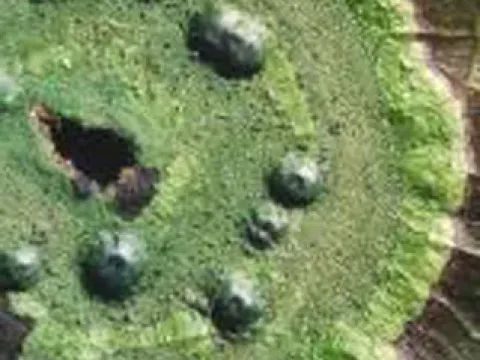
The main visual sign of colonization is the presence of grayish or greenish spots that appear on the upper surface of leaves, often resembling a fine crust.
These spots often follow the leaf veins or accumulate near the margins, creating a characteristic pattern that is quite distinct from viral or bacterial infections.
Using a magnifying glass, one can observe small, bump-like perithecia protruding from the surface of the crust, which is a key diagnostic feature.
Affected leaves do not show immediate rot or necrosis, but they may exhibit yellowing or a loss of luster due to the physical layer covering the epidermis.
In cases of severe infestation, the leaf surface becomes rough and partially obstructed, hindering the normal appearance and function of the foliage.
High relative humidity and frequent rainfall are the most critical factors driving the development and spread of Strigula macrocarpa.
This organism thrives in shaded and poorly ventilated environments where the leaf surface stays wet for extended periods, allowing spore germination.
Temperate to subtropical climates provide the optimal temperature range for the growth of the fungal mycelium and the maturation of its reproductive bodies.
Dense canopies, where air circulation is minimal, create microclimates that are perfect for the establishment of foliicolous lichens.
Accumulation of dust or debris on leaves can also stabilize the moisture film, inadvertently supporting the development of these colonies.
The primary harm caused by Strigula macrocarpa is the physical reduction of light reaching the photosynthetic apparatus of the leaf.
This shading effect leads to a decrease in the rate of photosynthesis, which results in reduced metabolic activity and slowed growth for the host plant.
Extensive coverage of the foliage can stress the plant, leading to premature leaf senescence and a weakened state that makes it vulnerable to other pathogens.
For ornamental plants and nurseries, the presence of these lichens is considered a defect, as it ruins the aesthetic quality of the foliage.
By trapping moisture and dust, these colonies can also create an environment that attracts additional pests or promotes secondary fungal infections.
Management focuses on improving the plant's environment, specifically by increasing air circulation through regular pruning and canopy thinning.
Reducing excessive humidity by managing irrigation systems and improving garden drainage can effectively suppress the lichen growth.
Copper-based fungicides are the standard chemical solution, as they effectively kill lichen colonies without causing significant damage to the leaf tissue.
Maintaining high plant vigor through proper fertilization helps the host withstand the stress of epiphyte colonization.
- Pruning for better air circulation.
- Application of copper-containing fungicides.
- Managing soil drainage and irrigation.
- Removing heavily infested, older leaves.