
Strobilurus
Strobilurus
Description
Symptoms
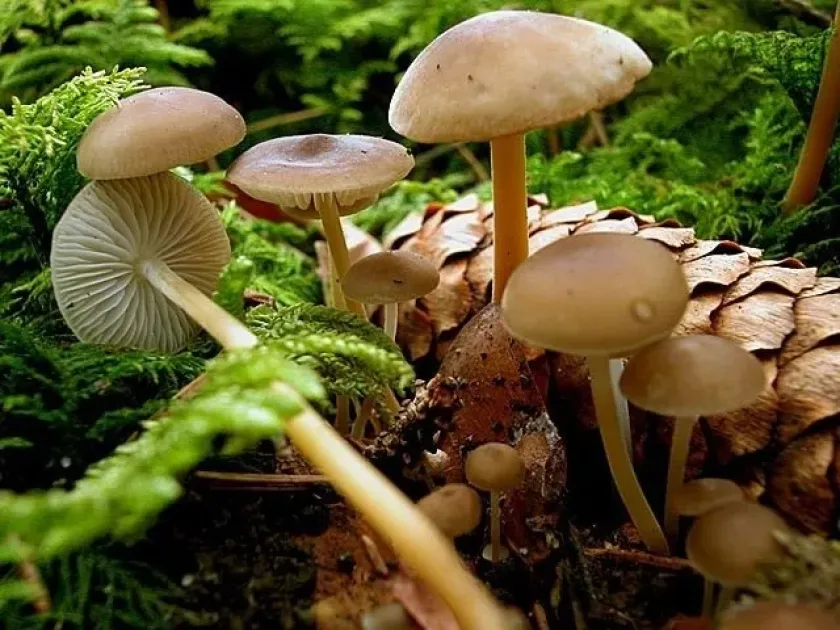
The most recognizable sign is the appearance of small, long-stemmed mushrooms emerging from fallen cones during the early spring season.
The caps are typically small, ranging from 1 to 3 cm in diameter, and exhibit various shades of brown, gray, or white depending on the species.
The stipe (stem) of the mushroom is often exceptionally long, extending deep into the cone's core, which acts as the primary substrate for the fungus.
The affected cones may show a visible white mycelial mat on the outer scales, especially in areas with consistently high humidity.
As the decomposition progresses, the physical structure of the cone becomes fragile and eventually disintegrates into humus.
Pathogen
Strobilurus is a genus of small gilled mushrooms belonging to the Physalacriaceae family, known for their specific habit of growing on fallen conifer cones.
In terms of agricultural and forestry science, these organisms are not classified as plant pathogens because they do not infect living or healthy plant tissues.
They function exclusively as saprotrophs, playing a vital role in the decomposition of tough lignified structures like spruce, pine, or larch cones.
The mycelium of the fungus penetrates deep into the cone scales, breaking down complex plant polymers through a sophisticated enzymatic process.
By recycling nutrients from fallen forest litter, Strobilurus contributes significantly to soil fertility and the overall health of the forest ecosystem.
Conditions for development
The emergence of Strobilurus fruiting bodies is strictly regulated by environmental conditions, particularly moisture and temperature in early spring.
High relative humidity and saturated forest litter following snowmelt provide the necessary trigger for the mycelium to produce mushrooms.
These fungi thrive in shaded, cool environments where the forest floor retains moisture for an extended period throughout the early growing season.
Optimal temperatures for the visible development of the fungus typically fall within the range of 5 to 15 degrees Celsius.
Periods of drought or rapid soil warming generally lead to the cessation of fruiting body formation, forcing the fungus back into a vegetative state.
Why it matters
There is no evidence that Strobilurus causes any harm to living trees, seedlings, or agricultural crops, as it lacks the mechanisms to colonize living hosts.
The fungus is entirely beneficial in a forest or garden setting because it accelerates the natural breakdown of plant waste that would otherwise accumulate.
It does not produce systemic toxins that could interfere with the physiology of nearby coniferous or deciduous vegetation.
Misidentifying this fungus as a plant disease is common, but it represents a natural ecological process rather than a pathological one.
Therefore, Strobilurus poses no threat to the economic viability of timber production or ornamental nursery stock.
Protection
Management of Strobilurus is unnecessary from a plant health perspective, as the fungus is not a pathogen and provides essential decomposition services.
If the presence of these mushrooms is considered aesthetically undesirable in a landscape setting, simple cultural practices are the most effective approach.
Removing fallen conifer cones from the ground eliminates the food source required for the fungal colonies to establish and propagate.
Chemical control using fungicides is highly discouraged as it is ecologically disruptive, unnecessary, and represents an ineffective use of resources.
Maintaining a clean garden environment through routine yard waste collection is the only proactive measure required for those seeking to limit fungal presence.
Discussion
No discussions yet — be the first.