
Strigula
Strigula
The disease is caused by fungi of the genus Strigula, which are often characterized as epiphytic or lichenized fungi. They colonize the surface of leaves, interacting closely with the plant's epidermis.
What the section contains
Strigula
These fungi form flattened, spreading colonies on the leaf surface. The mycelium can be partially embedded within the cuticle, allowing the fungus to survive under various atmospheric conditions.
Biology of Strigula often involves symbiosis with algae, giving them the appearance of thin, crust-like structures that resemble lichens growing on leaves.
Dissemination occurs via spores, which are primarily dispersed by rainfall and wind. These spores land on healthy leaves and begin the infection process when moisture levels are sufficient.
Taxonomically, they are classified under the Dothideomycetes class. Their life cycle is well-adapted to evergreen plants with thick, durable foliage found in humid climates.
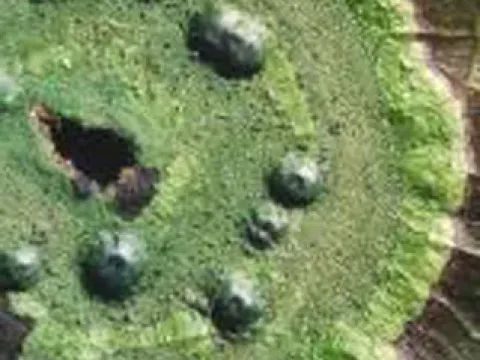
The primary symptom is the appearance of distinct spots on the leaf surface. These spots are often grey, brown, or greenish, and can vary in shape and size.
In many cases, the colonies of the fungus form elaborate, branched patterns that can look like an intricate map or network on the surface of the leaf.
Visible under a hand lens, small black fruiting bodies called perithecia can be found scattered across the surface of the fungal colony.
While the initial infection might look superficial, over time, the affected areas may lead to chlorosis or premature leaf drop if the colonization becomes too dense.
The upper surface of the leaf is most commonly affected because it provides a more stable area for the spores to germinate and grow without being washed away easily.
The development of Strigula is highly dependent on high humidity and prolonged periods of wet weather, which are essential for spore germination.
Shady and poorly ventilated areas in a canopy create a microclimate that remains moist for long periods, significantly favoring the spread of the fungus.
In tropical and subtropical environments, the fungus can thrive year-round, provided there is enough humidity to support its metabolic activity.
Dust, debris, and exudates on the leaf surface provide additional nutrients and a structural base for the fungal mycelium to anchor itself more firmly.
Temperatures ranging from 20°C to 28°C are generally considered optimal for the vegetative growth of Strigula, leading to more aggressive colonization during these times.
The major impact is the reduction of photosynthetic efficiency. By covering the leaf surface, the fungus blocks sunlight, which is necessary for the plant to produce energy.
The colonization interferes with the plant's transpiration process, potentially leading to water stress during dry spells and reducing the plant's overall vigor.
Chronic infestation can lead to a significant decline in the health of the plant, making it more susceptible to secondary pests and other more aggressive diseases.
For nurseries and ornamental producers, the aesthetic damage caused by Strigula spots makes the plants unmarketable and leads to direct economic loss.
Though rarely fatal to mature trees, persistent infections can weaken twigs and branches, leading to dieback and poor fruit yield in orchard species.
Pruning is the most effective cultural practice. Thinning the canopy allows for increased air circulation and light penetration, which naturally dries the foliage.
Sanitation is crucial; removing and destroying fallen leaves reduces the spore load in the immediate environment for the following growing season.
Chemical control, specifically the use of copper-based fungicides, is effective if applied early enough to prevent the establishment of the fungal colonies.
Managing irrigation practices, such as avoiding overhead watering, helps keep the foliage dry and prevents the spread of spores from the ground or infected leaves.
- Regular pruning for better airflow.
- Application of copper fungicides.
- Removal of leaf litter.
- Monitoring canopy health.