
Strigula elegans
Strigula elegans
Strigula elegans is a species of lichenized fungus that typically develops on the surface of leaves. It creates a symbiotic relationship with algae to form a characteristic thallus on the host plant.
What the section contains
Strigula elegans
In agronomy, it is categorized as a superficial pathogen that colonizes the epidermis and cuticle of leaves without penetrating deeply into the internal plant tissues.
The reproduction of the fungus is carried out via spores, which are disseminated by wind or splashing water, allowing the fungus to spread rapidly across dense orchard plantings.
Unlike parasitic fungi that cause severe decay, Strigula elegans maintains a slow growth rate, often staying on the same leaves for an extended period throughout the growing season.
Its biological survival is highly adapted to tropical and subtropical environments where humidity remains high, providing the necessary moisture for its continuous development.
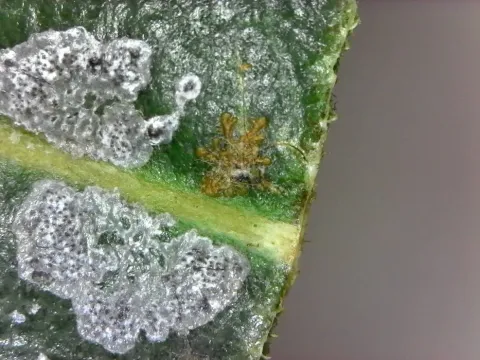
The primary symptom of infection is the emergence of distinctive spots on the leaves, which often display a silvery, light gray, or brownish color, depending on the age of the colony.
These spots generally present with clear, sometimes irregular margins, which expand gradually as the fungal colony increases in size on the leaf surface.
When observed closely, the affected areas show a thin, film-like appearance, which stands out against the natural, vibrant green color of a healthy mango leaf.
There is usually no immediate tissue necrosis or rot associated with this organism, but the visual impact on the plant's leaf surface is quite pronounced.
Persistent colonization can lead to a dull appearance of the foliage, diminishing the overall aesthetic and vigor of the host plant in nursery settings.
High relative humidity is the most critical environmental factor that promotes the establishment and growth of Strigula elegans on host foliage.
Shaded areas within the canopy that lack adequate air circulation and sunlight exposure provide the perfect microclimate for the fungus to thrive and propagate.
The tropical and subtropical climate, with frequent rain and warm temperatures, supports the metabolic needs of this organism throughout the year.
Accumulation of dust, organic debris, or residues from honeydew-secreting insects on the leaf surface creates a suitable substrate that aids in spore adhesion and germination.
Poor orchard sanitation and overcrowding of trees significantly increase the incidence of this disease by preventing foliage from drying out quickly after irrigation or rainfall.
The main agricultural concern is that the dense fungal layer shades the leaf surface, which interferes with photosynthesis and reduces the plant's overall energy production.
Severe infestations weaken the host plant over time, making it less productive and more susceptible to environmental stress and other secondary pests or diseases.
In ornamental horticulture and commercial mango nurseries, the presence of these spots significantly reduces the marketability and value of the planting material.
The long-term impact includes decreased vigor, slower growth rates, and, in cases of extreme density, premature leaf senescence and abscission.
Because the fungus is a competitor for space on the leaf surface, it can indirectly facilitate a decline in the plant's general health, requiring increased management input.
Effective management begins with proper cultural practices, such as routine pruning to open up the canopy, which improves air circulation and sunlight penetration.
Sanitation measures, including the selective removal of heavily infested leaves and branches, help reduce the overall spore load within the orchard environment.
While chemical fungicides are rarely required, applications of copper-based products may be used as a preventative measure to inhibit spore germination on young foliage.
Maintaining proper tree spacing and general orchard hygiene is essential to prevent the microclimate conditions that favor the rapid spread of this lichen.
- Prune trees regularly to ensure optimal light and airflow.
- Remove and destroy heavily colonized plant material.
- Monitor humidity levels in nurseries and high-density orchards.
- Apply preventative treatments only when necessary under professional guidance.