
Soybean dwarf
Soybean dwarf
The causative agent of the disease is the Soybean dwarf virus (SbDV), which belongs to the Polerovirus genus. This virus is a highly specific pathogen that affects various species within the Fabaceae family.
What the section contains
Soybean dwarf
The virus consists of spherical particles containing a single-stranded RNA. A fundamental characteristic of this pathogen is that it is not transmitted mechanically via sap or through infected seeds.
The transmission is carried out exclusively by aphid vectors, with Aulacorthum solani (the foxglove aphid) being one of the most efficient transmitters of the virus in field conditions.
The virus follows a persistent transmission pathway: once an aphid feeds on an infected plant, it acquires the virus and remains capable of transmitting it to healthy plants throughout its entire life span.
SbDV is phloem-limited, meaning it restricts its colonization to the plant's nutrient-transporting tissues, which explains why the symptoms primarily manifest as stunting and systemic chlorosis.
The most prominent sign of the disease is severe stunting of the plant, characterized by significantly shortened internodes, which gives the soybean plant a dwarf-like appearance.
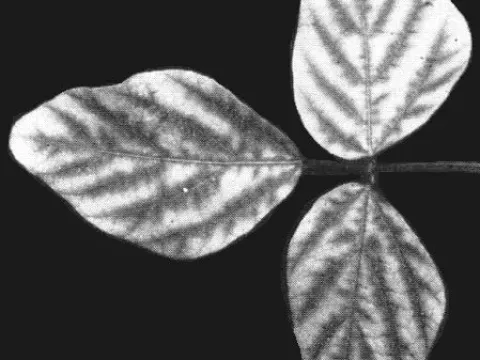
Leaves on infected plants typically show downward curling, thickening, and brittleness. Depending on the soybean cultivar, leaves may develop intense yellowing or reddish discoloration.
The architecture of the plant is altered; the loss of apical dominance leads to excessive branching and a stunted, bushy appearance that prevents proper canopy development.
Flowering is usually inhibited, and plants that do produce pods often have a significantly reduced number of seeds, which are typically small and shriveled.
Early-season infections are particularly devastating, as they result in systemic developmental failure, often leading to minimal or no harvestable yield from the affected plants.
The spread of Soybean dwarf virus is heavily dependent on the movement and density of aphid populations. Cool, moist weather conditions favor aphid survival, reproduction, and migration.
The disease incidence usually peaks when migratory aphid flights coincide with the susceptible growth stages of the soybean crop, particularly during the vegetative to early reproductive phases.
Nearby perennial forage legumes or wild leguminous weeds act as reservoirs for the virus during the winter months, providing a source of inoculum for the spring aphid populations.
Poor agricultural practices, such as the failure to control weeds in and around field borders, increase the population of alternative hosts for aphids, thereby accelerating the virus spread.
Environmental stress factors can exacerbate symptom development, making the plants appear even more stunted and vulnerable to further agricultural degradation.
Soybean dwarf can cause massive economic losses in soybean production, often affecting large areas of a field rather than individual scattered plants.
The primary impact is a severe reduction in seed yield. In cases of early and heavy infection, losses can exceed 50-80%, rendering the crop non-viable for profitable commercial production.
Seed quality is significantly degraded; the seeds produced by infected plants have lower weight, poor viability, and decreased oil and protein content compared to healthy plants.
Infected plants exhibit reduced tolerance to environmental stressors, making them more susceptible to secondary fungal infections and drought damage, which further contributes to yield instability.
The persistent nature of the virus creates long-term challenges, as it necessitates ongoing management efforts and investment in chemical or biological control, increasing overall production costs.
Effective management requires a comprehensive approach, primarily focusing on the control of aphid vectors through strategic insecticide applications during periods of high migration.
Selecting and planting resistant or tolerant soybean cultivars is the most sustainable and efficient strategy for minimizing the impact of the virus in areas where it is endemic.
Cultural control practices, such as maintaining clean field borders and managing wild leguminous weed populations, help reduce the local reservoir of the virus and the aphid population.
Adjusting planting dates to avoid the peak periods of aphid migration can help plants reach a less susceptible developmental stage before infection pressure becomes too high.
- Monitor aphid population densities using sticky traps.
- Promote the activity of natural predators like lady beetles and lacewings.
- Avoid planting soybeans in close proximity to perennial clover or forage legume fields.