
Soybean severe dwarf
Soybean severe
The primary symptom of Soybean severe dwarf is significant stunting, which makes infected plants appear much shorter than healthy ones in the field. The stems become shortened, and internodes are compressed, giving the plant a bushy and stunted appearance.
What the section contains
Soybean severe dwarf
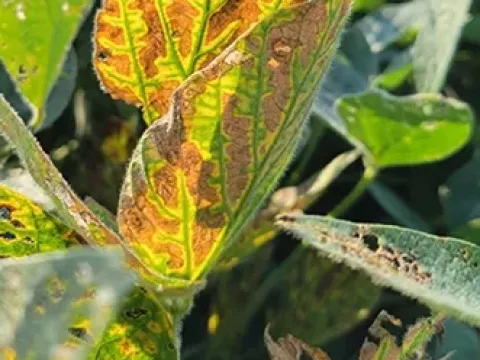
Leaves exhibit pronounced deformations, such as crinkling, curling, and a reduction in overall size compared to healthy foliage. A distinct mosaic pattern, characterized by patches of light and dark green, is frequently observed on the leaf surface.
Affected plants show poor development of reproductive structures, resulting in fewer pods or total sterility. If pods do develop, they are often misshapen and significantly smaller in size compared to those on healthy plants.
In later stages of the infection, soybean plants may experience premature yellowing and leaf drop, which drastically reduces the photosynthetic capacity of the canopy. The root system is also underdeveloped, making the plants more vulnerable to drought and nutrient deficiencies.
In field conditions, symptoms often appear in patches, which indicates the initial spread of the infection by insect vectors. Over time, the disease can spread to adjacent plants, creating large areas of stunted and unproductive crop growth.
The disease is caused by the Soybean severe dwarf virus (SSDV), which belongs to the Luteoviridae family. This pathogen is a phloem-limited virus, meaning it colonizes the plant's vascular tissue, specifically the sieve tubes.
The virus is a microscopic particle consisting of RNA encapsulated within a protein shell. It cannot be transmitted mechanically through contact between leaves or via contaminated tools during standard field operations.
Transmission occurs primarily through aphid vectors that acquire the virus while feeding on infected plant tissue. The transmission process is persistent, meaning that once an aphid acquires the virus, it remains a vector for a significant portion of its lifespan.
The virus restricts the normal flow of photosynthates from the leaves to the roots and developing pods by damaging the sieve tubes. This fundamental disruption of metabolic processes leads to the systemic suppression of the plant's overall development.
The genetic stability of the pathogen allows it to adapt to various environmental conditions, although it cannot survive for long outside of its vector or a suitable host plant. Consequently, weeds and overwintering insects act as the primary reservoirs during the off-season.
Disease outbreaks are closely linked to the activity cycles of aphid vectors. Favorable weather conditions during spring and early summer facilitate rapid aphid reproduction, which directly triggers the spread of the virus throughout the field.
The optimal temperature range for the development of aphid vectors is between 18°C and 25°C. Periods of moderately warm and humid weather favor higher aphid populations, which increases the risk of large-scale soybean infection.
The presence of perennial grasses and weeds near soybean fields serves as an alternative host reservoir for the virus, significantly increasing the risk of primary infection at the start of the growing season.
High-density planting, which creates a specific microclimate within the canopy, may inadvertently assist in the faster movement of aphids between soybean plants. Stress factors such as drought can also weaken the plant, making it more susceptible to viral load.
Poor crop rotation practices, such as continuous soybean cropping, facilitate the buildup of viral inoculum in the local agroecosystem. This creates a persistent "green bridge" that allows the virus to survive and perpetuate year after year.
The economic impact of Soybean severe dwarf stems from irreversible grain yield losses, which can reach 60-80 percent in heavily infested areas. Plants infected at early growth stages often fail to produce any marketable yield at all.
Productivity decline is driven by the disruption of physiological processes, particularly the suppression of growth and reduced biomass accumulation. The quality of seeds from infected plants is also poor, showing reduced weight and lower germination rates.
The biological quality of seeds produced by infected plants is compromised due to changes in the grain's biochemical composition. This affects not only the nutritional value but also the suitability of the seed for future planting cycles.
Infected crops are highly vulnerable to secondary infections and abiotic stressors. Even under favorable external conditions, infected plants are unable to realize their genetic potential for productivity.
Economic losses include both direct yield reduction and the increased costs associated with implementing intensive protective measures during the growing season. In the long term, the presence of this virus requires the use of different resistant varieties or fundamental changes in management.
The primary defense strategy is the use of resistant or tolerant soybean varieties capable of limiting viral replication. Breeding for resistance remains the most economically and environmentally effective method for controlling this disease.
Effective management requires consistent weed control along field margins and borders, as these areas often serve as the main viral reservoirs when the primary soybean crop is not present.
Targeted use of insecticides to manage aphid populations should be implemented timely, at the beginning of peak migratory periods. Monitoring insect density and applying control measures based on economic injury thresholds is essential.
Adjusting planting dates to avoid the peak activity periods of aphid vectors during the most vulnerable soybean growth stages can significantly reduce infection rates. Early planting often helps mitigate secondary spread within the field.
Spatial isolation of new soybean fields from areas that showed symptoms of viral diseases in previous seasons is a crucial preventive practice. Adhering to strict crop rotation rules helps break the lifecycle of both the pathogen and its insect vectors.