
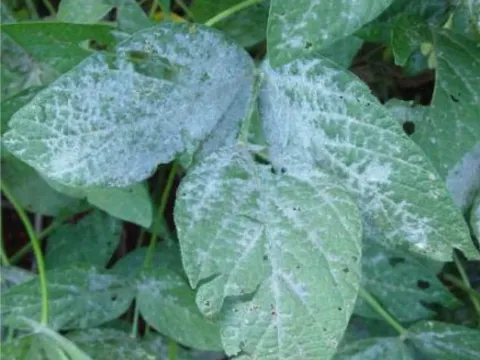
Soybean powdery mildew
Erysiphe diffusa
The initial symptoms of soybean powdery mildew appear as small, isolated white patches of powdery fungus on the upper surface of leaves. Over time, these spots expand to cover the entire leaf surface, including petioles and stems.
What the section contains
Soybean powdery mildew
The white powdery substance is composed of fungal mycelium and conidial spores. As the infection progresses, the patches may turn grayish or yellowish and take on a denser, felt-like texture.
Severely affected leaves exhibit yellowing, loss of turgor, and premature wilting, eventually falling off the plant. This early defoliation significantly impairs the plant's ability to undergo photosynthesis.
Stems and pods are also susceptible, especially during heavy infections. The presence of the pathogen on these parts leads to tissue deformation and can result in stunted overall growth of the soybean plant.
Towards the end of the growing season, small, dark, dot-like structures known as cleistothecia develop on the infected tissues; these are essential for the survival and overwintering of the fungus.
The causal agent of this disease is the obligate parasite Erysiphe diffusa. This fungus belongs to the order Erysiphales and is highly specialized, primarily affecting leguminous plants such as soybeans.
The fungus develops largely on the surface of plant tissues, penetrating epidermal cells with specialized structures called haustoria. These haustoria extract nutrients from the plant host, which weakens the plant without immediately killing it.
The pathogen reproduces via conidia, which are produced in chains on conidiophores. These spores are easily dispersed by wind, allowing for rapid transmission across fields even under relatively dry conditions.
The sexual stage of the pathogen involves the formation of cleistothecia. These structures are resistant to environmental stress and serve as the primary source of inoculum that persists on crop residues in the soil between seasons.
The biological development of Erysiphe diffusa is closely linked to the soybean growth cycle. The impact is most noticeable during the reproductive stages, as the fungus requires established host tissue to flourish.
Soybean powdery mildew thrives in moderately warm and dry weather conditions. The optimal temperature range for spore germination and mycelial growth is between +18°C and +25°C.
Unlike many other fungal pathogens, Erysiphe diffusa does not require free water or high rainfall for infection. In fact, excessive rain can wash spores off the foliage and actually inhibit the spread of the disease.
High relative humidity levels, typically between 70% and 85%, create the ideal environment for the fungus to produce large quantities of spores on the leaf surfaces, leading to rapid disease development.
Dense crop canopies that limit airflow and promote high humidity within the field create a microclimate that accelerates the spread of powdery mildew. Poor ventilation is a major factor in severe outbreaks.
Nutritional status plays a role as well; plants receiving excess nitrogen fertilizer are often more susceptible due to the development of softer, more tender tissue that the fungus can easily penetrate.
The primary economic impact of powdery mildew is the reduction of leaf area available for photosynthesis. This decline in energy production directly leads to lower yield potential in soybean crops.
Infested plants typically produce smaller seeds, resulting in a lower 1000-seed weight. Additionally, the number of pods per plant may decrease, and the overall nutritional quality, including protein and oil content, is often compromised.
Early-season infections can lead to premature senescence, making the plants more vulnerable to drought and secondary stressors. This combined effect significantly increases total crop loss.
Biochemical changes in the affected tissues often reduce the overall value of the grain. Furthermore, uneven maturity caused by the disease complicates harvesting and can lead to mechanical losses during combine operations.
In cases of severe infestation, the stems become weak and brittle, which may contribute to lodging, making it difficult to harvest the crop efficiently and resulting in significant yield loss.
Managing soybean powdery mildew requires a combination of genetic, cultural, and chemical strategies. The use of resistant or tolerant varieties remains the most effective and sustainable long-term solution.
Crop rotation is crucial for breaking the disease cycle. By rotating away from soybeans for at least three to four years, farmers can significantly reduce the amount of primary inoculum in the field.
Good agricultural practices, such as incorporating crop residues into the soil and controlling volunteer soybeans or weeds that may host the fungus, are essential for limiting initial infection sources.
Chemical control involving fungicides is recommended when the disease reaches a threshold that threatens yield. Fungicides from the triazole or strobilurin groups are often effective if applied at the first signs of the disease.
- Monitor fields regularly, especially during flowering and pod development.
- Maintain optimal plant spacing to promote airflow and decrease humidity.
- Use balanced fertilization to prevent overly lush and susceptible growth.
- Apply fungicides preventively in areas with a history of high disease pressure.