
Description
Symptoms
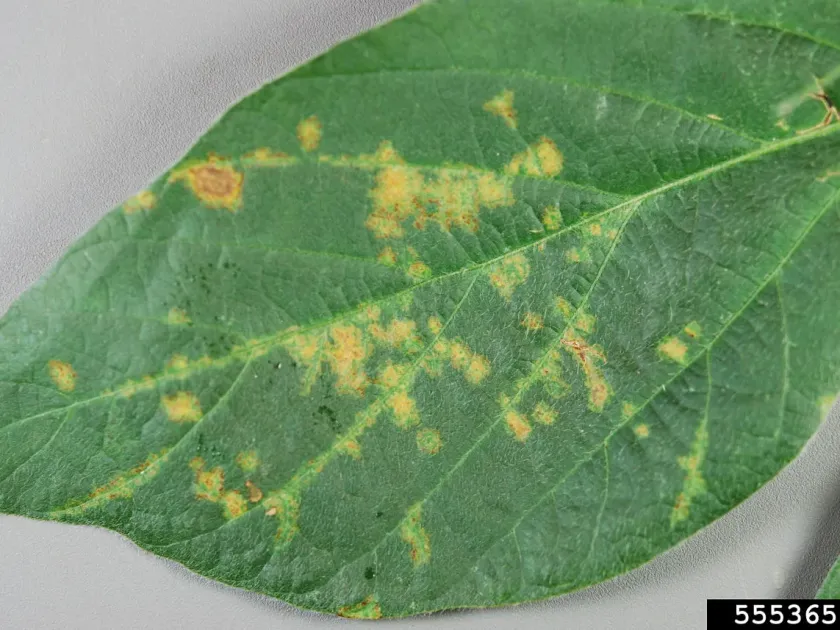
The primary symptom of the infection is the appearance of characteristic chlorotic spots localized along the leaf veins of the soybean plants.
Over time, these chlorotic areas turn into dark brown or reddish-brown lesions, indicating the onset of necrotic processes within the plant tissues.
Necrosis often spreads across the entire leaf blade, causing deformation, premature yellowing, and eventually the dropping of affected leaves.
In the early stages, symptoms can mimic other viral infections, but the specific localization along the conductive pathways is a key diagnostic identifier.
Severe infection leads to stunted plant growth and a significant reduction in overall vegetative biomass during the active growing period.
Pathogen
The disease is caused by the Soybean vein necrosis virus (SVNV), which belongs to the genus Tospovirus within the Tospoviridae family.
The virus consists of spherical particles containing a single-stranded RNA genome with segmented parts, which contributes to high genetic variability.
The disease type is a viral infection that systemically affects all plant organs, including leaves, stems, and reproductive structures.
In natural conditions, the virus is transmitted by insect vectors known as thrips, specifically the tobacco thrips (Thrips tabaci) and other related species feeding on plant sap.
The virus persists in perennial weeds and soybean volunteers, which serve as infection reservoirs until the emergence of the next season's crops.
Conditions for development
The development of outbreaks is driven by favorable weather conditions that promote active reproduction and migration of the thrips vectors.
Warm and dry weather significantly increases insect activity, which correlates with earlier and more intense virus spread within the field.
The presence of unmanaged weed populations near soybean fields significantly increases the risk of rapid infection of young plants.
Dense canopies with poor air circulation create a microclimate that facilitates the local buildup of the vector population.
The most active transmission of the virus typically occurs in the middle of the growing season when thrips population density peaks.
Why it matters
The harmfulness of the virus lies in a sharp reduction of photosynthetic activity due to the destruction of chlorophyll within the necrotic leaf zones.
The disease triggers a decrease in pod count per plant and reduces seed weight, which directly impacts the final grain yield.
Affected plants become more susceptible to secondary infections and external environmental stressors, further weakening their physiological state.
Crop quality significantly declines, as seeds may become shriveled with lower protein and oil content, reducing their market value.
In cases of widespread early-season infection, grain yield losses can range from 10% to 30%, depending on the environmental conditions of the year.
Protection
The main management strategy is the control of insect vector populations through the timely and appropriate application of insecticides.
Crucial agronomic practices include the removal of weed hosts both within the field and along field margins to eliminate infection reservoirs.
Implementing a sound crop rotation program helps disrupt the transmission cycle, preventing the buildup of the pathogen in soil and debris.
The use of certified, disease-free seed material serves as a fundamental preventive measure against the spread of many viral diseases.
- Regular monitoring of field conditions using yellow sticky traps to ensure early detection of thrips.
- Optimizing planting dates to avoid overlapping sensitive crop growth stages with peak vector activity.
- Timely rogueing and destruction of heavily infected plants early in the growing season.
Pathogens and affected parts
Affects crops · 1
Discussion
No discussions yet — be the first.