
Sparassidaceae
Sparassidaceae
Description
Symptoms
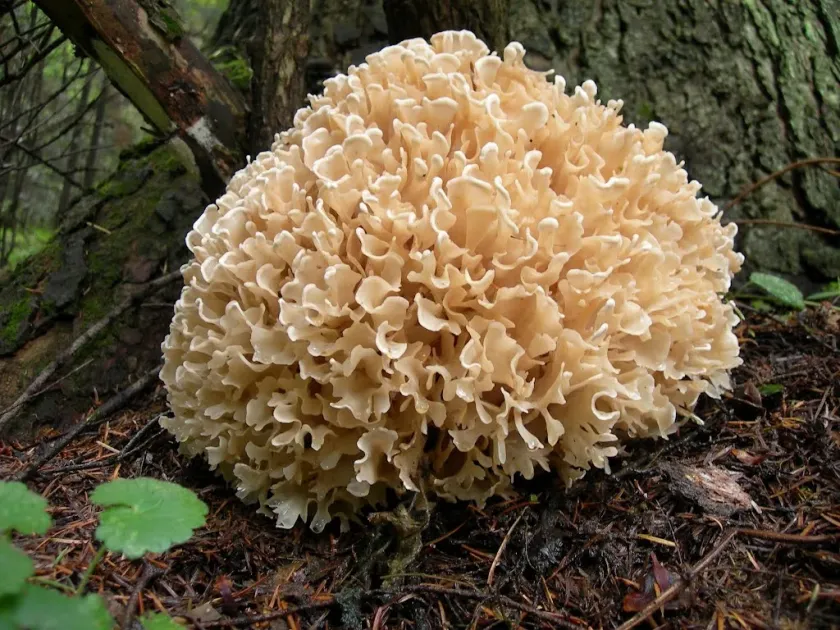
The most visible sign of an infection is the appearance of cauliflower-like fruiting bodies at the base of the infected tree.
These fruiting bodies are often cream to yellowish and serve as the main identifier for the presence of the fungus.
Internally, the infected wood undergoes a transformation, becoming brittle, brown, and crumbling into distinct cubical pieces.
Initial tree symptoms are often subtle, including slightly reduced vigor or thinning of the crown foliage.
As the rot progresses deep into the root system, the tree loses structural integrity, eventually leading to windthrow or collapse.
Pathogen
Sparassidaceae is a family of fungi, within the order Polyporales, which act as significant decay agents in forest ecosystems.
The most notable member, Sparassis crispa, is a parasitic fungus responsible for causing brown rot in the roots and butt of coniferous trees.
The fungus develops its mycelium within the wood, decomposing the structural components of the timber through enzymatic action.
It exists as a facultative parasite that can persist in the soil and on decaying wood debris for many years.
Infection cycles are primarily maintained through soil-borne mycelial spread from diseased roots to healthy neighboring trees.
Conditions for development
The development of Sparassidaceae fungi is favored by humid environments and mature coniferous stands with high soil acidity.
The fungus thrives in areas where tree roots have suffered mechanical damage, allowing an entry point for the mycelium.
Poorly drained soils or sites with high organic matter accumulation provide the necessary moisture to support fungal growth.
Spread is facilitated by the close proximity of tree roots in densely planted or naturally regenerated forest stands.
Fruiting body production is most intense during autumn months, following periods of consistent rainfall and mild temperatures.
Why it matters
The economic impact of Sparassidaceae is substantial, particularly in timber production, as it destroys the highest value section of the tree.
It compromises the stability of large trees, increasing the risk of accidents and forest fires due to the accumulation of dead wood.
The degradation of the root system causes permanent damage, often preventing the recovery of the host tree regardless of environmental conditions.
The disease leads to the formation of gap openings in forests, which can disrupt local wildlife habitats and ecosystem balance.
Once established in a stand, the pathogen creates persistent infection centers that are difficult to eradicate completely.
Protection
Integrated management is essential, focusing primarily on the removal of infected trees and their stump systems.
Practices that prevent root injuries during logging or recreational use are critical to reducing new infection sites.
In high-risk areas, the creation of buffer zones or trenches can help limit the spread of mycelium through the root network.
Encouraging tree species diversity can prevent the rapid transmission of the pathogen that often occurs in monoculture plantations.
- Sanitary harvesting of diseased trees.
- Complete removal of stumps and root systems.
- Monitoring forest stands for fruiting bodies.
Discussion
No discussions yet — be the first.