
Soybean crinkle
Soybean crinkle
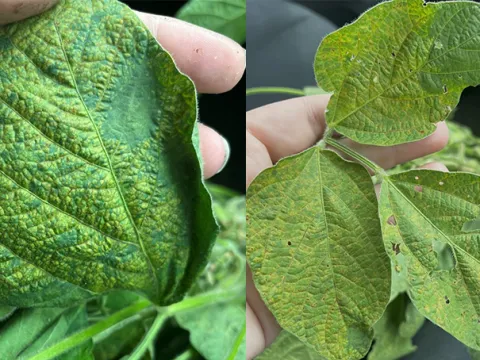
The primary symptom of Soybean crinkle is the characteristic deformation of the leaves, which become wrinkled, puckered, and exhibit curled margins.
What the section contains
Soybean crinkle
Leaf tissue often displays a mosaic pattern with areas of light green or yellow chlorosis, alternating with darker green healthy tissue sections.
Plants affected by the virus typically show stunted growth and shortened internodes, giving them a distinctively compressed and abnormal appearance.
The development of the plant is significantly impaired, with reduced flower production and poor pod formation, which directly affects the yield potential.
In advanced stages of infection, plants may show premature leaf senescence, leading to thin and sparse foliage that fails to cover the soil properly.
The causative agent of this disease is the Soybean crinkle leaf virus (SCLV), a plant virus specifically adapted to infect leguminous species.
The virus acts as a systemic pathogen, invading the vascular system of the host plant and disrupting essential physiological and metabolic processes.
Transmission occurs primarily through insect vectors, such as aphids and leafhoppers, which acquire the virus while feeding on infected plant sap.
Mechanical transmission can also occur in the field during standard agricultural operations when contaminated tools or machinery injure healthy plants.
The virus persists in alternate perennial weed hosts, which serve as crucial reservoirs for the disease during the off-season and crop rotation breaks.
The disease spread is closely linked to the population density of insect vectors, which thrive in favorable weather conditions like warm and humid climates.
High temperatures and adequate moisture levels increase the activity of aphids and leafhoppers, accelerating the rate of viral transmission throughout the field.
Fields situated near areas with a high concentration of wild legumes are at a higher risk due to the proximity of potential viral source populations.
Dense crop canopies provide an optimal microclimate for insects, facilitating easier movement and feeding across adjacent plants within the soybean rows.
Stress conditions, such as drought, nutrient deficiency, or prior mechanical injury, can render soybean plants more susceptible to initial viral colonization.
The economic impact of Soybean crinkle is significant due to the reduced number of pods and smaller seed size, which lead to severe yield losses.
Viral infection negatively alters the biochemical composition of the seeds, reducing their overall protein content and market quality for buyers.
Affected plants exhibit lower photosynthetic efficiency, making them more vulnerable to secondary infections from soil-borne fungi and other pathogens.
The overall uniformity of the crop is disrupted, causing uneven maturation and creating significant challenges during the harvesting process.
In severe infestation cases, the combination of stunted growth and low seed weight can lead to a substantial decline in the profitability of the soybean field.
Effective control strategies focus on integrated pest management to keep the populations of insect vectors below the economic injury threshold.
Strict weed control measures are essential to eliminate the perennial hosts that harbor the virus during the non-cropping periods of the year.
Using virus-free seeds and selecting resistant or tolerant soybean cultivars is the most sustainable approach to managing the disease in high-risk areas.
Regular field scouting allows for the early detection of symptoms, enabling timely removal of symptomatic plants to prevent further spread.
- Application of selective insecticides to control vectors.
- Implementation of proper crop rotation practices.
- Isolation of fields from established legume weed reservoirs.
- Sanitation of agricultural equipment between field operations.