
Soybean downy mildew
Peronospora manshurica
Description
Symptoms
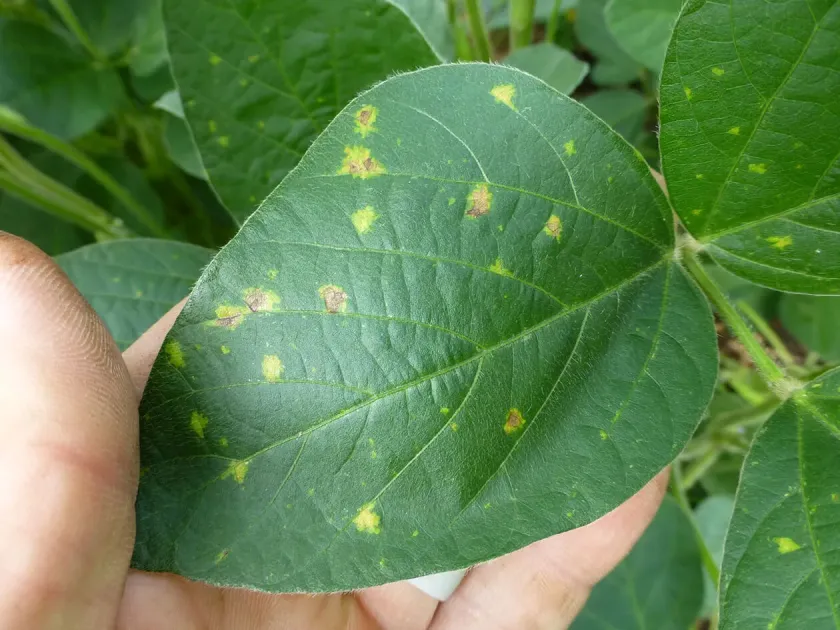
The primary symptoms of downy mildew on soybean appear as small, chlorotic spots on the upper surface of leaves, which eventually become yellow and later brown or necrotic.
Under humid conditions, a characteristic grey or light-purple fuzz develops on the underside of the leaves, directly corresponding to the spots on the upper side.
These spots are often restricted by leaf veins, resulting in an angular or irregular appearance, which is a classic diagnostic marker for the disease in the field.
As the infection advances, the leaves may become fully chlorotic, wither, and drop prematurely, negatively affecting the overall vigor of the soybean canopy.
Seeds within infected pods may show a white or greyish crust of fungal spores on their surface, which does not always kill the seed but significantly lowers its germination potential.
Pathogen
The disease is caused by the oomycete Peronospora manshurica, an obligate parasite that specifically infects soybean crops throughout the growing season.
The pathogen overwinters as oospores, which are thick-walled sexual spores capable of surviving in the soil and on crop debris for several years.
During the growing season, asexual reproduction occurs via conidia, which are easily disseminated by wind and water splashing from rain or overhead irrigation.
Primary infection usually occurs from oospores in the soil or from contaminated seeds, leading to the development of the first systemic or local lesions on young seedlings.
Peronospora manshurica is known for having multiple physiological races, making the development of resistant soybean cultivars a continuous challenge for plant breeders.
Conditions for development
Cool to moderate temperatures, typically ranging from 15°C to 22°C (59°F to 72°F), provide the most conducive environment for the rapid development of the disease.
High relative humidity and frequent rainfall or heavy dew are essential for the germination of conidia and the infection of healthy plant tissue.
Densely planted fields with low airflow create a favorable microclimate for the pathogen, allowing it to move rapidly from the lower leaves to the upper canopy.
Periods of prolonged cloudy, wet weather are especially dangerous as they suppress the plants' defenses and facilitate the spread of spores across the field.
Excessive nitrogen fertilizer can stimulate lush vegetative growth, which creates a denser canopy and keeps humidity high, thus exacerbating the severity of the infection.
Why it matters
Downy mildew causes the loss of green leaf area, which reduces the plant's photosynthetic efficiency and limits the supply of carbohydrates to the developing pods.
Premature leaf drop leads to poor pod filling, resulting in smaller seeds and reduced yield per plant, often causing significant economic losses in epidemic years.
In addition to yield loss, the disease can reduce the nutritional quality of the seeds, particularly impacting protein and oil content critical for processing.
Infected seeds often have lower germination rates and lower seedling vigor, which leads to poor stand establishment in the following season if untreated.
The weakened state of infected plants makes them more vulnerable to secondary infections by other opportunistic pathogens, complicating the overall crop health management.
Protection
Planting resistant or tolerant soybean varieties is the most sustainable and effective way to manage downy mildew in regions with high disease pressure.
Seed treatment with systemic fungicides is essential to protect germinating seedlings from soil-borne oospores and internally infected seed-borne pathogens.
Implementing a crop rotation system with non-host crops for at least three years helps to significantly reduce the concentration of oospores in the soil.
Tillage practices that incorporate crop residues into the soil promote the decomposition of infected tissues and prevent the buildup of inoculum for future seasons.
- Adjusting planting density to improve air circulation within the field.
- Scouting for early disease symptoms and applying foliar fungicides if necessary.
- Managing irrigation systems to avoid prolonged periods of leaf wetness.
- Using high-quality, certified disease-free seed for planting to prevent initial outbreaks.
Discussion
No discussions yet — be the first.