
Soybean dwarf
Indonesian soybean
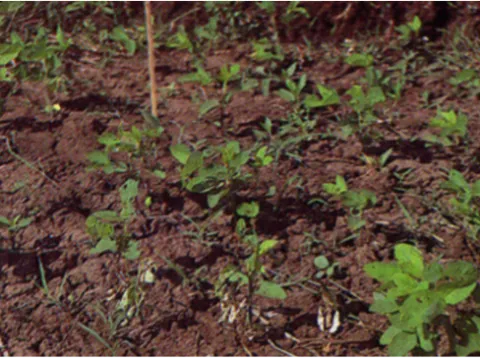
The primary symptom of the disease is severe stunting, characterized by significantly shortened internodes that give the plant a compact, bushy appearance.
What the section contains
Soybean dwarf
Leaves of infected soybean plants exhibit noticeable chlorosis, often curling downward at the edges and becoming more brittle than those of healthy plants.
During the flowering and pod-filling stages, a drastic reduction in pod formation occurs, often resulting in small, malformed, or underdeveloped seed pods.
Affected plants stand out in the field as patches of stunted growth that fail to reach their normal height, even during the peak of the growing season.
The severity of these symptoms can vary depending on the soybean cultivar and the stage at which the initial viral infection occurred.
The disease is caused by the Soybean dwarf virus (SbDV), which is a member of the genus Luteovirus within the family Luteoviridae.
This virus is not transmitted mechanically through sap or seeds, which is a crucial aspect to consider when planning quarantine or management strategies.
The pathogen is transmitted in a persistent manner by specific insect vectors, primarily various species of aphids that feed on the phloem of the plants.
The pea aphid (Acyrthosiphon pisum) is recognized as one of the most efficient vectors, capable of transmitting the virus after a relatively short feeding period.
The virus remains localized in the plant's vascular tissue, disrupting the translocation of nutrients and leading to systemic physiological stress.
The prevalence and spread of the disease are directly correlated with the population dynamics of aphid vectors, which thrive in warm and dry weather conditions.
Early-planted soybean crops are often at higher risk because the peak migration periods of aphid vectors frequently coincide with the most vulnerable seedling stage.
The proximity of reservoir hosts, such as perennial legumes or certain weeds, serves as a source of inoculum that can trigger outbreaks in nearby soybean fields.
Favorable environmental conditions that promote rapid aphid reproduction accelerate the spread of the virus across large areas of the field.
Temperature patterns during the spring and early summer play a critical role in the timing of aphid arrival and the subsequent intensity of viral transmission.
The damage caused by this disease leads to a significant reduction in grain yield due to impaired vegetative growth and poor reproductive success.
Beyond yield loss, the quality of the soybean harvest is compromised, often resulting in decreased protein content and oil quality, impacting market value.
Systemic viral infection weakens the plant's overall physiology, making it significantly more susceptible to secondary fungal and bacterial infections.
In cases of severe early-season infection, the crop productivity may drop to levels that make harvesting economically unviable for the producer.
Economic losses are compounded by both the reduced volume of grain and the increased expenditure required for intensive insecticide programs.
The most effective long-term management strategy is the selection and planting of soybean cultivars that show natural resistance or tolerance to the virus.
Regular monitoring of aphid populations is essential, combined with the strategic application of insecticides to prevent vector buildup during high-risk periods.
Spatial isolation of soybean fields from perennial legume crops helps minimize the risk of virus introduction by migratory insect vectors.
Maintaining weed-free borders and removing alternative host plants around the fields can significantly reduce the reservoir of both the virus and its vectors.
- Using systemic seed treatments to protect young seedlings from aphid feeding.
- Optimizing planting dates to avoid alignment with peak vector migration cycles.
- Practicing integrated pest management to preserve beneficial predator populations.