
Soybean downy mildew
Peronospora swinglei
Description
Symptoms
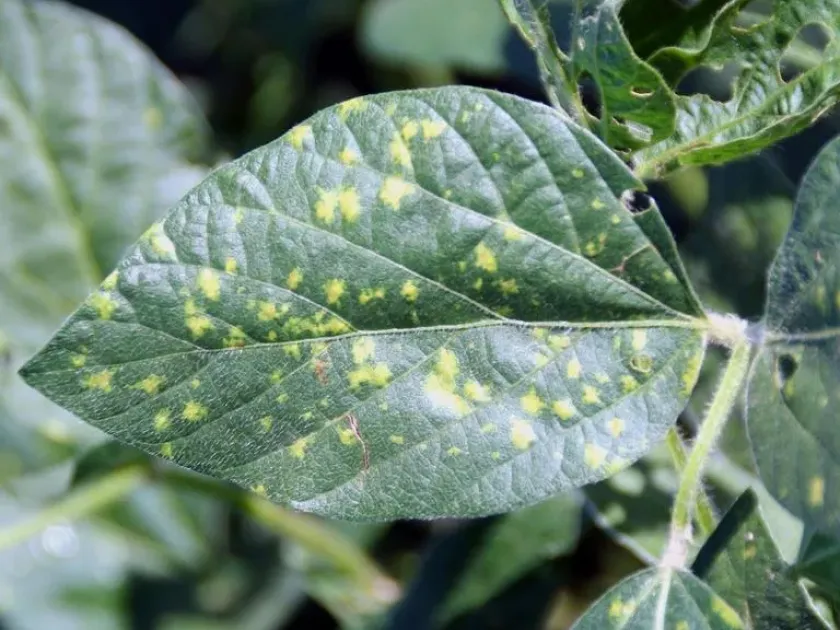
Symptoms initially appear on cotyledons and young leaves as small, pale green to yellow spots, often referred to as chlorotic lesions.
These spots frequently develop an angular shape because their growth is restricted by the small veins of the soybean leaf.
The underside of the affected leaf typically exhibits a grayish or light-violet fungal mat, which is the site of conidial production.
As the disease progresses, these lesions can merge, causing the tissue to turn brown and necrotic, eventually leading to leaf drop.
Infected seeds may be coated with a dull, yellowish-white film of oospores, which serves as a primary source of inoculum for the next year.
Pathogen
The causative agent of soybean downy mildew is the oomycete Peronospora manshurica. It is a highly specialized pathogen that exclusively infects plants belonging to the genus Glycine.
The pathogen overwinters as thick-walled oospores in soil or on infected crop debris, where they can remain viable for several growing seasons.
During the growing season, the fungus produces conidia, which are easily disseminated by wind and splashing raindrops across the field.
The pathogen infects leaves through stomata, developing an intercellular mycelium that drains nutrients from the plant host cells.
The life cycle is closely tied to moisture availability, allowing the pathogen to initiate multiple infection cycles within a single season.
Conditions for development
Development of downy mildew is favored by cool and humid environmental conditions, with temperatures ranging from 18°C to 22°C.
Extended periods of high relative humidity, such as morning dews or frequent rainfall, are essential for conidial germination and host infection.
High planting densities that restrict airflow and increase canopy humidity significantly promote the rapid spread of the disease.
The pathogen is most active during the vegetative stage, particularly if the weather remains cloudy and wet throughout the early season.
Adequate soil fertility, particularly balanced nitrogen and potassium levels, can help plants maintain vigor and reduce susceptibility.
Why it matters
The economic impact of downy mildew stems from the reduction of photosynthetic area, which limits the plant's energy production capacity.
Reduced leaf health leads to decreased grain filling, resulting in lower yields and lighter seed weights compared to healthy plants.
Severe infections can reduce seed quality, impacting germination rates and the overall protein and oil content of the harvest.
Early-season infestation can stunt plant growth, making the crop less competitive against weeds and more susceptible to other stressors.
In cases of severe epidemics, yield losses can be significant, especially in susceptible varieties grown under ideal conditions for the pathogen.
Protection
The most effective management strategy is the selection and planting of resistant or tolerant soybean varieties.
Crop rotation with non-host crops for at least two to three years helps to deplete the population of oospores in the soil.
Seed treatment with systemic fungicides is highly recommended to protect young seedlings from early-season colonization.
Implementing proper cultural practices, such as choosing appropriate seeding rates, helps to maintain canopy ventilation.
- Apply foliar fungicides if the disease threshold is reached.
- Ensure deep tillage to bury crop residues and accelerate decomposition.
- Use certified disease-free seeds to prevent the introduction of the pathogen.
Discussion
No discussions yet — be the first.