
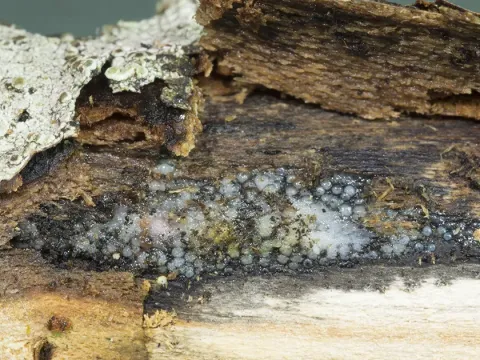
Sirobasidium albidum
Sirobasidium albidum
Sirobasidium albidum is a species of basidiomycete fungus known to colonize the wood and bark of various deciduous trees.
What the section contains
Sirobasidium albidum
It is characterized by the production of unique gelatinous basidia, which typically manifest as small, whitish or translucent clusters on the host surface.
The fungus is largely regarded as a wood-decaying organism that can thrive in environments where moisture is abundant, acting as a saprotroph or a weak opportunistic parasite.
Biologically, it belongs to the order Tremellales, a group of fungi noted for their ability to withstand fluctuating moisture conditions by swelling or shrinking.
While it is not always the primary killer of trees, its presence indicates that the host plant is experiencing physiological stress or has localized tissue damage.
The primary sign of infection is the emergence of gelatinous, whitish to creamy-colored pustules that appear on the bark during humid weather.
These fruiting bodies often dry out into thin, crust-like layers that are difficult to distinguish from the surrounding bark tissue when inactive.
Affected areas of the bark may exhibit slight discoloration or softening, which indicates the enzymatic degradation of the underlying cellular structures.
In advanced cases, one might observe cracking or fissuring of the bark in the colonized areas as the protective layers lose their structural integrity.
Trees affected by significant colonies may show signs of canopy decline, including yellowing leaves or sparse foliage due to impaired nutrient transport.
High humidity and consistent rainfall are the most critical environmental factors driving the development and spread of Sirobasidium albidum.
The fungus prefers shaded, damp environments where wood surfaces remain wet for extended periods, preventing rapid desiccation of the gelatinous fruiting bodies.
Mechanical injuries, such as frost cracks, broken branches, or pest-induced wounds, serve as the primary entry points for spores to infect the tree.
Temperatures ranging from cool to moderate provide the optimal physiological window for the fungus to expand its mycelial network.
Dense tree stands with poor ventilation are particularly susceptible to outbreaks, as they create a persistent microclimate that favors fungal activity.
The harm caused by Sirobasidium albidum involves the slow degradation of the bark and cambium, which interferes with the tree's ability to maintain hydration.
By damaging the protective bark layer, the fungus creates an opening for secondary infections by more aggressive pathogens and wood-boring insects.
Persistent infestation leads to the dieback of branches, which can significantly detract from the health and aesthetics of ornamental landscape trees.
While it may not kill a healthy tree immediately, it exacerbates the conditions of already stressed specimens, potentially leading to total decline.
In forestry settings, the activity of such fungi can degrade the quality of wood, impacting the economic value of the timber produced.
Effective management begins with maintaining high plant vigor through proper nutrition, irrigation, and avoiding unnecessary mechanical stress.
Regular monitoring for early signs of infection allows for prompt removal of colonized tissues before the fungus can spread across the trunk.
Applying copper-based fungicides to affected areas after pruning or cleaning can significantly inhibit the development of new fungal colonies.
Sanitation practices, such as removing and destroying heavily infested plant material, are essential to reduce the local spore load in the orchard or park.
Pruning to improve air circulation within the canopy helps maintain drier conditions, which directly suppresses the development of this moisture-dependent fungus.