
Sirococcus shoot blight
Sirococcus tsugae
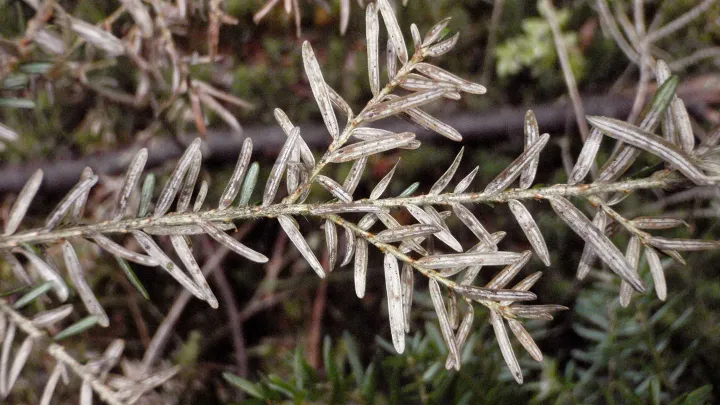
Description
Symptoms
The most distinctive symptom of Sirococcus shoot blight is the discoloration of needles at the base of new shoots. These needles turn yellow, then reddish-brown, and eventually drop off.
Young shoots often exhibit a characteristic bending or curling, commonly referred to as the "shepherd's crook" symptom. This is caused by the necrosis of the vascular tissues in the infected shoot.
Microscopic examination or close inspection reveals the presence of tiny, black pycnidia arranged in lines on the needles or along the bark of the dying twigs.
- Yellowing and browning of needles at shoot bases.
- Twisting or curling of new terminal growth.
- Development of black pycnidia on dead tissues.
- Premature needle cast.
- Dieback of lower canopy branches.
Symptoms often progress upwards through the tree canopy, as the lower, more shaded, and humid branches are the first to provide the necessary conditions for fungal colonization.
Pathogen
The disease is caused by the fungus Sirococcus tsugae, an ascomycete pathogen that primarily infects hemlock species. It is a specialized parasite that colonizes the needles and current-year shoots of its host.
The life cycle of the pathogen is closely tied to climatic conditions. It produces conidia in small, dark fruiting bodies (pycnidia) that develop on infected needles and shoots during periods of high humidity.
The fungus spreads via water droplets during rain, which splash the spores onto healthy, susceptible tissues. Once the spores germinate, the hyphae penetrate the host's surface to begin the infection process.
Due to its biological nature, Sirococcus tsugae can thrive in cool, temperate climates, often becoming a significant problem in nurseries and natural forests where moisture is abundant.
Ongoing research into the genetic characteristics of the pathogen helps scientists develop better strategies for early detection and mitigation in ornamental plantings.
Conditions for development
Development of the disease is heavily dependent on moisture and moderate temperatures. Frequent rain, heavy fog, and dew provide the optimal environment for spore dispersal and germination.
Densely planted hemlocks suffer the most, as poor air circulation allows moisture to linger on the needles, creating a prime environment for the fungal pathogen to flourish.
Shaded locations or areas with restricted airflow are significantly more prone to outbreaks. Trees in these sites remain wet for longer periods, which dramatically increases the risk of infection.
Host susceptibility is increased by environmental stress. Trees suffering from drought, nutrient deficiency, or prior damage are less capable of resisting the pathogen's spread.
Proximity to already infected trees is the most common cause of new infections, as spores are easily transported by wind and splash from rain showers.
Why it matters
Sirococcus shoot blight significantly impacts the health and visual quality of hemlock trees. Persistent infections lead to loss of vigor and can result in the death of individual branches or entire trees.
In forest nurseries, the disease can be devastating, leading to high seedling mortality rates and significant economic losses for producers.
For ornamental landscapes, the disfigurement caused by shoot dieback and thinning foliage makes the affected trees undesirable and often requires costly removal and replacement.
Repeated infection cycles weaken the tree's overall defense mechanisms, making it increasingly vulnerable to opportunistic pests and other secondary pathogens.
The accumulation of inoculum in fallen needles and plant debris ensures that the disease can persist in the environment, creating a long-term management challenge for land owners.
Protection
Sanitation is the most critical control measure. All infected shoots and branches should be pruned during dry weather and immediately disposed of to prevent the spread of spores.
Chemical control involving copper-based fungicides or systemic treatments can be effective when applied preventatively or early in the infection cycle.
Improving cultural practices, such as spacing trees appropriately to ensure good air circulation and avoiding overhead irrigation, significantly reduces the humidity levels that favor the fungus.
Regular monitoring of the canopy, especially during the spring, is essential for early detection. Prompt removal of minor infections can prevent the need for more intensive management strategies later.
Maintaining high tree health through proper fertilization and watering helps plants develop a natural resilience against infection, reducing the severity of outbreaks even when environmental conditions are favorable for the fungus.
Discussion
No discussions yet — be the first.